







The co-leads of the Intergovernmental Negotiating Committee (INC) of the United Nations Framework Convention on International Tax Cooperation (UNFCITC) released the first draft of the Framework Convention Template on 24 October 2025. The timing, just before the INC’s third session in Nairobi, Kenya, between 10 and 19 November 2025, is opportune and vital. The draft provides for issues such as the regulation of the fair allocation of taxing rights, the taxation of high-net-worth individuals (HNWIs), mutual administrative assistance and measures to combat harmful tax practices and illicit financial flows.
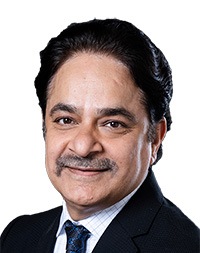
Founder and Managing Partner
BMR Legal
One of the most important provisions is article 4, the fair allocation of taxing rights. This aims to identify the rights of all source jurisdictions in which the taxpayer conducts business and in which value is created, to allow taxing authorities to levy on the income generated from these businesses. The theme running through the UN discussions involving all stakeholders has been the inclusion and meaning of the word “fair”. Although discussions of fairness and its intersections with international tax frameworks have become too abstract, the exchanges at the Nairobi meeting should determine how it is applied in practice.
Advancing global taxation of HNWIs
Article 5 is a clear invitation to end decades of silence and inaction on the effective taxation of HNWIs. It seeks to provide a practical and effective framework for such taxation. This was an issue of great concern to a number of states in previous INC meetings. One such problem was that the article envisaged the need for jurisdictions to share information about their HNWIs. The work of the UN in this matter since the last meeting of the INC has been to broaden the application of exchanges of information by countries about their HNWIs and how they are taxed.
Article 6 sets out a mechanism of mutual administration assistance to achieve the goal of domestic resource mobilisation. Although the commitment text and the draft article are somewhat inconsistent, work on conciliation of terms is expected to pick up after the meeting.
Co-operative tools against harmful tax practices

Senior Associate
BMR Legal
Article 7 aims to address illicit financial flows. The draft identifies effective state co-operation as the way to combat such movements. Article 8, dealing with the issue of harmful tax practices, requires that tax incentives are linked to real projects. They must be based on investment or performance, not merely profit. State co-operation remains the most effective way to develop tools that combat such parasitical tax avoidance. Submissions from jurisdictions in the Global South to reshape the contents of this article are awaited and will be keenly examined. Article 9 is the first instance in which the UN has sought to define and legislate for the issue of sustainable development.
Article 10 of the draft template provides for the prevention and resolution of tax disputes. It demonstrates the importance of resolving disputes as a precondition for promoting investment and trade. The article highlights the need for states to reduce situations that lead to tax disputes. They will be able to do this by implementing clear and accessible rules and interpretative guidance that set out tax obligations. It also identifies an acceptable way for states to introduce and implement domestic dispute mechanisms. This would seem to be an elegant way of bolstering the sovereignty of member states in resolving taxation disputes.
Building a flexible global tax convention
The draft article 22 of the template will be the foundation of the convention and is worded broadly to ensure tax certainty. Details of the way the convention will operate in practice will be contained in protocols to be issued subsequently. They will set out the requirements for their coming into force. To be a party to a protocol, a state must be a party to the convention and a state that is a party to the convention will not be bound by a protocol unless it becomes a party to such protocol. This ensures that states will sign up to the convention even though they refuse to accept the requirements of individual protocols.
If previous discussions were mere headlines, the Nairobi negotiations should be a defining moment in the history of sustained efforts to achieve international tax co-operation. However, translating and putting the draft articles into effect will require co-ordinated efforts by states in acceptance and application.
Mukesh Butani is the founder and managing partner, Pranoy Goswami is a senior associate and Spandana Koona is a research associate at BMR Legal
 BMR Legal
13 A-B, Hansalaya Building
15, Barakhamba Road
New Delhi – 110 001, India
Contact details:
T: +91 11 6678 3000
E: sangeeta.kumar@bmrlegal.in