









In 2023, the Russian M&A market showed a general decrease in both the number and average value of transactions, which generally correlates with the global M&A market. Key economic factors affecting the Russian M&A market are high inflation rates and currency fluctuations.
The Russian M&A market continues to be driven by the geopolitical agenda. While Russia is still trying to establish deeper business co-operation with Asia, the Middle East, Latin America and Africa, almost all ties with longstanding partners from the US and Europe have been cut. Hence, in addition to purely economic factors mentioned above, the Russian M&A market suffers from a lack of inbound foreign investment.
Nevertheless, the M&A market has been slowly recovering towards the end of 2023 and the beginning of 2024, with a growing number of domestic transactions among local players and cross-border transactions involving new foreign investors from jurisdictions other than the EU and US.
As a result, it is expected that in 2024, the number of M&A transactions in the Russian market will continue to grow, especially in the technology, agriculture, construction and development sectors.
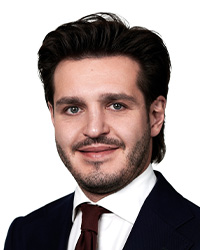
Partner
Email: artashes.oganov@sl-legal.ru
The main market trends this year are:
- Secondary sales of assets acquired from exiting foreign investors to strategic investors or industry leaders;
- Reorganisation and restructuring of holdings that absorbed the assets of exiting foreign investors and now have to maintain operations;
- Increased interest of Eastern and Asian investors in Russian assets;
- Continued consolidation of business groups and their vertical integration with entry into new segments; and
- The continued, although much fading, exodus of foreign (mainly EU and US) companies, which started in 2022.
The loss of access to Western credit facilities commonly used in the past, together with a significant increase in loan rates, has also triggered a boom in domestic IPOs and secondary public offerings (SPOs) by companies of different scales and industries.
Transaction structures
There are two main groups of M&A transactions structures, depending on the parties involved.
The first group includes transactions with exiting foreign companies driven by the EU, US and UK sanctions pressure. These transactions are made on substantially simplified and non-market terms. Their main attributes are:
- Severely limited or completely excluded seller’s liability;
- Significantly reduced number of warranties, indemnities and representations provided to the purchaser (usually limited to title and capacity);
- Discount to the market value of the sold asset equal to or exceeding 50%; and
- Choice of arbitration institutions that was uncustomary for the Russian market before 2022; instead of the International Chamber of Commerce, the London Court of International Arbitration and the SCC Arbitration Institute, the parties tend to choose the Hong Kong International Arbitration Centre, the Singapore International Arbitration Centre, or other foreign (e.g. arbitration institutions in CIS states) or domestic arbitrations.
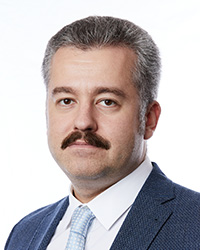
Counsel, Head of Asian Initiative
Seamless Legal
Email: georgy.daneliya@seamless.legal
The second group comprises transactions between local players that are usually made on market-standard M&A terms, including:
- Fair pricing and various price adjustment mechanisms;
- Extended warranties and representations from the sellers;
- Strong sellers’ liability and additional indemnification of the purchasers;
- Various conditions precedent and subsequent to completion; and
- Disputes often submitted to domestic arbitrations and less frequently to state commercial courts.
Each transaction may also combine elements of both above-mentioned trends in different proportions, depending on the parties to the transaction, its goals, and further circumstances (acquisition of a new asset, exposure of a party to international sanctions, restructuring of existing shareholdings, etc.).
As for the type of M&A transactions, both asset deals and share deals are made by the market players, with the choice usually depending on the acquired asset, its ownership structure, anticipated timing, and tax burden entailed by the transaction. So far, among market players, the combination of relatively short timing and lower tax burden has made share deals much more popular than asset deals.
Key legal, regulatory issues
In the past couple of years, the Russian legal and regulatory environment has become more complicated for foreign investors. At the same time, it provides more certainty in 2024 than it did in 2022. The requirements have become more comprehensible and clearance procedures are better established and clearer.
In terms of M&A transactions, the legal framework is dictated by the “counter sanctions” regulations designed to protect the local economy and financial system, which often mirror the external restrictions imposed by the US, EU and UK. Consequently, all transactions with foreign companies continue to face increased regulatory scrutiny, regardless of the jurisdiction of the foreign company involved.
Counter sanctions regulations divide all foreign countries into two main categories – “unfriendly” and others. This division is crucial for identifying the regulatory requirements applying to a particular transaction.

Senior Associate
Email: anastasia.dukhina@sl-legal.ru
“Unfriendly” countries include those that have imposed sanctions or introduced other restrictive measures against Russia. Such countries include the US, UK and Commonwealth states, all EU member states, Japan, Singapore, South Korea, Taiwan and some other jurisdictions from the list maintained by the Russian government.
Countries that do not qualify as “unfriendly” and are not on the government list include China, India, Turkey, the UAE and members of the Commonwealth of Independent States (CIS).
All transactions with Russian assets (i.e. equity capital, real estate and IP) where at least one of the parties originates from an “unfriendly” country, or is under the direct or indirect control of a person or entity from such a country, are subject to review and approval by a special subdivision of the Russian government (the Government Commission) or the Russian president, if the target operates in a strategic industry (energy, fuel, banking, etc.). These transactions should meet certain criteria, including:
- A purchase price discount of 50% or more to market value;
- Certain key performance indicators (KPIs) for the purchaser to be met after completion, including retention of employees and meeting certain income or other business KPIs; and
- Mandatory payment to the Russian budget in the amount of about 15-25% of the transaction value or, if the latter is nominal, of the asset’s market value.
The Government Commission may add any other requirements or conditions to be observed by the parties to the transaction as it sees fit.
In some cases, when the terms of the transaction imply a complicated payment structure or involve payment in euros or US dollars, the preliminary approval of the Russian Central Bank or Ministry of Finance is also required.
The timing for obtaining clearances for a transaction is not established and may vary from a couple of weeks to six or seven months, or longer.
Not only pure M&A transactions are subject to preliminary approval by the Government Commission, but also other transactions resulting in the establishment, change or termination of controlling rights of a foreign investor from an “unfriendly” country over a Russian entity, for example, SHAs, pledge of shares, etc.
The above-mentioned restrictions apply to any deal involving an investor from an “unfriendly” state, including deals aimed at the sale of a Russian business to a “friendly” foreign investor or domestic player. But those buyers who successfully clear all regulatory obstacles usually benefit from acquiring a high-quality asset for less than 50% of its market value.
Existing counter sanctions regulations, together with tightening external sanctions, lead to certain developments in the legal aspects of M&A transactions.
Russian parties’ access to foreign legal services is severely limited, and this leads to more transactions switching from English law, which used to be the first choice of governing law for M&A deals with a foreign nexus, to Hong Kong, Singapore or Russian law, even if a foreign party is involved.
The parties have to choose dispute resolution institutions from those that are still willing to work with a “Russian element” and are not located in “unfriendly” jurisdictions.
Finally, restricted access to foreign currency and banking institutions forces the parties to M&A transactions to make settlements with foreign partners – where possible, in Chinese, UAE and Russian currencies – or seek new, unconventional ways of payment transfers.
M&A outlook
The above-mentioned restrictions and challenges require additional diligence from both foreign and domestic investors when negotiating and implementing M&A transactions in relation to Russian assets. However, the new stage of development of the Russian economy (trend for localisation of production, and the intention to secure the full life cycle of products within the country), the exit of big international corporations from Russian assets, and continued demand for financing and expertise basically shape a new, very favourable market for those investors who are ready to adapt to, and navigate through, the internal and external regulatory restrictions and requirements.
 SEAMLESS LEGAL
10 Presnenskaya Naberezhnaya, Block C
123112 Moscow, Russia
Tel: +7 495 786 40 00
Email: info@seamless.legal