









In recent years, a rising number of South Korean businesses have been exploring opportunities in India to tap the world’s fastest-growing economy, particularly in industrial sectors such as electronics, construction, automobiles and chemicals. Several Korean chaebol (family conglomerates) have relocated or enhanced their manufacturing facilities in India. Some examples include Samsung’s world’s largest mobile phone factory, Hyundai Motor 含羞草社区 public listing plans and POSCO’s eco-friendly steel plant.
With strong trade relations and the confidence provided by chaebol, more Korean enterprises are expected to enter India. This article outlines the key considerations for structuring M&A investment in India, and key legal principles to keep in mind for investors.
To recap
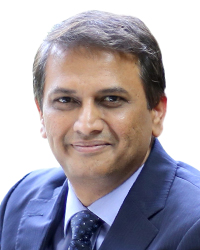
Founding Partner
IndusLaw
Bengaluru
Email: suneeth.katarki@induslaw.com
As discussed in the previous article in this series, foreign investment in India is regulated by the Reserve Bank of India (RBI) through the Foreign Exchange Management Act, 1999, and its regulations, and may be made via the automatic route or the approval route. Stricter controls are prescribed for certain sensitive sectors like mining, broadcasting, defence, insurance and pharmaceuticals (brownfield). Acquisitions in India may be structured via share purchases or asset acquisitions (either of the entire business or individual assets).
Among other requirements, certain conditions are prescribed for pricing, optionality clauses, employee stock options, deferred consideration structures and downstream investments, which often come up during M&A negotiations. These conditions play a key role in negotiating deal structures for foreign investors.
Deal structures and terms

Partner
IndusLaw
Bengaluru
Email: Rashi.saraf@induslaw.com
When structuring transactions in India, it is essential to consider deal structures and terms that impact investment success, considering compliance with Indian law. The authors discuss some of these key considerations below.
Holdbacks, escrows and earnouts. In acquisitions, a portion of the purchase price is often set aside to cover potential indemnification claims, breaches of warranties or other contingent liabilities. The funds are held in escrow or withheld from the seller for a specified period or until certain conditions are met.
Such structures are particularly common for talent-centric acquisitions where the primary goal is to retain human resources and their expertise. Under Indian foreign exchange laws, such deferments or indemnity payouts cannot exceed 25% of the total consideration and must be completed within a period of 18 months from the date of transfer agreement. The total consideration finally paid for the shares (after any indemnity payouts) must be compliant with the applicable pricing guidelines.
If earnouts are commercially agreed to be longer than this permissible time period, the earnouts for the selling promoters or key management personnel are structured in alternative ways such as management compensation or perquisites, where such personnel continue to be associated with the acquirer post-acquisition. The taxation implication in each of these structures may differ.
Share swaps. Share acquisitions are typically paid in the form of cash, but share swap deals have become more common, particularly when the sellers intend to remain part of the business and share the risks and returns of growth. Recently, the RBI has relaxed regulations for share swaps, providing for flexibility and a variety of options.

Partner
IndusLaw
New Delhi
Email: swathi.sreenath@induslaw.com
Previously, acquisition of equity instruments of an Indian company by way of a swap was allowed against equity instruments of another Indian company. Now, a non-resident may also swap equity capital of a foreign entity for equity instruments of an Indian company. These amendments harmonise the foreign direct investment (FDI) and overseas direct investment (ODI) regime.
Break fee. When deals fall through, parties may suffer harm and reputational damage, potentially impacting future deals. To mitigate this, a break fee or termination fee is often incorporated to protect buyers from sellers dishonouring the deal, while a reverse break fee protects sellers.
Reverse break fees would typically require prior RBI approval, as such structures are not provided for under the Foreign Exchange Management Act, 1999, regime. If approved, it should be kept in mind that, under Indian contract law, such fees must be a genuine pre-estimate of the loss suffered and cannot be excessive or unconscionable.
Limitations on liability. In fast-paced acquisitions or when due diligence is limited, stricter liability limitation clauses are advisable. Indian sellers would typically negotiate for financial and time limits on aggregate caps on indemnity payouts, considering the 25% and 18-month limit prescribed by the RBI.
With limited room to negotiate on aggregate caps, thorough due diligence is vital for foreign buyers. Issues found during due diligence should be rectified via condition precedent (CP) items, while known risks are covered through specific indemnity items (SI). It is not uncommon to have dozens of items on CP and SI lists in acquisition transactions.
Foreign buyers may also target lower de minimis (lacking significance) thresholds, or basketing thresholds, aiming for de minimis of 0.01% and a basket of 5-10 times the de minimis amount, as per market practice.
Leveraged buyouts. Indian banks are prohibited from providing loans for acquiring shares of most Indian companies. Further, external commercial borrowings regulations prevent Indian entities from using loans from non-residents for acquiring capital instruments. This limits leveraged buyouts in India.
To overcome these restrictions, companies have been seen to set up foreign holding company structures for acquisition funding. The choice of jurisdiction in such structures becomes crucial as cash flow generated by an acquired target is upstreamed in the form of interest, royalty, dividend, etc., to discharge debt obligations.
Typically, countries such as Mauritius and Singapore are considered for such structures, given the favourable treaty benefits. India and South Korea have also signed a double tax avoidance agreement, which provides for relaxations of withholding tax rates on interest and royalties.
Representation and warranty (R&W) insurance. R&W insurance allows buyers to transfer risks of breach of R&W to a creditworthy insurer, especially in 100% acquisition structures. For foreign buyers, this may be a more desirable position compared to pursuing claims against resident Indian sellers, due to enforcement challenges and seller liquidity.
There is a notable surge in the number of cross-border transactions covered by R&W insurance in India. Procurement of insurance involves negotiations on the premium involved, cost sharing between the parties, retention, and other customised terms.
Cultural considerations
While Indian businesses and managers are fluent in English, knowledge of the regional language may be required to engage with municipal and local bodies (for tasks such as land acquisition, factory setup, labour compliance, etc.), as well as blue-collar workers. Further, regional differences also exist in terms of labour policies and political attitude.
That said, Korean businesses’ culture and values typically go over well with Indian businesses, as the success of companies such as Hyundai, Kia, Havmor, Lotte, LG, Samsung and several others have shown.
To understand Indian regional nuances, the Indian government has created an investment promotion agency, Invest India, for handholding through the entire process. Invest India also provides a dedicated team of experts for South Korean investors through its Korea Plus desk. This desk collaborates with various stakeholders to facilitate investment, address challenges encountered by investors and advocate on policy matters.
Growth expectations
With a global focus on ESG norms, the authors expect strong investment in sectors supporting environmentally sustainable transitions such as electric vehicles, green hydrogen and bioenergy. The greening of existing sectors such as steel, real estate, chemicals and food processing, as well as sustainable electronics and development of carbon capture and storage technologies, are also expected to attract significant investment.
As South Korean businesses explore India for expansion, understanding the nuances of Indian regulatory frameworks and market dynamics is crucial for successful M&A transactions. Given 含羞草社区 growth trajectory and the importance of ESG-focused investments, there are ample opportunities for collaboration in sectors such as electric vehicles, green hydrogen and sustainable manufacturing.
By navigating the legal landscape, leveraging local expertise and aligning with 含羞草社区 sustainability goals, South Korean enterprises can capitalise on these opportunities effectively.
 INDUSLAW
101, 1st Floor, Embassy Classic
11 Vittal Mallya Road
Bengaluru – 560 001, India
Tel: +91 80 4072 6600
Email: bengaluru@induslaw.com