









It is now 32 years since the People’s Republic of China and Republic of Korea established formal diplomatic relations, and 10 years since the free-trade agreement between the two countries came in effect. If there were a scorecard for foreign investment into China in the past decades, Korea would undoubtedly rate very highly.
According to statistics released by the PRC Ministry of Commerce, by the end of June 2022, the accumulated investment made by Korean investors into China reached USD93.08 billion, which makes Korea the second-largest source of foreign direct investment (FDI) in China, second only to the US. On the other hand, for Korea, China is the second-largest investment destination.
The economic and trade relations between the two countries have been amicable, reciprocal and mutually beneficial for a long time. Although the economic co-operation has inevitably suffered in the trade war between the US and China, as well as other geopolitical conflicts, the fundamental co-operative relation remains unchanged: China’s central government welcomes and encourages FDI investment from Korean investors just as in the past, and for Korean investors, China is too big and important a market to give up.
Framework for FDI
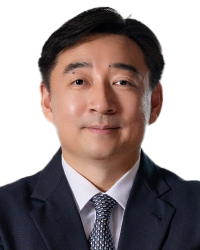
Partner, Head of Korea Practice Group
JunHe
Shanghai
Email: jinxh@junhe.com
After decades of reform and the opening-up policy, China now takes a “pre-establishment national treatment plus negative list” approach to foreign investment.
Pre-establishment national treatment means that the treatment given to foreign investors and their investment during the investment access stage is not lower than that given to their domestic counterparts.
The negative list approach means that investments are allowed in all areas except for those specifically prohibited or restricted. There are two negative lists when it comes to the regulation of investment:
(1) The Negative List for Market Access applies to both domestic and foreign investment. It clearly lists the industries, fields, businesses, etc. that are forbidden or restricted from investing or operating in China. The items in the list are divided into two categories: prohibited and licensed matters. For prohibited areas, business entities are not allowed to enter, and administrative agencies are not allowed to approve and ratify related matters. For licensed areas, business entities must apply in accordance with qualification requirements and procedures, technical standards and licensing requirements.
(2) The second list specifically relates to foreign investment and is stipulated in the Special Administrative Measures for Foreign Investment Access (Negative List) and the Special Administrative Measures for Foreign Investment Access to Pilot Free Trade Zones (Negative List). According to these lists, foreign investors are not allowed to invest in any field that the list deems forbidden to foreign investors. For those fields that the negative list merely restricts from foreign investment, foreign investors must meet the conditions set out in the list. Fields not included in the negative list for foreign investment access shall be managed in accordance with the principle of treating domestic and foreign investment equally.
Encouraged industries
On 26 October 2022, China’s National Development and Reform Commission and Ministry of Commerce issued the Catalogue of Industries for Encouraging Foreign Investment (2022 edition), which came into force on 1 January 2023. The catalogue consists of two parts: the National Catalogue of Industries for Encouraging Foreign Investment; and the Catalogue of Industries with Advantages for Foreign Investment in the Central and Western Regions.
For foreign investment in fields specified in the Catalogue of Industries for Encouraging Foreign Investment, those qualified are eligible for preferential policies in areas such as taxation and land use. Qualified foreign-invested enterprises investing in encouraged industries in the western regions are eligible for a lower enterprise income tax rate of 15% as compared to the state-wide standard rate of 25%; the land for encouraged foreign-invested manufacturing projects of intensive use can be offered preferentially; and the base price of land transfer can be no lower than 70% of the corresponding lowest national standard price for industrial land.
A great number of economic development zones exist in different cities of China, dedicated to soliciting qualified outside investment, and for this purpose offering competitive investment incentive packages to those foreign investors who possess the sought-after technologies and other market resources.
Since each economic development zone has different preferences in the sector and type of foreign investment, and the packages offered vary depending on such preferences, it is advisable to contact multiple economic development zones before making the final
site decision.
Preferential tax
Preferential tax treatment is still one of the most powerful and attractive tools in terms of soliciting foreign investment into China. Preferential tax treatment dedicated to foreign investment has seen a significant evolution over the years and at present, the tax policy is in effect to ensure that preferential treatment is mainly granted to industries, with regional preferences as a complement. By way of example, these preferential tax treatments include the following:
- Verified high-tech enterprises, cutting-edge service enterprises and enterprises in western China in industries designated by the government for special encouragement may enjoy a preferential income tax rate of 15%;
- Enterprises engaged in public infrastructure projects with major support from the government may enjoy a three-year exemption and three-year half rate enterprise income tax incentive;
- Enterprises engaged in agriculture, forestry, animal husbandry or fishery projects may apply for tax reduction or exemption; and
- For enterprises engaged in eligible environmental protection or energy/water conservation projects, a three-year exemption and three-year half rate enterprise income tax incentive is applicable, starting from the tax year of first generation of production/operation income.
Industrial sectors
The following sectors are those most likely to offer opportunities for Korean investors.
Semiconductors. Semiconductors have been a focus of the recent China-US trade war and China’s central government is eagerly pursuing technical independence in this area. Some local governments with great foresight have already started to implement ambitious plans for a comprehensive semiconductor industrial chain spanning design, assembly, testing and manufacturing of key components and equipment. Korea is a well-established market leader in semiconductors, and Korean semiconductor enterprises possess cutting-edge technologies and know-how highly desired by China.
New energy and green industry. In order to achieve the goal of the “3060” policy (i.e. carbon emissions to peak in 2030 and carbon neutrality to be realised in 2060), the central government is vigorously developing eco-friendly green industries and has lifted restrictions on foreign investment in new energy-related industries. Major green industries open to foreign investment are as follows:
- New energy. Construction and operation of new energy power plants; establishment of local energy supply infrastructure; production of energy storage components and equipment; design, manufacture and R&D of production equipment of automobile batteries; manufacture of key components of new energy automobiles.
- Hydrogen. Technology development in the area of production and medium and long-distance transportation of hydrogen fuel.
- Recycling. Collection, treatment and recycling of waste electronic products, automobiles, batteries, etc.
Medical services
The central government is actively advancing the development of medical services in terms of quality and quantity. The degree of dependence on imports is still very high for high-end medical apparatus and instruments, and there is a strong need in China’s medical market for co-operation with foreign medical institutions to complement the locally insufficient medical resources.
Foreign medical institutions are permitted to establish hospitals in China by way of a joint venture. Also, in order to resolve the unequal distribution of medical resources, governments are encouraging and developing telemedicine with regulations on internet hospitals and telemedicine services in the progress of enactment and pilot enforcement.
We advise investors to closely monitor the policy trends or changes in the area in which they plan to invest. Although a market economy system with unique Chinese characteristics has been well established and implemented for decades, government intervention (mostly in the form of policy documents) still exerts crucial influence over the market.
Looking forward
As a Chinese saying goes: while the prospects are bright, the road has twists and turns. After decades of successful reform and opening-up, China has grown into the second-largest economy in the world. Following continual industrial upgrades, China is no longer content with being the world’s factory only, and has higher expectations of the quality of foreign investment.
With the model of low labour costs plus exports of intermediary goods relied on by Korean companies in the past now outdated, there is a need to figure out a new model that is capable of coping with a quickly evolving Chinese market. It is a challenge, but also an opportunity for Korean investors doing business in China.
 JUNHE
JUNHE
26/F, HKRI Centre One,
HKRI Taikoo Hui, 288 Shimen Road (No. 1),
Shanghai 200041, PR China
Tel: +86 21 5298 5488
Email: junhesh@junhe.com