










Regulatory efforts are being made in Taiwan and Hong Kong to encourage investment in capital markets
Latest developments in Hong Kong capital markets space
Many encouraging new developments were witnessed in the Hong Kong capital markets space in 2024. On 13 June, QuantumPharm, an AI-driven drug discovery company also known as XtalPi, debuted on the Main Board of the Hong Kong Stock Exchange (HKEx), marking the first successful listing under chapter 18C of the listing rules since its introduction in March 2023.

Partner
Jingtian & Gongcheng
Hong Kong
Tel: +852 2926 9448
Email: stephen.luo@jingtian.com
On 30 October, Hong Kong-listed special purpose acquisition company (SPAC) HK Acquisition Corporation completed its merger with Synagistics, a Singapore-based e-commerce solutions platform, with the new combination debuting on the HKEx under the name Synagistics.
This marks the first successful completion of a “de-SPAC” transaction and listing of the resulting successor company in Hong Kong since the introduction of the SPAC regime under chapter 18B of the listing rules in January 2022.
Also in 2024, the HKEx and Hong Kong’s Securities and Futures Commission (SFC) introduced important new initiatives that underscore an ongoing commitment for listing quality companies and upholding public interest. The most significant was an enhanced timeframe for the new listing application process, jointly announced by the SFC and the HKEx on 18 October.
Here, when a listing applicant and its sponsor submit an application for new listing and related materials that meet all applicable requirements and guidance under the Securities and Futures Ordinance, the Securities and Futures (Stock Market Listing) Rules and the listing rules, the SFC and the HKEx will individually assess and indicate any material regulatory concerns (regulators’ assessment) after a maximum of two rounds of regulatory comments.
In this scenario, the time taken by each regulator will be no more than 40 business days (this refers to the number of business days in the hands of the regulators and excludes the time needed for the listing applicant and its sponsor to prepare and submit their response).
It is the regulators’ expectation that a listing applicant and its sponsor will take about 60 business days to satisfactorily address regulators’ comments. Subject to obtaining approvals from the listing committee and other authorities or regulators, the application process can be completed within a six-month application validity window.
Furthermore, for existing A-share listed companies seeking a listing on the HKEx, the SFC and the exchange will process listing applications under an accelerated timeframe. A regulators’ assessment of an existing A-share listed company’s new listing application will be completed after one round of regulatory comments if a company meets the following criteria:
-
- It has a minimum market capitalisation (calculate with reference to the actual A-share market capitalisation and the expected H-share market capitalisation) of HKD10 billion (USD1.28 billion).
- It can confirm, with the support of legal advisers’ opinions, that it has complied with all laws and regulations, in all material respects, applicable to its A-share listing throughout the two full financial years immediately preceding the new listing application and up to the date of submitting the new listing application.

Partner
Jingtian & Gongcheng
Hong Kong
Tel: +852 2926 9438
Email: stella.yeung@jingtian.com
In this scenario, each regulator will take no more than 30 (rather than 40) business days to complete the regulators’ assessment. If the SFC or the HKEx have material regulatory concerns over the listing application, they will proactively engage the listing applicant and its sponsor about their concerns.
The enhanced timeframe applies to new listing applications filed after 18 October 2024. Together with five measures announced by the China Securities Regulatory Commission (CSRC) in April 2024, to enhance the Stock Connect and support Hong Kong’s strengthening of its status as an international financial centre (one of these measures being supporting the listing of leading mainland companies in Hong Kong), it will encourage companies currently listed on mainland stock exchanges, as well as other leading mainland companies, to seek a Hong Kong listing by providing more clarity and certainty as well as enhanced transparency in the new listing application process.
Other major developments in the listing regulatory space in 2024 are outlined below.
Amendments to treasury shares. In April 2024, the HKEx published its consultation conclusion on proposed amendments to the listing rules relating to treasury shares, announcing the adoption of its proposal as announced in October 2023 to, among others:
-
- Remove the requirement to cancel repurchased shares so that issuers may hold repurchased shares in treasury subject to the laws of their places of incorporation and their constitutional documents.
- Allow the resale of treasury shares by an issuer to follow the listing rules that currently apply to an issue of new shares.
- Impose a 30-day moratorium to restrict: (1) a resale of treasury shares after a share repurchase; and (2) an on-exchange share repurchase after an on-exchange resale of treasury shares.
- Prohibit a resale of treasury shares on the exchange in certain circumstances where there is potential insider dealing risk.
The new regime came into effect on 11 June 2024.
Capitalising technology specialists. In August 2024, the SFC and the HKEx jointly announced temporary modifications to the listing rules with respect to the minimum initial capitalisation of specialist technology companies (as defined in chapter 18C of the listing rules). Specifically, it reduced the minimum initial market capitalisation at the time of listing:
-
- From HKD6 billion to HKD4 billion for commercial companies (companies that meet the revenue requirements in chapter 18C).
- From HKD10 billion to HKD8 billion for pre-commercial companies (companies that do not meet the 18C revenue requirements).
The modifications took effect on 1 September 2024, and apply temporarily for three years from 1 September 2024 to 31 August 2027. This is a welcome change for the investment community, and to capital market practitioners, as the significant reduction in initial market capitalisation requirement (33% for commercial companies and 20% for pre-commercials) will grant eligibility to many companies that were unable to meet the previous requirement due to the challenging macroeconomic environment.
IPO price discovery and open market requirements. In December 2024, the HKEx published a consultation paper on its proposals to optimise IPO price discovery and open market requirements to ensure the HKEx listing mechanism remains attractive and competitive for existing and prospective issuers. One highlight is the reduction of the minimum threshold of H shares that A+H issuers must list in Hong Kong, from 15% of the total number of issued shares in the same class to:
-
- 10% of the total number of issued shares in the same class; or
- Shares having an expected market value of at least HKD3 billion at listing.
The HKEx suggests the threshold could increase flexibility for A+H issuers while ensuring the amount of shares listed in Hong Kong is large enough to attract a critical mass of investor interest and form a sufficient public float.
Another key proposal is the relaxation of the regulatory lock-up requirement on cornerstone investments by allowing a “staggered release” approach where 50% of the IPO securities placed to cornerstone investors will be released three months after listing (while the remaining 50% will be released six months after listing). The HKEx expects this will provide greater liquidity in the securities of the listed issuer post-IPO and alleviate the impact of share price volatility on the expiry of the lock-up period.
The consultation period ends 19 March 2025. After considering all comments, the HKEx will conclude its proposal and implement the new rules. It is expected that applicants seeking to list on the HKEx in the second half of 2025 will likely be subject to, and benefit from, the new rules.
On the horizon
Looking into 2025, the authors expect the Hong Kong capital markets to continue to demonstrate resilience despite uncertainties in the macroeconomic and political environment. Specifically, the authors expect that:
-
- Initiatives taken by the SFC, the HKEx and the CSRC will facilitate more mainland companies (especially existing A-share listed companies) seeking to list in Hong Kong.
- Investor appetite for companies operating in certain innovative sectors (such as next-generation information technology including AI, advanced hardware and software such as robotics and automation, advanced materials, new energy and consumer-related) will continue to be strong.
- Favourable government policies and regulatory developments will further drive capital market activities, presenting new opportunities for listing applicants, listed issuers and capital market practitioners.

Suites 3203-3207, 32/F, Edinburgh Tower
The Landmark, 15 Queen’s Road,
Building a fund-friendly ecosystem for Taiwan startups
Taiwan’s vibrant capital markets offer a wide range of fundraising avenues for both domestic and international participants. Local issuers can raise funds domestically through rights offerings or access global investors via instruments of global depositary receipts (GDRs) and European convertible bonds (ECBs).
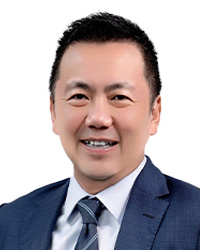
Senior Partner
Dentons
Taipei
Tel: +886 2 2702 0208 #206
Email: james.hsiao@dentons.com.tw
Meanwhile, foreign issuers may tap into Taiwan’s market through Taiwan depositary receipts (TDRs), international bonds, RMB-denominated Formosa bonds, or by applying for a primary listing of securities on the Taiwan Stock Exchange (TWSE).
These fundraising activities are governed primarily by: the Regulations Governing the Offering and Issuance of Securities by Securities Issuers; the Regulations Governing the Offering and Issuance of Securities by Foreign Issuers; the Regulations Governing the Offering and Issuance of Overseas Securities by Issuers; and the Taiwan Stock Exchange Corporation Rules Governing Review of Securities Listings.
These regulations are further supplemented by rules promulgated by the Financial Supervisory Commission (FSC) and TWSE.
A landmark development in Taiwan’s capital market was the launch of the Taiwan Innovation Board (TIB) in 2021. Historically, stringent listing requirements and high entry thresholds deterred many innovative companies from accessing traditional fundraising channels. To address these challenges, the TWSE introduced the TIB, creating a dedicated platform to support innovative enterprises.
Under the Taiwan Stock Exchange Corporation Rules Governing Review of Securities Listings, startups with critical core technologies, strong innovation capabilities or disruptive business models are eligible for listing on the TIB. These span sectors such as IoT, AI, big data, cybersecurity, biotechnology, green energy, renewable resources and national defence.
Notably, as of late 2023, the TIB’s market capitalisation has exceeded TWD150 billion (USD4.6 billion).
Listing requirements
The TIB offers a more accessible pathway for emerging industries to enter Taiwan’s securities market by easing regulatory hurdles compared to traditional listings on the main board.
Specifically, the TIB eliminates the paid-in capital requirement — a key barrier for many startups — and instead focuses on market capitalisation rather than profitability.
These shifts align with the unique needs of the startup ecosystem, allowing innovative startups that have yet to achieve profitability to access public funding and fuel their growth.
TIB trading mechanism
In light of the lower listing thresholds on the TIB, its trading mechanisms were initially designed to mitigate the higher investment risks associated with emerging companies.
When the TIB was launched in 2021, trading was restricted to qualified investors. These were defined as:
-
- Professional institutional investors or legal entities with at least two years of securities trading experience;
- Venture capital firms; and
- Individual investors with at least two years of securities trading experience and either:
-
-
- financial assets of TWD10 million or more; or
- an average annual income of TWD1.5 million over the past two years.
-
While these measures were implemented to protect investors, they had the unintended consequence of limiting liquidity for TIB-listed securities. Recognising this, the FSC and TWSE relaxed the TIB’s trading restrictions in September 2023, introducing the following key changes:
-
- Removal of minimum capital requirement. The minimum capital threshold of TWD100 million has been eliminated. Market capitalisation now serves as the core listing criterion, better reflecting the needs of the startup economy.
- Adjusted underwriting mechanism. The underwriting process for TIB listings has been adjusted to align more closely with the general IPO system. The reference price for underwriting has been reduced from 90% to 70% of the over-the-counter (OTC) benchmark price. Additionally, the minimum proportion of shares for public sale has increased from 3% to 5%. To facilitate price discovery, there are no price limits for the first five trading days.
- Transition to general market. When TIB-listed companies transition to the general stock market, they must offer at least 3% of their shares for public sale. Share allocation during the transition will be divided as 80% through bidding and 20% through subscription.
- Relaxed criteria for qualified investors. For institutional investors, the required trading experience has been reduced from two years to one year. For individual investors, financial proof has been lowered from TWD500,000 to TWD200,000, and the average annual income requirement has been reduced from TWD150,000 to TWD100,000.
Furthermore, a major regulatory reform was approved by the board of the TWSE on 26 November 2024.
The reform focuses on four key aspects:
-
- Removing restrictions on qualified investors and diversifying trading instruments;
- Enhancing the rigour of innovation evaluations;
- Creating a flexible and friendly fundraising environment; and
- Strengthening investor protection.
These amendments to the above-mentioned rules have been submitted to the FSC for approval, with implementation expected in early January 2025. The main amendments are:

Associate
Dentons
Taipei
Tel: +886 2 27020208 #209
Email: iting.huang@dentons.com.tw
Removing restrictions on qualified investors and diversifying trading instruments. To attract more domestic and international innovative enterprises and capital into the market, and to increase trading volume, the amendments remove restrictions on qualified investors, adopting general board trading mechanisms. This change is expected to increase the investor base for TIB-listed stocks from the current 300,000 to more than 13 million.
In addition, TIB-listed stocks will now be accessible through various instruments including margin trading, securities lending and intraday (or after-hours) odd-lot trading, providing investors with diverse and dynamic trading environments.
Introducing external experts to enhance the rigour of innovation evaluations. To ensure that the TIB remains a premium platform recognised for innovative enterprises, the TWSE will involve external experts to evaluate the innovation aspects of applicant companies. Only those meeting the innovation criteria will proceed to the Listing Review Committee for further consideration.
Creating a flexible and friendly fundraising environment. Companies applying for TIB listings that have already publicly sold at least 10% of the total proposed shares and meet the equity dispersion requirements at the time of application may be exempted from conducting additional public offerings. This adjustment provides greater flexibility and efficiency for TIB-listed companies seeking to raise funds.
Strengthening investor protection. Several measures have been introduced to enhance oversight and safeguard investors.
These include: raising the approval threshold for TIB Listing Review Committee decisions to at least two-thirds of attending committee members; limiting sales to group-affiliated or related entities to no more than 70% of total sales; requiring disclosure of plans to enhance corporate value for businesses experiencing severe declines or losses; mandating biannual investor conferences for all TIB-listed companies; and increasing the inspection rate of underwriting firms’ compliance assistance activities.
Key takeaway
Currently, 20 companies are listed on the TIB, including J&V Energy Technology and HD Renewable Energy, both of which have successfully transitioned to the main board. Tigerair Taiwan also migrated to the main board on 29 November 2024.
With the upcoming regulatory relaxations set to take effect in January 2025, the TIB is poised to attract a broader range of emerging industries, further broadening its scope and appeal.
These reforms are expected to foster a dynamic and vibrant ecosystem that supports the growth and development of innovative companies while reinforcing the global competitiveness of Taiwan’s capital markets.
Over time, this momentum could create a positive cycle of economic growth, improved corporate performance, and increased innovation. By attracting investment and empowering groundbreaking enterprises, Taiwan is well-positioned to solidify its role as a global hub for innovation-driven industries.
 DENTONS
3F, No. 77, Section 2,
Dunhua South Road, Taipei, Taiwan
Tel: + 886 2 27020208
Email: james.hsiao@dentons.com.tw