







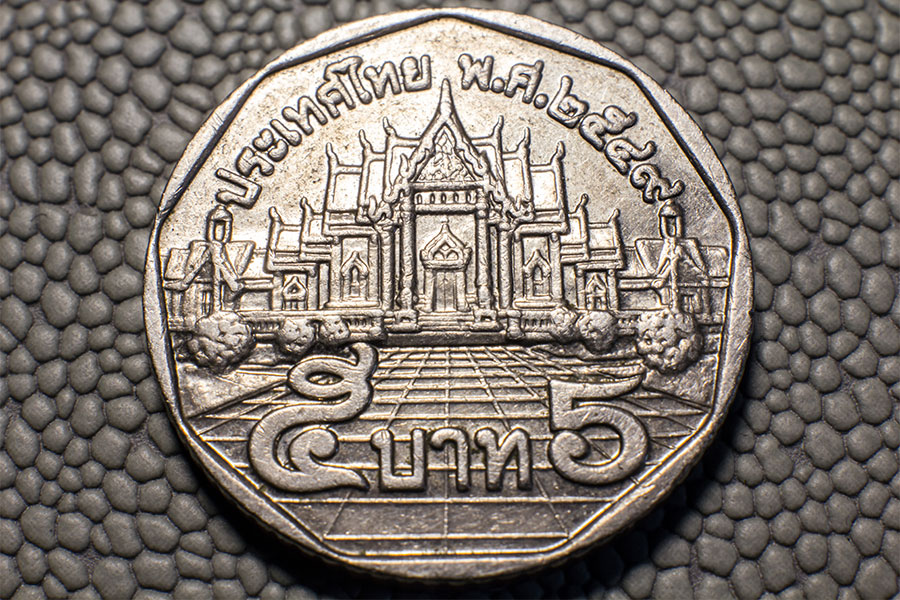


Thailand can be a regulatory conundrum when it comes to foreign investors considering setting up shop here
Thailand’s FDI rules for foreign investors
Foreign direct investment (FDI) via M&A continues to serve as a strategic entry point for international investors seeking to establish or expand their presence in Thailand. While the country’s robust infrastructure, strategic Asean location and competitive human capital offer an attractive commercial environment, investors must navigate a multi-layered regulatory landscape to ensure lawful and effective transactions.
This legal update outlines the key regulatory considerations and structuring options for foreign investors undertaking M&A transactions in Thailand, with a particular focus on compliance with the applicable laws in Thailand, licensing regimes and post-transaction obligations.
M&A methods
The purchasing of shares in a company and the acquisition of a business and assets are the most common investment methods in Thailand.

Founding Partner
Warot Advisory Services
Bangkok
Tel: +66 8 1802 5698
Email: warot@warotadvisoryservices.com
Purchasing shares. The share acquisition is the most common method for a company to acquire a target company. It is easier to implement, but due diligence must be conducted to identify risks in the target company. Indemnities and warranties shall be incorporated in the share purchase agreement.
The transfer of shares will be subject to stamp duty in Thailand at the rate of 0.1% of the greater of the transfer value or the par value.
Acquisition of business and assets. An acquisition of assets will be done where the acquirer does not wish to assume hidden legal and tax liabilities in the target company, as such legal and tax liabilities generally remain with the target company and are not transferred with the business or assets.
The Foreign Business Act may restrict foreign companies from directly holding a business or assets. Thus, a Thai company must be established to hold a business or assets in Thailand. Certain legal requirements must also be met.
The transfer of assets is normally subject to value-added tax, and certain transactional documents are subject to stamp duty and other fees in Thailand.
Joint venture company. A joint venture company will be set up between companies (either between a foreign company and a Thai company; between foreign companies; or between Thai companies) to operate a business in Thailand, which may require knowledge and know-how from both parties. In some cases, joint venture companies are established to comply with the requirements of the Foreign Business Act, where foreign companies wish to engage in a business restricted to foreign ownership in Thailand.
Relevant regulations
Civil and Commercial Code (CCC). The CCC plays an important role in private M&A transactions, which are becoming more active in Thailand. In some cases, it is advisable to consult with the registrar when deal structures are complex.
Foreign Business Act (FBA). The FBA is the most important regulation to consider when foreign companies conduct M&A transactions in Thailand. It restricts and prohibits foreign nationals and companies from engaging in certain business activities, including most service businesses in Thailand. Under the FBA restrictions, a “foreigner” is classified as a foreign individual, a company incorporated outside Thailand or a company incorporated in Thailand that is majority-owned by foreign individuals or foreign companies.
Therefore, in some cases, foreign companies shall not be able to hold more than 50% of shares in a Thai company.
Trade Competition Act (TCA). Since coming into force in 2018, the TCA has played an important role in M&A transactions in Thailand. Any transaction meeting the requirements under the TCA must comply with its provisions to obtain (1) pre-approval or (2) post-notification of the transactions. In short, pre-approval is required when the transaction would create a monopoly, while the post-notification is required when the transaction would result in less competition in the market.
Labour Protection Act (LPA). In share acquisition transactions, there will be no requirement to obtain prior consent from employees, as, legally speaking, the employer entity remains unchanged.
However, in the acquisition of a business or assets involving the transfer of employees, the LPA will provide that all rights, duties and privileges of the employees will be assumed by the new employer, and the transfer of employment must be consented to by the employees. In case any employee does not give consent or does not want to work for the new employer and the existing employer ceases operations, it shall be deemed that the employment contract is terminated, and such employee shall be entitled to severance pay from the existing employer.
Other regulations
If any party in the M&A transaction is a public limited company or listed company, the Public Limited Companies Act and the Securities and Exchange Act will be important regulations parties must consider. The Land Code (together with the FBA) must also be considered when companies acquire other companies holding land as assets. It is important to note M&A activities in various industries may be subject to different and specific regulations in each industry.
Exemptions and special regimes
Treaty of Amity (US investors). Under the US-Thailand Treaty of Amity and Economic Relations, US individuals and entities may hold a majority or full ownership in most sectors without a foreign business licence (FBL), subject to exclusion from certain sensitive activities such as land trading and communications.
Thailand Board of Investment (BOI). The BOI offers promotional privileges to foreign investors in targeted sectors, including:
-
- Up to 100% foreign ownership;
- Exemption from FBL requirements for restricted businesses; and
- Tax and non-tax incentives (such as import duty exemptions and corporate income tax holidays).
BOI applications are evaluated on a project basis and require a clear demonstration of technology transfer, local employment or alignment with Thailand’s development policies.
IEAT promotion. Entities operating within industrial zones administered by the Industrial Estate Authority of Thailand (IEAT) may be eligible for similar foreign ownership privileges, including land ownership rights.
Acquisition funding
In acquisition transactions, an acquirer must decide whether to fund the vehicle with debt or equity, or even a hybrid instrument that combines the characteristics of debt and equity.
Debt. The advantage of using debt is the deductibility of interest for tax purposes and the ease in repatriating the investment via repayment of the principal. On the other hand, the payment of dividends is not deductible, and returns of capital can be an onerous and time-consuming task. Thailand does not have thin capitalisation rules.
Equity. An acquirer may use equity to fund its acquisition. However, using equity funding may not be attractive since dividends are not deductible for tax purposes in Thailand and dividends cannot be distributed unless the company is profitable. A return of capital (equity) is also more difficult than repaying a loan.
Business transfer and other options
Under the Thai Revenue Code, a company may conduct an entire business transfer, under which the business and liabilities of one company will be transferred to another through a share swap. If all conditions are met, the entire business transfer will be a tax-free transaction.
Thailand also has an amalgamation process, where two companies can merge to form a new company. This transaction should be free from Thai corporate income tax, but any tax losses in either of the original companies will be lost. Both the original companies are dissolved as part of the amalgamation process.
The merger is a new concept under the CCC, and it will allow companies to have more flexibility when pursuing business acquisitions. Nonetheless, the new merger regime has not been widely adopted due to the lack of knowledge and uncertainty surrounding the related rules and regulations.
 WAROT ADVISORY SERVICES
1055/655 State Tower 31st Floor
Silom Road Silom, Bangrak
Bangkok – 10500 Thailand
Tel: +66 8 1802 5698
Email: warot@warotadvisoryservices.com
M&A in Thailand’s renewable energy sector
Thailand’s renewable energy sector has been back in the spotlight following the recent allocation of 6.98GW of renewable energy power purchase agreements by state-owned operators Metropolitan Electricity Authority, Provincial Electricity Authority and Electricity Generating Authority of Thailand (power purchasing agreements) and the launch of the utility green tariff (UGT) programme in January 2025.
Under the UGT-1 scheme, businesses will be able to purchase “green” electricity from state-owned hydropower plants already in operation, and a planned UGT-2 scheme will allow businesses to purchase electricity from wind, solar projects or other renewable sources operated either by state-owned generators or private-sector generators.

Partner
SCL Nishimura & Asahi
Bangkok
Email: c.osborne@nishimura.com
These developments reflect the Thai government’s ongoing commitment to sustainability and its efforts to achieve its sustainable development goals (SDGs) in line with international agreements, under which Thailand has pledged to reduce greenhouse gas emissions.
For investors, this presents a promising entry point into the Thai renewable energy market. However, navigating this space demands an understanding of a complex legal and regulatory framework. In addition to a review of engineering, procurement and construction (EPC), and operations and maintenance (O&M) contracts and correspondence, M&A transactions in the Thai energy sector involve additional regulatory considerations including licensing, land ownership restrictions and structuring complexities, particularly for foreign investors.
Regulatory framework
M&A transactions in Thailand’s energy sector require careful consideration of merger restrictions administered by the Energy Regulatory Commission (ERC) and foreign ownership restrictions imposed by other regulators, as Thailand does not have a one-stop licensing system that addresses all legal aspects of an electricity generating company. The regulatory framework is summarised below.
The Energy Industry Act (2007) (Energy Act) and the Energy Development and Promotion Act (1992) (EDP Act). Under the Energy Act, a licence from the ERC is required for the production, transmission and distribution of electricity above 1,000 Kilo-volt-amperes (kVA), as well as for activities involving natural gas. Under the EDP Act, the production of energy from sources with a total capacity exceeding 200kVA requires a regulated energy permit from the Department of Alternative Energy Development and Efficiency.

Associate
SCL Nishimura & Asahi
Bangkok
Email: n.pudphetkaew@nishimura.com
Power purchase agreements (PPAs). Renewable energy PPAs in Thailand typically range from five to 25 years, depending on the type of renewable energy and the applicable tariff structure. Tariffs may be structured as a flat rate feed-in tariff over the life of the PPA or as a variable rate calculated by adding a fixed premium to the prevailing wholesale electricity price (such as an adder rate).If the PPA has a shorter term, it does not necessarily renew automatically. The target company must comply with the renewal procedures set out in the PPA to renew the agreement. Accordingly, legal due diligence should cover:
-
- a review of the PPA to determine whether any conditions have been breached that may affect the ability to renew the PPA; and
- an assessment of any change of control provisions, including whether prior consent from the relevant utility authorities in Thailand is required for any change in the ownership or structure of the target company.
The Foreign Business Act (1999) (FBA). The FBA lists several businesses for which the majority of foreign-owned companies must obtain approval – penalties for failing to obtain approval include imprisonment for three years and fines of THB1 million (USD30,110). While the production of electricity is not restricted under the FBA, activities such as trading or on-selling electricity, or providing transmission line services, are likely to be restricted under the FBA.
A Thai company will be classified as “foreign” under the FBA if 50% or more of its shares are held by non-Thai investors, and it will require approval under the FBA to engage in restricted activities, a process which can take between one and six months, or longer.

Associate
SCL Nishimura & Asahi
Bangkok
Email: s.saowapak@nishimura.com
Land. Renewable energy projects require large areas of land, and projects in Thailand are typically situated on land under the Land Code (Chanote land and NorSor3 land), land administered by the Agricultural Land Reform Office (ALRO land), or land under the supervision of the Royal Forest Department (RFD land).
Each category of land is subject to different regulatory frameworks, and foreign ownership restrictions may apply. As a result, land use rights or land ownership may be affected, or potentially invalidated, by a foreign acquisition, depending on the nature of the land and applicable regulations. Foreign ownership of land under the Land Code is permissible in certain industrial estates, or if approval from the Board of Investment is granted; however, other land types may present challenges for foreign buyers.
M&A structure
The most commonly used structure in renewable energy M&A in Thailand is a share acquisition, rather than an asset acquisition, primarily for transactional efficiency and speed. Renewable energy projects are typically developed through a special purpose vehicle (SPV), and acquisitions are frequently carried out by acquiring shares in the SPV from the holding company.
A key rationale behind the preference for share acquisitions is the continuity of the project’s licences, permits and contracts. Share acquisitions allow these to remain with the SPV, avoiding the need to obtain new approvals or to novate existing project agreements.
In contrast, asset acquisitions often trigger significant tax implications and may require the reissuance or transfer of regulatory permits and the novation of contractual arrangements, resulting in increased complexity and transaction costs.
Merger controls
The Energy Regulatory Commission’s most recent regulation on rules and procedures for mergers and cross-shareholding in the energy business (ERC merger regulation) came into effect on 20 December 2022. This sets out the types of activities that require prior approval from ERC when a merger or acquisition takes place between two licence holders under the Energy Industry Act (licensees). The M&A activities requiring prior approval under the ERC merger regulation include the following:
-
- Merger or amalgamation between licensees where one entity continues to exist and the other is dissolved, or where a new entity is formed;
- Acquisition of assets exceeding 25% of another licensee’s assets related to energy business operations;
- Share acquisition (including through instruments such as warrants or other securities) resulting in control over another licensee, whether directly or indirectly; and
- Acquisition of control over a licensee or its controlling entity when holding less than 25% of the total shares.
Exemptions from the approval requirement are available in certain circumstances, including if the total assets used for energy business operations after the merger or amalgamation do not exceed THB1 billion. Other exemption criteria are prescribed under the ERC merger regulation.
The merger regulations also govern cross-shareholding between licensees, which similarly requires ERC’s approval.
In addition to the ERC merger regulations, the energy commission has enacted the regulation on rules, procedures and conditions for the transfer of licences to operate energy businesses (ERC transfer regulation). Under this regulation, the original licensee is required to seek prior approval from the ERC before transferring its licence. The key factors considered by ERC in determining whether to approve a licence transfer are as follows:
-
- The impact on market monopoly and competition;
- The impact on the transferor’s contractual partners and energy consumers; and
- The impact on energy security and public welfare.
Change of control
Apart from a change of control provisions at the contractual level, it is important to highlight that in most bidding rounds for power purchasing agreements, the ERC imposes restrictions on changes in the shareholding structure of companies to which a PPA has been awarded.
The original shareholders of a company awarded a PPA are typically required to maintain a minimum shareholding percentage, commonly 50% or 51% of total shares, until a specified period has passed, often three years following the commercial operation date.
Conclusion
The Thailand renewable energy sector’s key issues include licensing, foreign ownership restrictions, land regulations and the ERC approvals for mergers and licence transfers. Thorough legal due diligence and careful structuring are key roles to ensure compliance and maintain project continuity.
 SCL NISHIMURA & ASAHI LIMITED
 NISHIMURA & ASAHI (BANGKOK)
34th Floor, Athenee Tower, 63 Wireless Road
Lumpini Pathumwan, Bangkok 10330, Thailand
Tel: +66 2 126 9100; +66 2 126 9109
Email: c.osborne@nishimura.com
Read the related article here:
Opportunity knocks
Thailand’s proposed reforms to its foreign business act promise a long-desired open investment climate, but questions of clarity, enforcement and fairness remain

For more stories about Thailand, visit law.asia.