










Is this genuine trade, or irregular financing in disguise? How do companies avoid the trap of fraudulent circular trading? Robin Luo, chief legal officer for North Asia, and Ashley Xu, senior legal counsel, at Louis Dreyfus company break down the essentials
Bulk commodity trading runs on scale and speed. Ticket sizes are large, chains are long, and parties are many. Physical flows, information flows and cash flows are tightly interwoven, spinning an inherently complex web.
Under pressure from tighter liquidity and sharp competition, structures sometimes emerge that move cash, not goods, in the name of trade. The fallout can be severe: courts may look through the contract form; title can slip out of control; and civil disputes can spill into criminal exposure.
For in-house legal teams, the priority is to put in place governance that is explainable, verifiable and auditable, so that there can be balance between commercial momentum and compliance.
What circular trading looks like
A straightforward sale should rest on real delivery, contracts and settlement terms should add up commercially, and profit should come from market spreads and execution.
Problem cases tend to show the opposite pattern: goods are never delivered, or delivery cannot be proved; the contract chain closes into a loop; parties repeatedly buy high and sell low; spreads and payment terms are fixed and decoupled from the market; intermediaries do not carry meaningful commodity risk and act mainly as a booking conduit; and large prepayments and fixed tenors start to look less like trade credit and more like maturity plus funding cost.
The most typical form of circular trading sees goods change hands several times and end up back with the original seller or an affiliate, exhibiting several of the above-mentioned deviations. When such deviations stack up in a dispute, adjudicators often pivot to economic substance and recharacterise the transaction as “a sale in name, a loan in fact”.
That re-labelling changes everything: “purchase price” may be treated as principal; the “spread” as interest; and fees charged by other participants as channel or conduit fees. The trade itself may be held entirely or partially invalid, with parties on the chain assuming liability based on faults and benefits. Even a conduit party with modest earnings can, in certain circumstances, face joint and several liability or supplementary liability if its role created a reasonable expectation of credit enhancement for others.
Test the authenticity
Published cases indicate that courts tend to work along the following three tracks when they see “abnormal trades”.
-
- Can the physical movement of goods be verified? Invoices and counterparties’ internal paperwork – delivery/receipt slips, title transfer notes, warehouse in/out documents – are rarely enough on their own. Independent, objective proof such as transport records, warehousing documentation, weighbridge tickets, inspection certificates and similar third-party or operational data are often necessary. Without them, the evidence chain often has a fatal gap, and goods cannot be proven to even exist.
- Do contracts and cash flows form a closed loop? Red flags include same-day fund “round-tripping” and circular settlement patterns. Related party links and sustained loss-making trades further weaken any claim of commercial rationale.
- Is the trade systematically detached from market pricing? A stable, fixed spread paired with a fixed payment term can look less like trade economics and more like a loan’s “interest + tenor”. That is a common trigger for substance-over-form scrutiny.
Warehouse weaknesses can compound the problem. If warehouse receipts cannot be authenticated, responsibilities are blurred, or system audit trails are thin, a court may view the warehouse leg as facilitating the structure or failing to meet expected standards of care.
Red flags
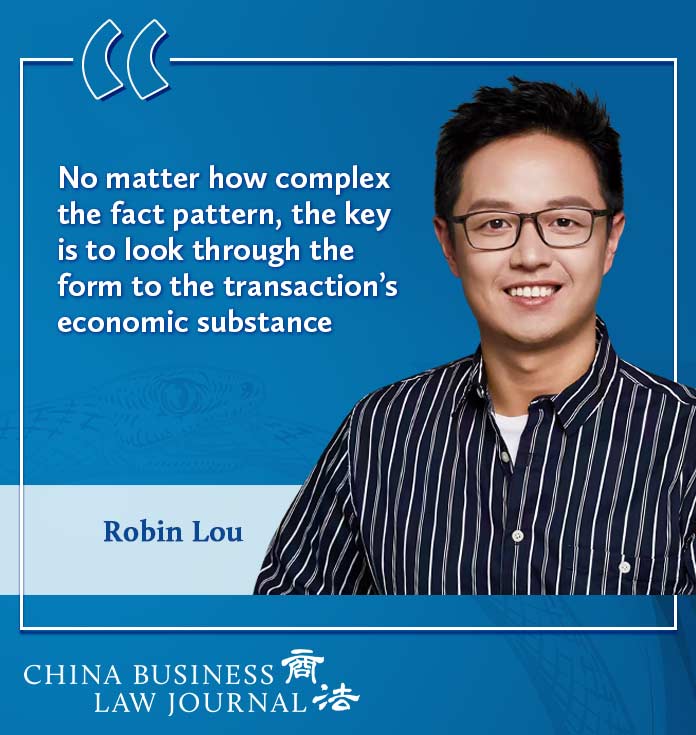
Frontline business teams often ask what should trigger a cautionary pause? The answer is simple in principle: No matter how complex the fact pattern, the key is to look through the form to the transaction’s economic substance.
Reassess the structure and the proof base when you see, for example: a contract chain stretched without commercial necessity; counterparties “assigned” by a third party, with signing and performance also routed through that third party; goods that cannot be earmarked to a specific batch or location; breaks in the goods’ evidence trail; locked-in spreads and set payment tenors that are out of line with market pricing; large prepayments that do not match risk; warehousing that is not independently verified; inventory figures that shift across documents or time; contract language that drifts into “loan”, “advance funding” or “interest”; or counterparties with clusters of litigation and compliance issues.
No single signal is decisive. Several in combination should prompt a deeper review, not least to prevent a financing-type trade, or even contract fraud.
You must be a
subscribersubscribersubscribersubscriber
to read this content, please
subscribesubscribesubscribesubscribe
today.
For group subscribers, please click here to access.
Interested in group subscription? Please contact us.
你需要登录去解锁本文内容。欢迎注册账号。如果想阅读月刊所有文章,欢迎成为我们的订阅会员成为我们的订阅会员。