



As debate swirls around ownership of AI-generated content, what are the lessons for India on anchoring AI in copyright law? Katherine Abraham reports
When Donald Trump’s former lawyer, Michael Cohen, was found guilty of submitting citations of non-existent cases, or what the court later referred to as “hallucinations”, Cohen chose to plead ignorance. That was despite the fact that he was the one who sourced the citations through the open-search Google Bard (now Gemini), a multimodal large language model (LLM) of artificial intelligence (AI). Cohen’s lawyer took the fall as the judge admonished him to verify AI-generated case citations.
Soon afterwards, commenting on the lapses, US Supreme Court Chief Justice John Roberts described AI as a mixed blessing that ought to be used with “caution and humility”. Roberts highlighted both the efficiency AI can bring to legal processes and the potential risks of over-reliance on AI-generated content.
The propagation of AI search engines is revolutionising the way we think, work and approach problems. The intersection of AI and the law has us in unchartered waters, with early trends showing that the traditional legal system may fall prey to such hallucinations – fictional interpretations that create falsities.
Regarding AI and copyright law, a number of high-level disputes have taken place internationally between AI companies and media giants in the domains of journalism and entertainment.
With music, books and other copyrighted material being fed to the LLMs, driving the machines to deliver optimal output, the question of how to protect creatives from their work being exploited remains.
In the recent US case of Authors Guild v OpenAI, the plaintiffs submitted in a written statement: “OpenAI’s LLMs endanger fiction writers’ ability to make a living, in that the LLMs allow anyone to generate – automatically and freely (or very cheaply) – texts that they would otherwise pay writers to create. Moreover, OpenAI’s LLMs can spit out derivative works: material that is based on, mimics, summarises, or that paraphrases plaintiffs’ works, and harms the market for them.”
Shashi Tharoor, a member of parliament from Thiruvananthapuram and former chairman of the parliamentary standing committee for IT, says: “On the one hand, authors would go broke if their copyrights weren’t respected and, on the other, innovation would be impossible if vast amounts of copyrighted work were not allowed to be used to train new AI systems.”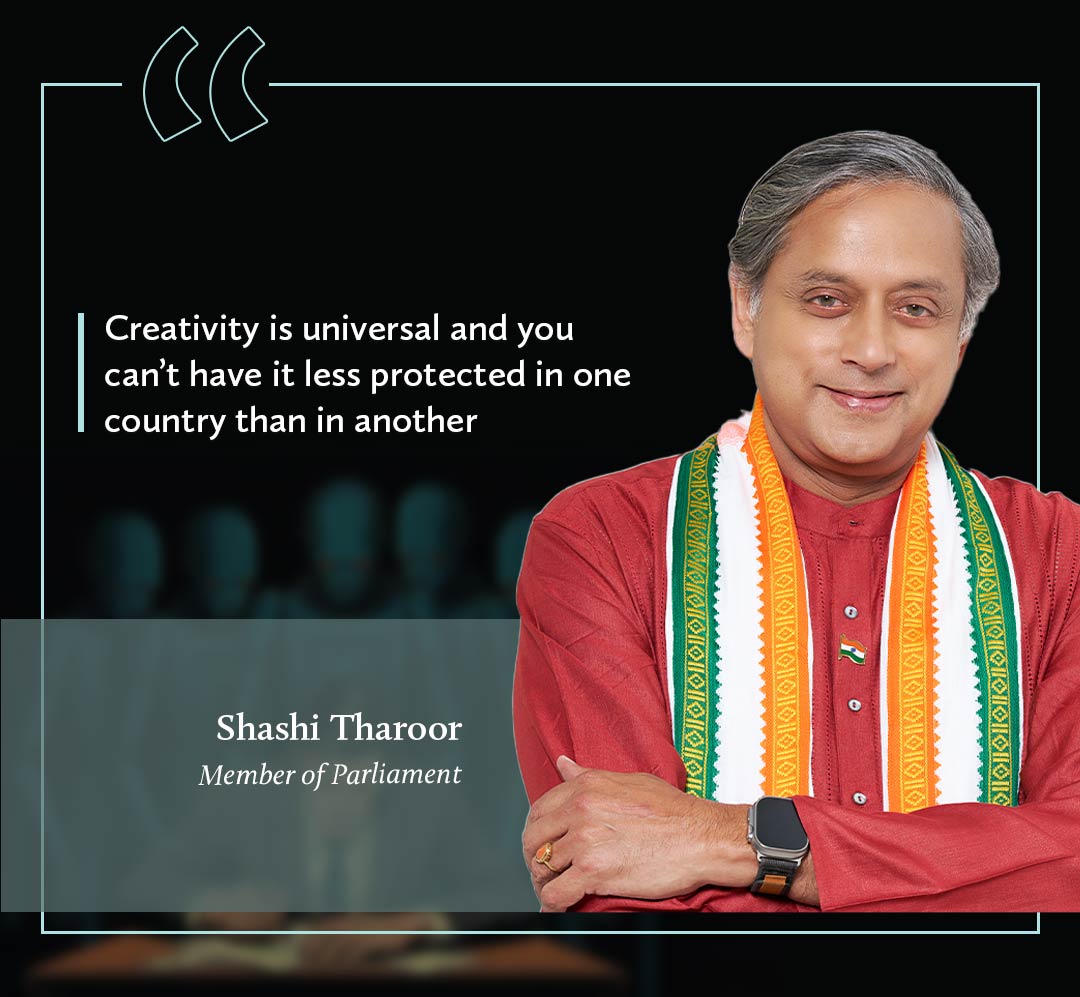
In a recent case, Sony Music and Warner Records, among others, filed a lawsuit against the AI-powered music services Suno and Udio, alleging copyright infringement. The plaintiffs claimed AI-generated tracks resembled their artists’ original music, which led to potential revenue loss. They implored the court to recognise that “AI companies, like all other enterprises, must abide by the laws that protect human creativity and ingenuity”. The plaintiffs added: “There is nothing that exempts AI technology from copyright law, or that excuses AI companies from playing by the rules.”
Astha Negi, a partner in the trademark and copyright team at Fidus Law Chambers in Noida, says that when AI produces an artwork, whether it be literature, a song or visual art, that is substantially similar to a copyrighted piece, “the company could be held responsible for the infringement”.
Utsav Mukherjee, founder of IP and tech law-focused firm Law Offices of Utsav Mukherjee in Gurugram, says any AI, no matter how advanced, efficient or close to human abilities, derives its intelligence from troves of data available across the web, and from electronic devices. “Huge lawsuits like these are inevitable, across jurisdictions,” he says.
Balancing the protection of IP with the need for innovation is increasingly complex in the age of AI, and this is evident elsewhere in the world in recent legal battles such as the 2023 Zarya of the Dawn case, centring on a copyright dispute involving AI-generated art. Kristina Kashtanova, the creator of the comic book Zarya of the Dawn, used AI to generate images for her storyline. The story, which was original, received copyright that protected both the written and visual content.
However, the US Copyright Office that had granted comprehensive copyright protection for the comic retracted the decision and registration for the AI-generated images, arguing that copyright law only protected human-created works.
Kashtanova challenged the decision, leading to a legal debate on whether AI-generated content can be copyrighted.
Swati Sharma, partner and head of IP practice at Cyril Amarchand Mangaldas (CAM) in New Delhi, says: “From an author’s lens, it is pertinent to explicitly disclose in your claim whether any AI assistance has been sought. Accordingly, the copyright office is likely to give a certificate that explicitly excludes any work generated using assistance from AI, and only include the author’s contribution, such as done in the Zarya of the Dawn case.”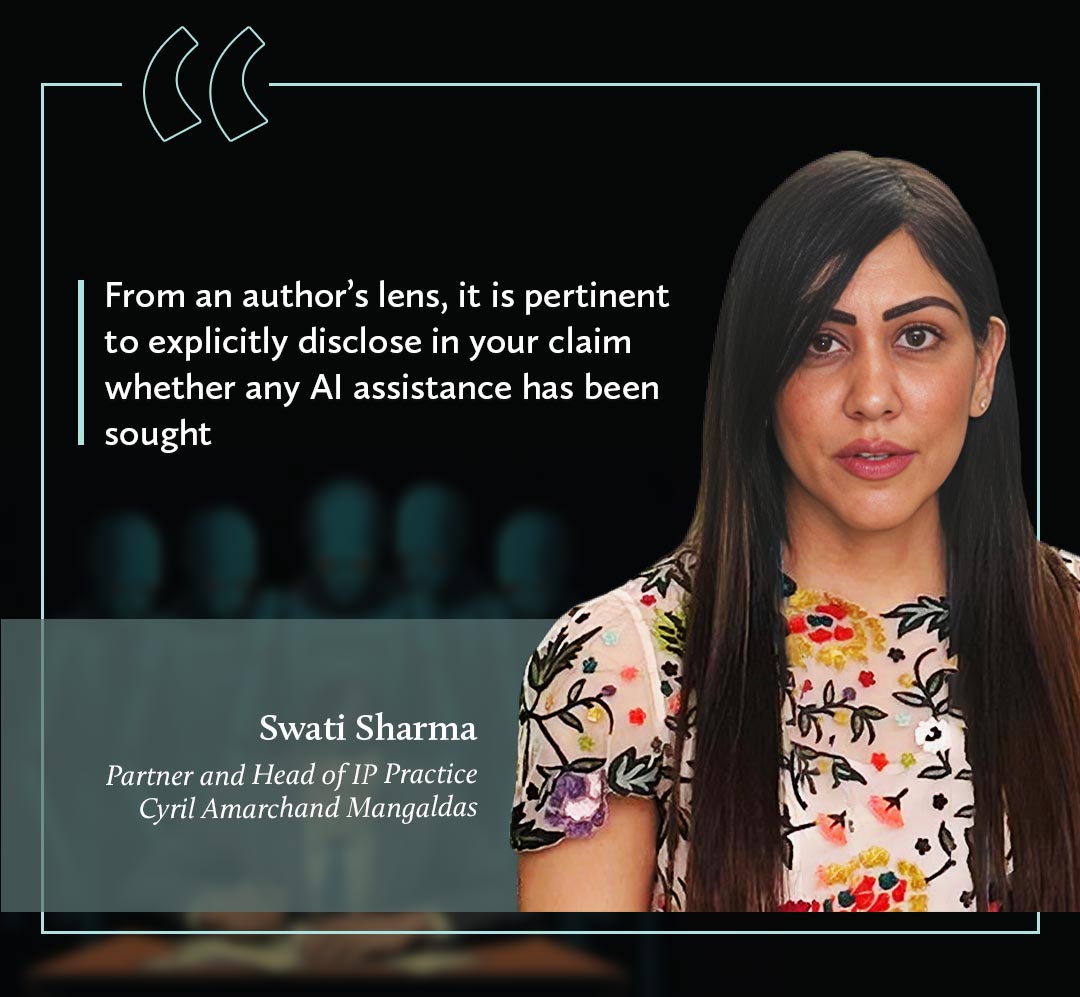
While the US grapples with the complexities of AI and copyright, China has chosen a more definitive stance. “China’s approach to AI-generated content is a bit more evolved,” says Medhavi Mishra, a tech and IP-focused lawyer at Panda Law in Noida. “The Beijing Internet Court has recognised AI-generated works as copyrightable if they exhibit originality and human oversight.”
Mishra is referring to the 2023 case of Li v Liu, in which the Beijing Internet Court ruled that an AI-generated image created using Stable Diffusion software was copyrightable, setting a precedent.
The court determined that the AI-generated image reflected the plaintiff’s original intellectual input and personal expression, making it a work of human authorship. The defendant had used the image without permission, leading the court to order compensation and a public apology. This case became the first in China to recognise copyright for AI-generated content.
However, on a close reading, the court also ruled out the possibility that an AI service itself could be considered as an author of a copyrightable work because AI is not a human being.
Mukherjee is cautiously optimistic on the judgment and calls for better safeguards. “It’s rather good for creators, as they can get AI-generated work copyrighted, if they have applied skill to create such work,” he says.
Sumit Roy, a commercial litigator and managing partner of Claritas Legal in Noida, adds: “Copyright laws the world over recognise this principle. It is also well settled that it is not the idea but the expression of the idea, whether literary, dramatic, musical or artistic work, which is copyrightable.”
Mishra talks about Singapore’s recent legal reforms that “exemplify a progressive approach” and are “allowing businesses and researchers to use copyrighted materials for computational analysis without needing prior permission, provided that the use is lawful and not profit-driven”.
Critical questions also surround fairness and compensation in the evolving landscape.
“On balance, the dissemination of knowledge is surely more important than the private interests of individuals,” says Tharoor, who is also an international best-selling author. “But how does one reconcile that logic with the private profits made by AI companies, while the writers [that AI is] cannibalising languish without compensation?”
CAM’s Sharma says: “In certain cases, the terms of use of AI may clarify copyright ownership issues. The issue at large is also whether [generative] AI itself qualifies as original work or derivative work, or will be considered an infringement of the original work that AI used to create the generative work.”
Mukherjee refers to a judgment in the Eastern Book Company case, rendered in 2008, which discussed the concept of derivative work. “The judgment explains that derivative work is work derived from prior existing sources, which involves application of some degree of skill, intellect and judgement, and is distinguishable from the original work. Derivative work is not considered infringing,” he says.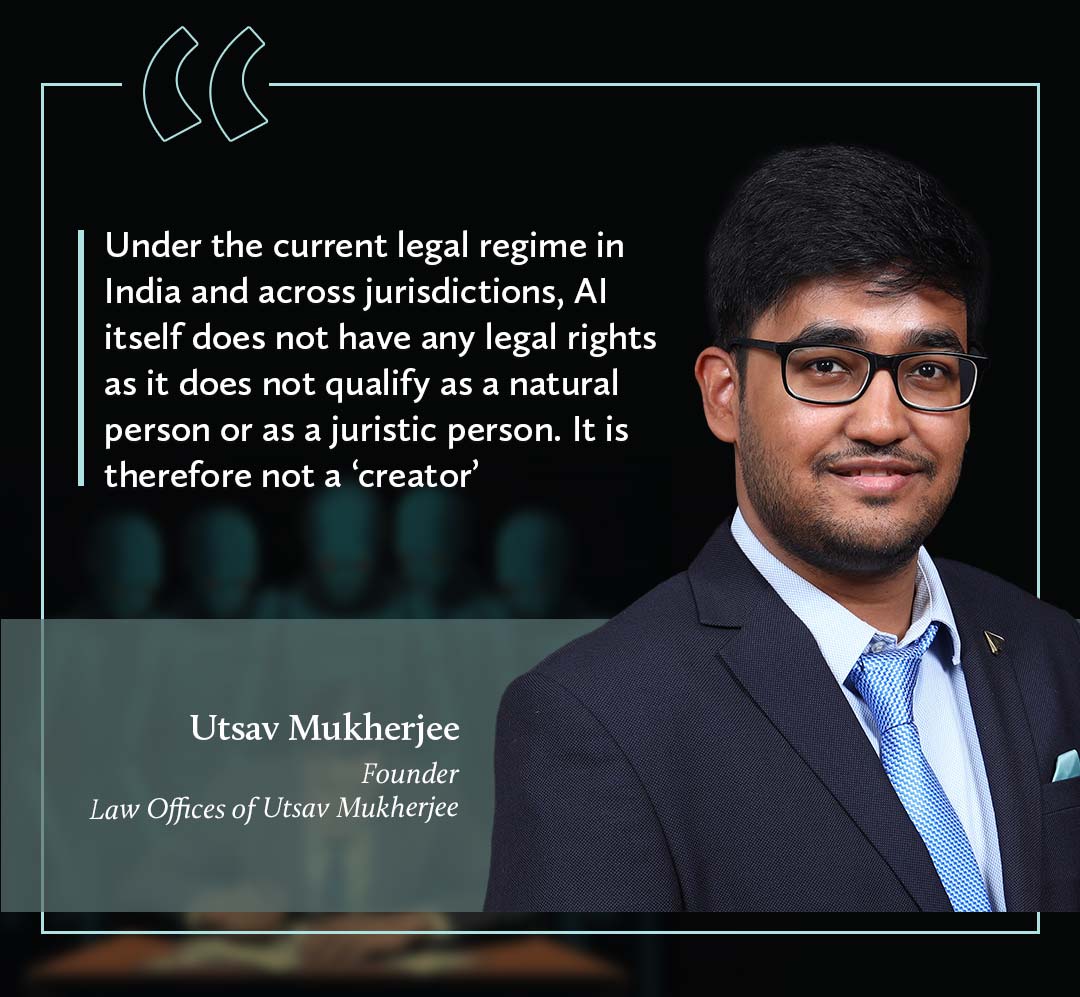
The infusion of new ideas can complicate matters further. “[In] a case study from India, an applicant, Ankit Sahani, who owned Raghav, an AI-based painting app, filed two copyright applications for the AI-generated artwork, Suryast,” says Sharma.
“In the first copyright application, the application was filed in the name of the AI app, Raghav, and this was rejected by the copyright office as the author was not a natural person.
“In the second application, the applicant mentioned himself and Raghav as the co-author, and this application was registered. The copyright office subsequently raised objections and sought to cancel the registration.”
Sharma says there are no definitive answers to date on ownership. “[While] our laws aim to only recognise a natural person as the owner, the question still is [who] will the owner be, the AI creator or the AI user?”
Negi, at Fidus Law Chambers, adds: “The current legal framework [in India] does not explicitly address these scenarios, and future legislative or judicial clarifications may be needed to resolve these ambiguities.”
You must be a
subscribersubscribersubscribersubscriber
to read this content, please
subscribesubscribesubscribesubscribe
today.
For group subscribers, please click here to access.
Interested in group subscription? Please contact us.
你需要登录去解锁本文内容。欢迎注册账号。如果想阅读月刊所有文章,欢迎成为我们的订阅会员成为我们的订阅会员。