





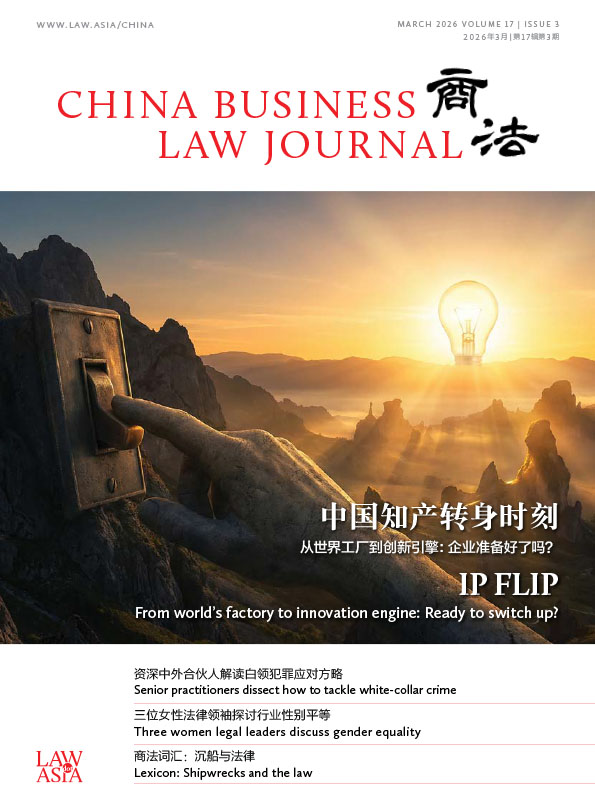





China’s recent surge of equity-related disputes reflects testing economic times – and the importance of swift, effective resolution. Sophie Cheng reports
With China’s economic juggernaut straining to pivot under intensifying regulation, it is little surprise that capital market and financial investment sectors have lately become a hotbed for disputes.
An annual report compiled by the Supreme People’s Court (SPC) indicates that the number and total disputed amount of arbitration cases handled by arbitration institutions nationwide posted year-on-year growth of 27.8% and 17.7%, respectively.
Among commercial mediation organisations, the China Council for the Promotion of International Trade (CCPIT) similarly mediated a record number of commercial mediation cases in 2023, with year-on-year growth soaring 31% and the total amount under dispute also showing a yearly increment.
Along with the surge of conflicting interests in equity investment, numerous challenging issues and developments are emerging in tandem with the new Company Law.
Looking ahead beyond looming socioeconomic challenges, diversifying dispute resolution mechanisms and groundbreaking applications of legaltech, new demands unfolding from economic and industrial transformation further underline the necessity for both legal academics and practitioners to keep their wits sharpened and up-to-speed.
Where disputes abound
Amid the ongoing macroeconomic fluctuations and market uncertainty, businesses are being hit with the double whammy of falling revenue and shrinking market value, setting back many capital market ambitions and listing plans. Some sectors, such as off-campus education and training, have been all but cut off from capitalisation due to policy adjustments.
Meanwhile, publicly filed bankruptcy cases nationwide exceeded 78,000 up to September this year, notes Lyu Yi, a Shanghai-based partner at Guantao Law Firm. In addition, with a higher bar set for domestic IPOs and a slowdown in the vetting process, going public is no longer a relatively easy feat.
In light of this, Zhou Zheren, Shanghai-based managing partner at Grandall Law Firm, notices investors generally adopting a cautious stance, resulting in shrinkage of new capital investment across the market. At the same time, investors are re-evaluating existing investments and exploring suitable exit mechanisms.
In the field of dispute resolution, Zhou says: “This trend is reflected in the declining number of cases related to new investments, such as equity investments, joint venture contracts, and capital increases, while the number of cases related to investment – such as disputes over equity repurchases and exits from asset management products – has seen a sharp increase.
“This reflects investors’ reassessment of risks and growing demand for liquidity.”
In particular, Rocky Ji, managing partner and head of dispute resolution at the Beijing office of East & Concord Partners, notes that, in the field of equity investment, judicial opinions on the legal nature of investor’s repurchase rights and the reasonable period for exercising them have triggered widespread concern within the industry.
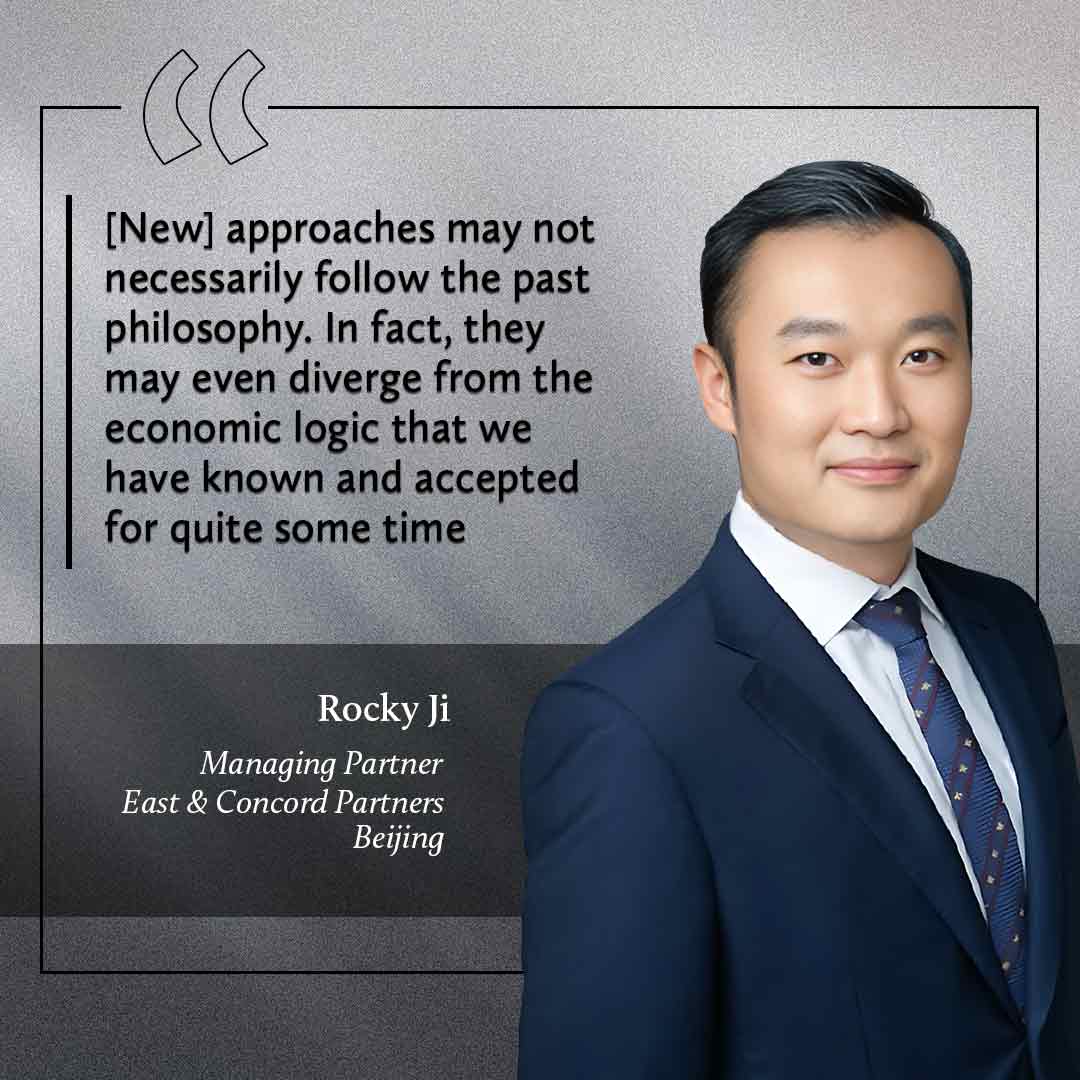
In areas such as securities investment and private equity investment, he says that claims arising from industry regulation and penalties are piling up.
Internally, conflicts between fund LPs (limited partners) and GPs (general partners) are also escalating. Li Qi, a Beijing-based managing partner at Tian Yuan Law Firm, explains that when a fund cannot arrange a timely exit or face massive investment losses, the LP – unwilling to accept a total loss – may seek to somehow shift the blame onto the GP, leading to frequent disputes. “How to define the boundaries of the GP diligence and degree of accountability are also heated issues that require further deliberation,” he says.
Mu Fei, a Beijing-based partner at Hylands Law Firm, says that litigation and arbitration involving corporate control and infringement of shareholders’ rights and interests – as well as disputes involving Sino-foreign joint venture (partnership) contracts – have led to a growing number of complex cases.
The latter mostly stems from the establishment of Sino-foreign JVs or partnerships back in the 1990s, when introducing foreign capital was popular. Now that the domestic investment and market environment has drastically shifted, a series of contractual disputes has broken out.
“When it comes to current financial disputes, they are not so much resolved as transmitted,” says Yang Guang, Beijing-based founding partner of Lantai Partners. Yang summarises the significant changes in these dispute-prone areas into two aspects.
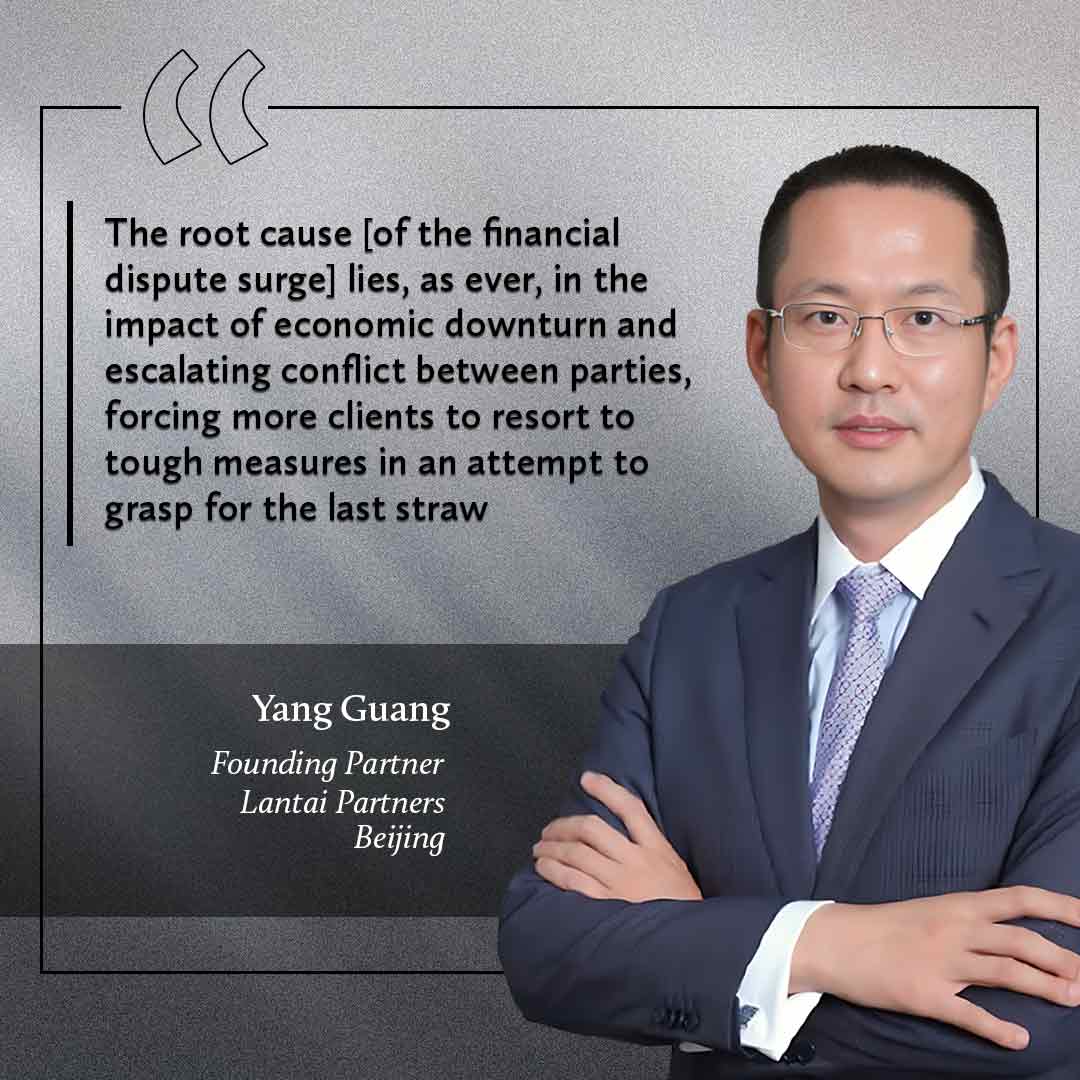
First, he sees a narrowing of the framework for resolution where investors, instead of seeking incremental gains of the underlying assets as they originally did, now play the zero-sum game among themselves.
Second, parties focus on the goals of interim measures and enforcement but overlook the difficulties of making them happen, particularly when they apply the look-through principle in trials, which sometimes adds a great deal more related parties into the list of respondents.
“The root cause lies, as ever, in the impact of economic downturn and escalating conflict between parties, forcing more clients to resort to tough measures in an attempt to grasp for the last straw,” he says.
All about the equity
In view of the current challenges in the capital market, many lawyers agree that share repurchase ranks among the most prominent hot topics of debate, with prominent cases attracting widespread attention.
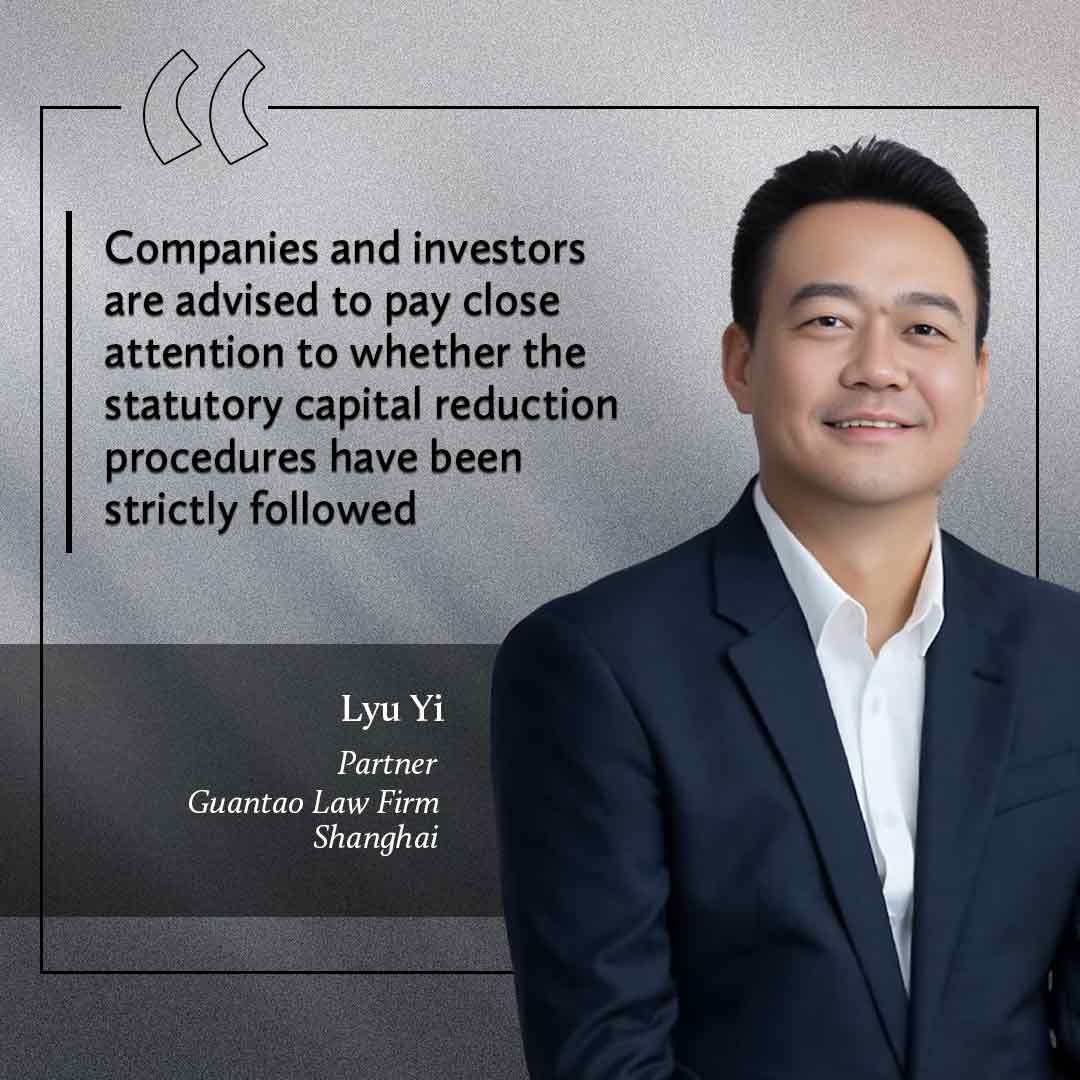
Lyu, of Guantao, says that the market’s primary focus is the legality of share buyback. “Judging from current judicial practice, it is often difficult to obtain court support for an equity repurchase request that fails to comply with the statutory capital reduction procedures,” he says.
“Therefore, companies and investors are advised to pay close attention to whether the statutory capital reduction procedures have been strictly followed.”
However, due to China’s registered capital system and the penchant of protecting creditors, Li, of Tian Yuan, cautions that investors can find it challenging to request invested companies to repurchase their shares in accordance with the capital reduction requirements.
The exercise and limitation of shareholders’ right of preemption is another issue that cannot be ignored. Lyu suggests that companies and investors keep a close eye on the validity of equity transfer contracts, the legal risks during the transfer process, and how to ward off such risks via sound clause design.
Notably, Lyu questions that under certain circumstances, if the company’s assets are in good condition and no excessive damage has been caused to other creditors, whether certain flexibility should be considered when dealing with share repurchase requests – even if the company did not fully comply with statutory capital reduction procedures – lest it becomes a rigid, one-size-fits-all system.
As long as the investors’ need for exit persists, Alex Huang, a Shenzhen-based partner at Llinks Law Offices, believes that the surge of buyback-related cases will continue for the next couple of years.
“Even if some investment firms are reluctant to initiate buybacks, can they remain so poised after fellow investors have launched their own buybacks? For founders who did not sign any bet-on agreement, can they accept new value adjustment mechanism [VAM] arrangements when the business is in dire need of financing to even survive? These are questions that all companies and investors should think about,” says Huang.
Fu Changyu, a Beijing-based equity partner at Zhong Lun Law Firm, detects a shift in the wind of public opinion on equity disputes that may be unfavourable to investors, having witnessed burgeoning attempts to adjust the contractual agreements and add restrictions to the compensation and repurchase rights.
Fu advises that investors, if involved in such disputes, should act quickly to resolve the issue or exercise their rights. “At the moment, courts’ opinions are still influenced by the greater environment,” she says.
Enforcement remains a major challenge. Li says that, in equity disputes, there is consensus on issues such as repurchase by the actual controller, or at the shareholder level, leaving little room for discord. “The main issue is whether actual controllers can fulfil the obligation at all.”
According to Fu, “the enforcement of a favourable decision, whether from arbitration or court, can be quite difficult. Property investigation, preservation and increased security measures should all be considered well in advance.”
Lyu points out that “no property available for enforcement” is a common thorn for investors, and some courts’ tendency for prudence in “pre-litigation property preservation” rarely helps.
Addressing the issue of enforcing judgments against bankrupt companies bereft of any assets, the SPC issued the Opinions on Regulating and Strengthening the Handling of Pre-trial Preservation Cases earlier this year. The opinions, setting detailed standards on the procedures and requirements of property preservation, officially came into effect on 1 March 2024.
For companies, Lyu suggests that they should closely watch their own cash flow to avoid broken capital chains due to unenforceable assets, and take timely interim measures to safeguard their legitimate rights and interests.
Against these complex issues, Sun Shiqi, a Shanghai-based partner at Jingtian & Gongcheng, believes that investors and companies may need to focus on how better to resolve rather than expand conflicts in the event of disputes over equity exits.
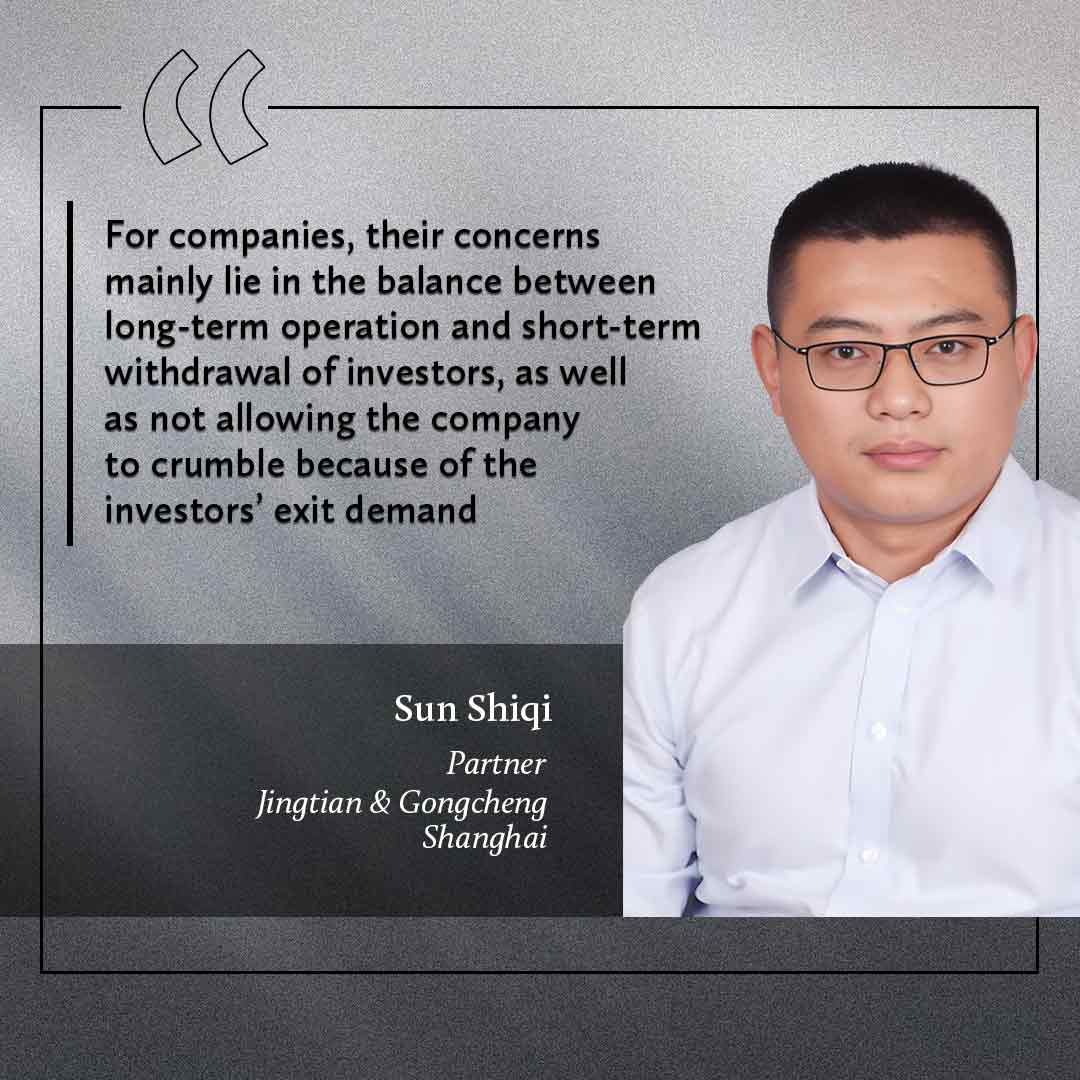
“For investors, simply obtaining a favourable buyback decision that follows the terms of the agreement may not be their ultimate goal. Instead, securing the right price for exits from the company and its founders is often far more important,” says Sun.
“They are also advised to pay attention to the evolution of subsequent judgments, particularly whether they will lead to limitation or loss of investors’ rights granted by VAM agreements, and when and how they should exercise their rights.
“For companies, their concerns mainly lie in the balance between long-term operation and short-term withdrawal of investors, as well as not allowing the company to crumble because of the investors’ exit demand.”
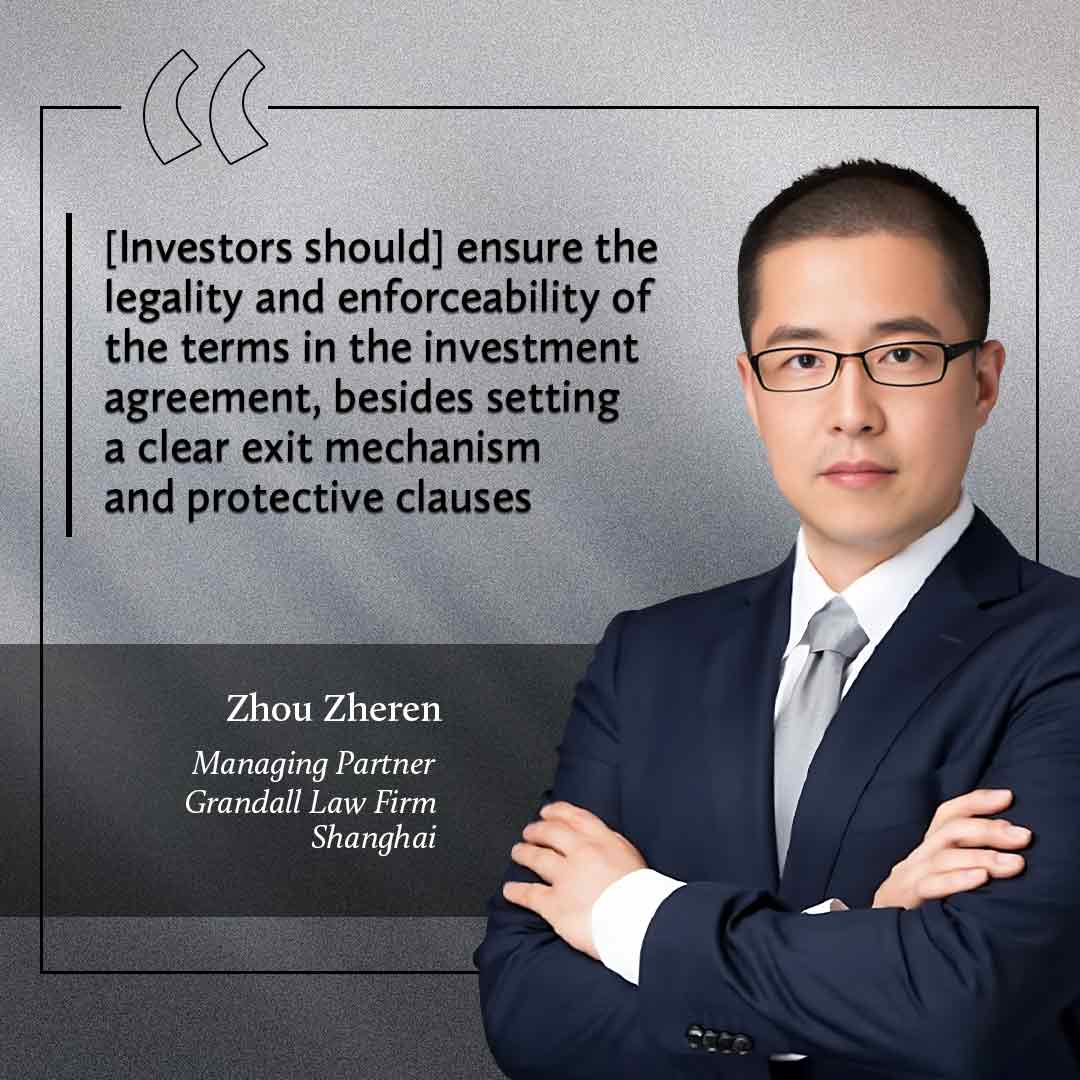
Zhou, of Grandall, says investors should “comprehensively consider the risk premium of the market and their own risk tolerance when making investment decisions, and ensure the legality and enforceability of the terms in the investment agreement, besides setting a clear exit mechanism and protective clauses”.
“For companies, it is particularly vital to set reasonable conditions for equity investments and buybacks,” says Zhou. “Companies need to formulate feasible investment terms based on macroeconomic analysis, market trend forecasts and internal financial situation, to mitigate the potentially massive compensation risk caused by the failure of VAM agreements.”
Ji, of East & Concord, urges investors to put the review of past projects onto the agenda as soon as possible, focused on: whether the conditions for exercising rights of repurchase have been fulfilled; whether the exercise period has been agreed; whether the notice of rights exercise has been issued within a reasonable period; and whether the wording of the notice is precise and clear.
For future projects, he suggests that investors should reconstruct the logic of repurchase clauses to further align with judicial policy changes and avoid possible risk of losing the rights.
Protecting smaller interests
The revised Company Law came into effect on 1 July 2024, and with its implementation Yang, of Lantai, expects to see more diverse litigation concerning the corporate capital system, corporate governance structure, protecting minority rights, responsibilities of directors and supervisors, and credit enhancement measures such as the letter of credit.
“The standards for rulings will align over time, and the trend of policy-driven judicial review will become increasingly evident,” he predicts.
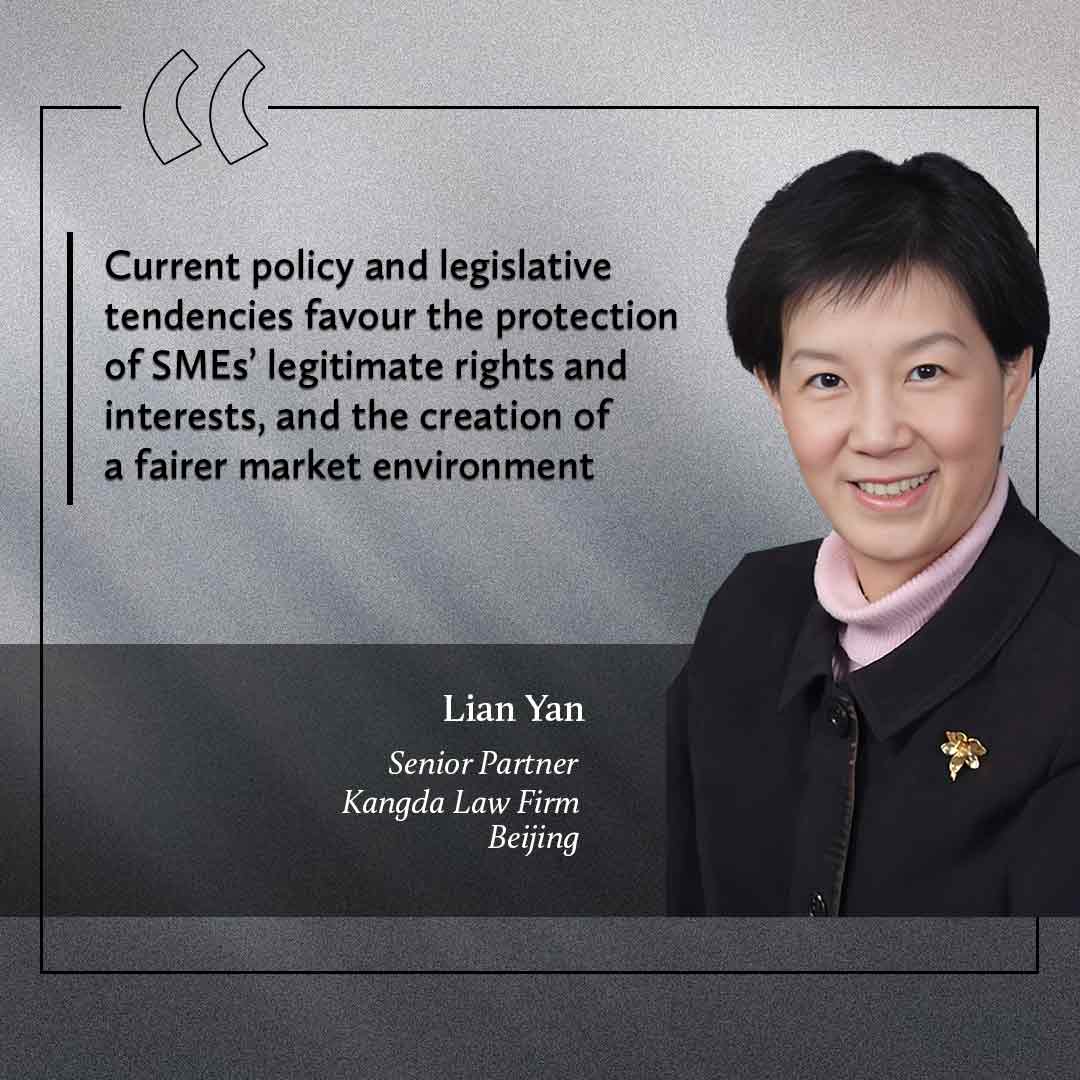
Meanwhile, the judicial interpretation on the “back-to-back” clause issued by the SPC at the end of August clarifies that agreements between large companies and small and medium-sized enterprises (SMEs) – which make third-party payment a prerequisite for payments – are invalid. This is conducive to preventing large companies from delaying payments to SMEs.
Lian Yan, a Beijing-based senior partner at Kangda Law Firm, says: “It is evident that current policy and legislative tendencies favour the protection of SMEs’ legitimate rights and interests, and the creation of a fairer market environment.
“Specifically, they are designed to ward off major shareholders’ excessive control and avoid situations where large companies have absolute say in transactions,” says Lian.
Since “back-to-back” provisions are now invalid, she advises that large companies should evaluate the risks they bear and refrain from unreasonable competition practices. They should also reassess financial risks and capital strain to decide whether to adjust project quotations.
Li Zhao, a Beijing-based partner at Commerce & Finance Law Offices, points out that the most notable regulatory issue under the new Company Law is the provision of credit enhancement and liquidity support by major shareholders for listed companies in financing activities such as private placements.
“The highest judicial authorities have adopted an approach different from the past, which holds that such arrangements involve unfair treatment of minority investors and should therefore be deemed invalid,” he says. “Their line of thought increasingly aligns with that of the regulatory agencies.”
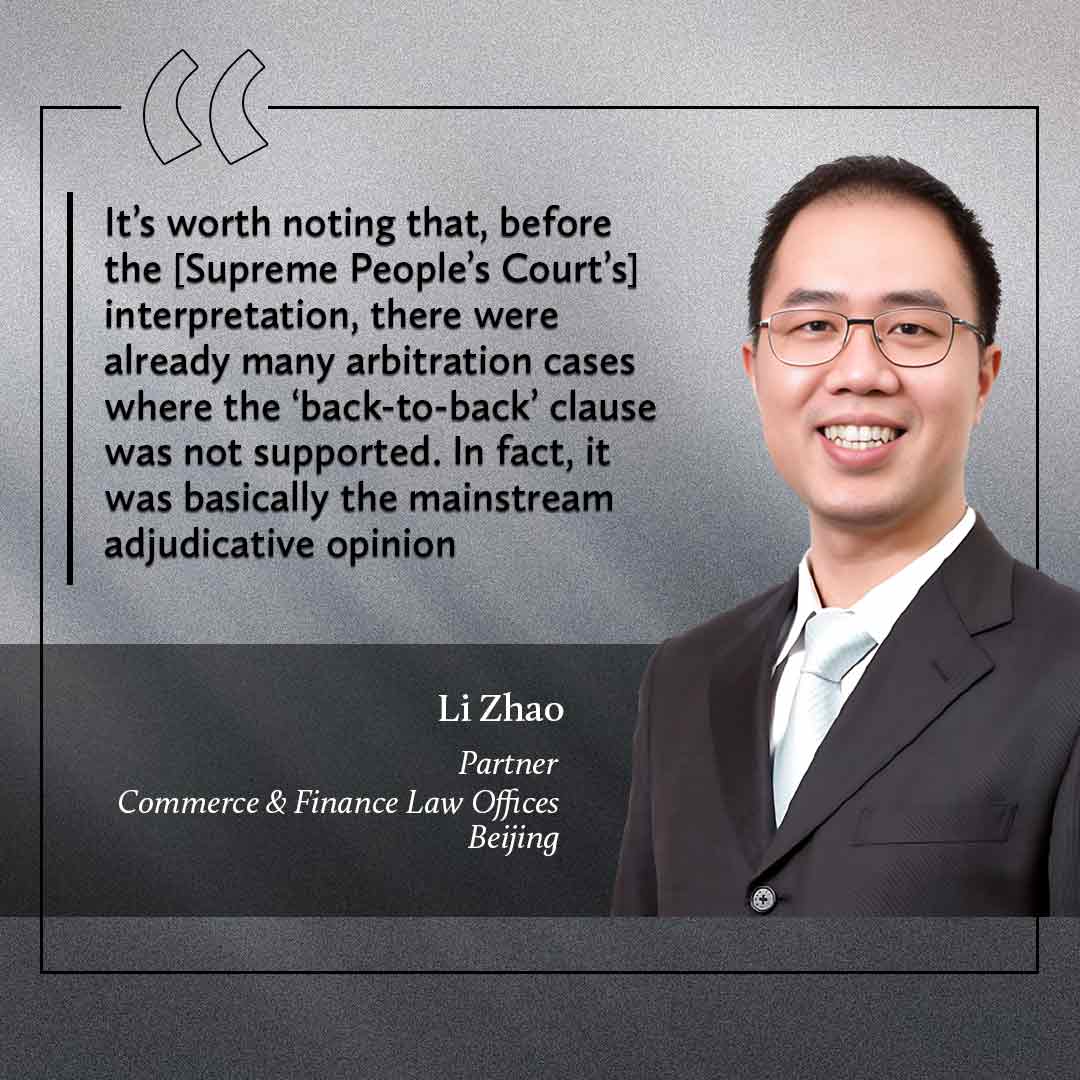
He adds that the judicial interpretation of the “back-to-back” clause effectively solves a chronic problem in the engineering sector, going a long way to protecting the interests of SMEs. “It’s worth noting that, before the interpretation, there were already many arbitration cases where the ‘back-to-back’ clause was not supported. In fact, it was basically the mainstream adjudicative opinion.”
Sun, of Jingtian & Gongcheng, also detects a significant shift in the trend of judicial rulings on disputes over company repurchase, emphasising that subsequent cases related to VAMs will be more consistent with the principle of “bearing your own risk”.
You must be a
subscribersubscribersubscribersubscriber
to read this content, please
subscribesubscribesubscribesubscribe
today.
For group subscribers, please click here to access.
Interested in group subscription? Please contact us.
你需要登录去解锁本文内容。欢迎注册账号。如果想阅读月刊所有文章,欢迎成为我们的订阅会员成为我们的订阅会员。