








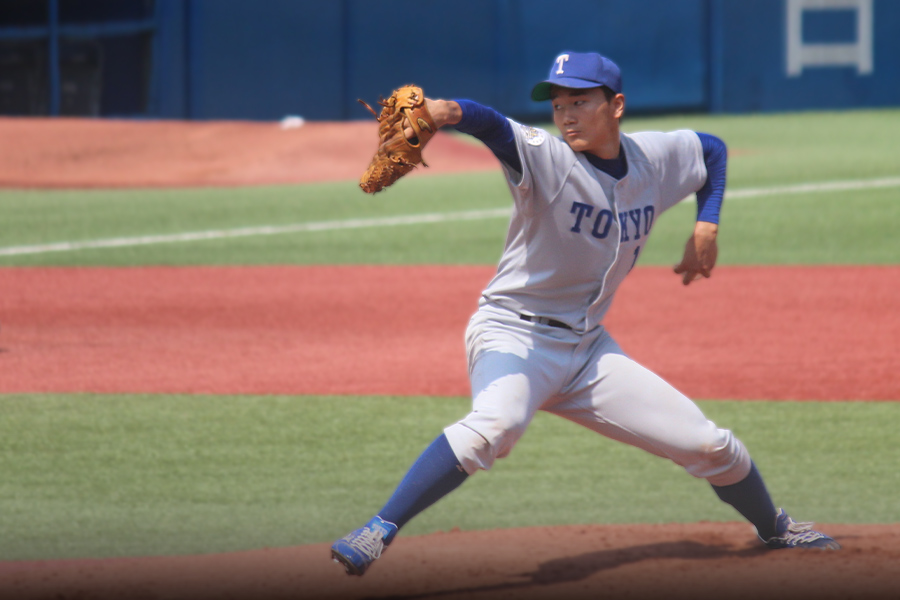


Cover Photo: Courtesy of Tokyo Big6 Baseball League
Kohei Miyadai will be breaking new ground in Japan as the first lawyer who was also a professional baseball player. Here he pitches the virtues and challenges of both to Byung Jin Park
Playing professional baseball in Japan is an achievement in itself. For one lawyer, that distinction is paired with another milestone: becoming the first in the country to enter the legal profession after a career in professional baseball.
Kohei Miyadai, a graduate of the University of Tokyo Faculty of Law, played as a pitcher for the Hokkaido Nippon-Ham Fighters and the Tokyo Yakult Swallows from 2018 to 2022. After retiring in October 2022, he pursued a legal career and passed the Japanese bar examination in November 2025, an uncommon transition for a former professional athlete.
Speaking to Asia Business Law Journal, he explains his career transition from professional baseball player to incoming associate at TMI Associates, one of Japan’s leading full-service law firms, and outlines what he hopes to achieve in his legal career.
Asia Business Law Journal: What inspired your transition from professional sports to law, and was there a defining moment that drove this change?
Kohei Miyadai: When I retired from professional baseball, I had a strong desire to remain involved in the sports business, but from a specialised professional standpoint.
I considered several paths, such as becoming a business consultant, or working within a club’s front office. However, having studied at the University of Tokyo’s Faculty of Law, I felt that becoming a lawyer was the optimal solution for me.
At that time, there were no lawyers in Japan with a background as a former Nippon Professional Baseball (NPB) player. I recognised that this unique “dual career” identity would not only be a personal strength but also a bridge between two seemingly different worlds. I wanted to prove that the analytical mindset required on the mound could be equally powerful in a court of law.
ABLJ: Do you feel pressure or opportunity in being the first former professional baseball player in Japan to become a lawyer? Why?
Miyadai: Honestly, I feel much more anticipation than pressure. Being the first former NPB player to become a lawyer in Japan means I am walking a path that has never been trodden. There is an exhilarating sense of freedom in creating my own career model. However, I am also aware that the title “former pro baseball player” will stay with me for the rest of my life.
To honour the world of professional baseball and the people who supported me, I feel a deep responsibility to achieve great success as a lawyer. I want to be known as a great lawyer who happened to play baseball, not just a baseball player who became a lawyer.
ABLJ: What type of law do you want to specialise in, and why?
Miyadai: Currently, my primary focus is on the sports business. That said, TMI Associates is home to experts in a vast range of practices, including corporate law and M&A. My immediate goal is to immerse myself in various cases to find where my skills can be most effectively utilised.
Recently, I have developed a strong interest in the Companies Act (Corporate Law). Through my bar exam studies, I realised that the Corporate Law is the most fundamental set of rules governing modern business. Understanding how a company – the basic unit of the economy – operates is essential, whether I am dealing with a sports organisation or a global corporation. I want to build a solid foundation in corporate matters before narrowing my niche.
ABLJ: As you begin your legal career, how do you expect your experience as a professional baseball player to influence your work as a lawyer?
Miyadai: My experience in professional baseball provides me with a “behind the scenes” perspective that a traditional legal education cannot provide. I have lived through the reality of contract negotiations and team operations. I understand the psychology of both sides: the anxiety a player feels regarding their career longevity, and the strategic priorities of a club’s management.
During my playing days, I competed alongside athletes of extraordinary talent. While I admit there was a part of me that felt a sense of jealousy towards such pure giftedness, that feeling has transformed since my retirement. Now, my motivation is to use the law to help these athletes maximise their market value and protect the careers they have worked so hard to build.
ABLJ: Elite sports and legal practice both require sustained discipline and performance under pressure. From your experience, what similarities and differences stand out most between the two professions?
Miyadai: The most striking similarity is that both fields are strictly meritocratic. Operating in an environment where your results and efforts are evaluated objectively is demanding, but it is also what facilitates rapid growth. Furthermore, both professions grant a high degree of individual discretion; success depends on how you manage your own performance.
The obvious difference is whether you utilise your body or your brain. However, I believe these two are converging. Modern top athletes must be incredibly logical and analytical to stay competitive, while elite professionals (the white-collar athletes) require physical resilience and mental toughness to sustain high performance under pressure. In that sense, I feel right at home in the legal profession.
ABLJ: Have there been moments when your sports experience gave you insights that a purely legal training would not?
Miyadai: The most profound insight sports gave me is the ruthlessness and uncertainty of competition. Law is often a battle of logic and precedents. However, in sports, physical ability and mental states often override logic.

Real society operates similarly – there are emotions, momentum and gut feelings that logic alone cannot resolve. When I look for a ‘landing point’ in a legal dispute, I want to maintain this field perspective to find solutions that are not just legally correct, but humanly convincing.
ABLJ: Japan’s legal system has certain differences when compared to Western jurisdictions. How does that shape the way sports law is practised here?
Miyadai: Japanese contracts are generally simpler than the highly detailed agreements found in Western jurisdictions. In Japan, many gaps are filled by the on-the-ground atmosphere, or mutual trust. While this allows for flexibility and quick adjustments in the field, it creates a risk of low predictability.
If a scandal occurs, or a contract is suddenly terminated, the lack of clear written terms can lead to protracted disputes. As the sports industry becomes more globalised and commercialised, I believe Japan needs to move towards more transparent and predictable legal frameworks to protect all parties involved.
ABLJ: What are the biggest legal challenges emerging in sports law in Japan?
Miyadai: A major challenge I observe is the reserve system in the NPB. Currently, the period that a player is reserved by a club in Japan is longer than in Major League Baseball [in the US]. This has sparked intense debate. If our domestic system remains too restrictive, there is a real risk that Japan’s top amateur talent will bypass the NPB and head straight to the US.
Furthermore, because the current system is seen as out of sync with the modern era, many top players are forced to rely on the posting system to move abroad. To keep Japanese professional baseball attractive and competitive, we must regularly review and update these rules to align with global standards.
ABLJ: What key changes to sports law do you anticipate in the next 12 months, and over the coming years?
Miyadai: I anticipate a significant rise in player rights awareness and a broader adoption of the agent system. With recent interventions by the Japan Fair Trade Commission, we are in a phase where longstanding customs are being re-evaluated under the law.
In the coming years, I expect a demand for more open and transparent rules. This will likely intensify the competition for talent, not just within Japan, but between professional leagues globally.
ABLJ: As a former athlete, how do you view the growing legal complexities surrounding sports management, contracts and image rights, in Japan and globally?
Miyadai: If athletes can legitimately manage their own image rights [publicity rights] and receive fair compensation, it will act as a catalyst for the entire sports business. With the advancement of digital technology and social media, the way these rights are utilised has become incredibly complex.
However, I don’t see this complexity as a barrier; rather it is an opportunity. This is exactly where lawyers can provide essential support. By handling the legal intricacies, we allow athletes to focus entirely on their performance, knowing their commercial interests are being protected.
ABLJ: Do you see your transition as helping create a new career path for athletes in Japan, and reflecting a broader shift beyond sport? Are professional athletes in Japan increasingly considering or preparing for secondary careers alongside their sporting pursuits?
Miyadai: Given my specific background – coming from the University of Tokyo – I recognise that my path may be somewhat unique and not easily generalised.
However, I hope my transition serves as a message to student athletes who are working hard in both sports and academics. It proves that the knowledge you gain in the classroom can eventually bloom in your career after you leave the field.
In Japan, the virtue was once baseball only, but today more players are interested in business and wealth management. Since active players have significant time constraints, there is a growing need for professionals who can support their aspirations.
ABLJ: What advice would you offer young lawyers – or even retiring athletes – about finding cross-disciplinary skills that can drive a second career?
Miyadai: The ability to work towards a goal with steady, diligent effort is a universal skill. Many retiring athletes worry that the skills they spent a lifetime refining – such as a pitcher’s mechanics or the command of a breaking ball – won’t translate to a second career.
While it’s true that specific physical skills may not apply, the underlying analytical ability definitely does. In my case, studying law is very different from practising pitching, but the process of analysing what is required to pass the bar exam is identical to the process I used to analyse what I needed to do to succeed as a pro player. Trust the process you have already mastered.

ABLJ: Outside of your professional career, what do you most enjoy doing in your free time?
Miyadai: In my free time, I am passionate about running and weight training. Interestingly, during my baseball career, training was work and reading was my hobby to escape. Now, that has been reversed. Reading and studying are my primary focus, and physical training has become my way of refreshing my mind. Running helps clear my head and keeps me healthy, providing the mental stamina I need for my legal research.