








When price battles devour profits and financing games falter, which players will survive the perilous path of global expansion and autonomous driving? Maisy Mok reports
Neta Auto’s overseas venture took a turn that was as abrupt as it was instructive. The Chinese electric vehicle (EV) upstart, named after an ancient mythical figure, blazed onto Singapore’s scene – and vanished just as quickly.
In early 2025, Neta made a splashy debut in the heart of Singapore’s shopping district, its showroom gleaming under bright lights highlighted the stylish Neta X and Neta Aya models.
Yet, within three months, the brand disappeared without a trace – no notices, no answered calls – only to be swiftly replaced by Omoda and Jaecoo, brands under Chery Automobile.
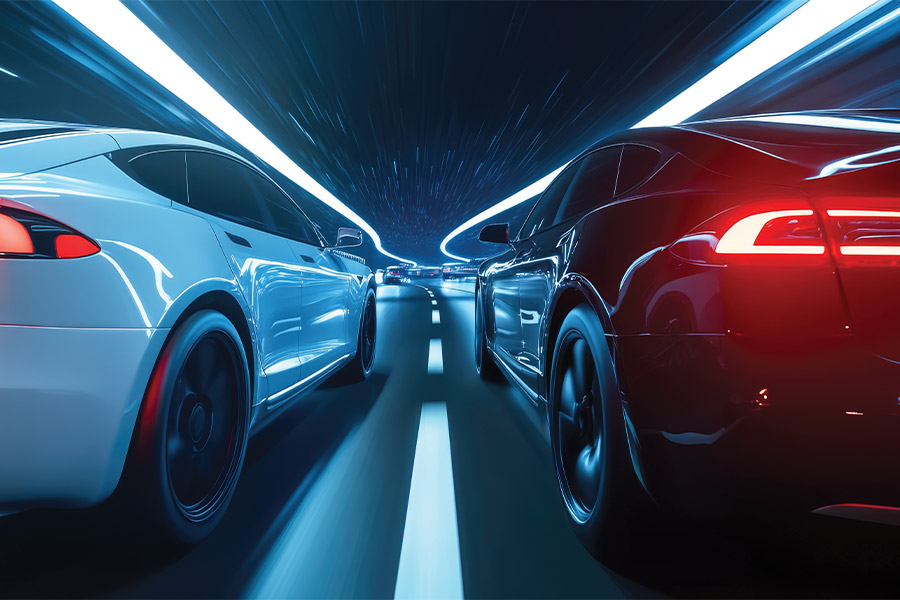
This phenomenon of “one Chinese brand displacing another” encapsulates the cutthroat competition in the auto industry.
While headlines trump the rise of Chinese automakers, few mention the brutal race for survival or the legal minefields that claim the unwary. From R&D and financing to global expansion, every step carries risks. As technology accelerates and consolidation looms, regulatory compliance has become a daily imperative for in-house legal teams.
China’s EV sector has gone through more than two decades of development and it is now spearheading global production. According to China Customs’ data, the number of EV cars exported reached a new high of two million in 2024.
To woo consumers, carmakers are doubling down on smart features. But as the market matures, it is industry consolidation that is accelerating.
The number of EV manufacturers declined from 738 in 2023 to 591 in 2024, according to the Ministry of Industry and Information Technology. As growth slows, automakers including Baoneng and WM Motor have suspended production.
Gordon Cheng, former board secretary and chief legal officer of Chery Jaguar Land Rover, says China’s overcrowded auto market, with its overcapacity in vehicles, will inevitably lead to the sector consolidating, and some brands have been sold while others faced closure. “Many homegrown companies rely on equity financing to stay afloat,” says Cheng. “Even those once favoured by investors face high uncertainty due to persistent losses and waning confidence.”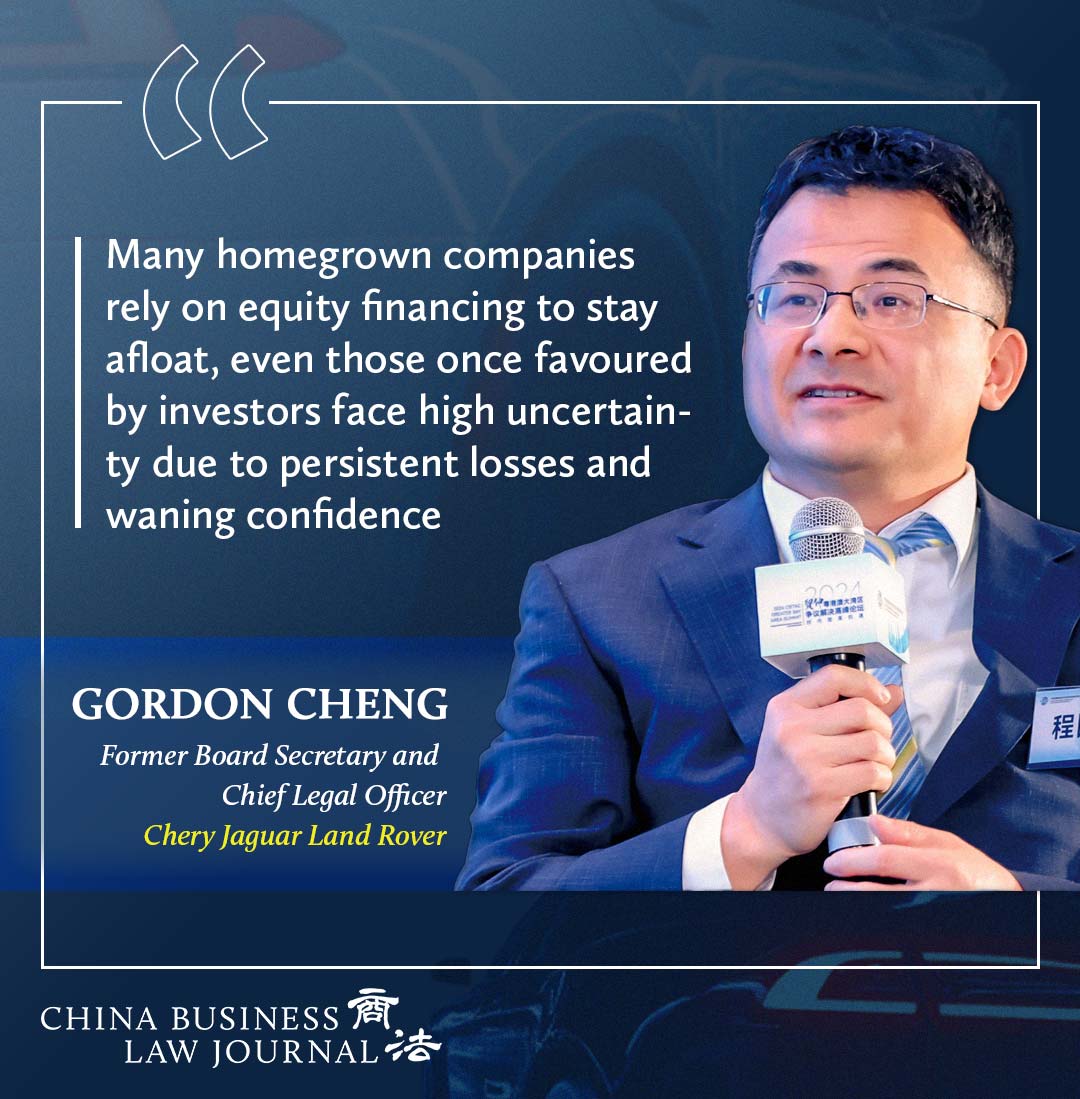
The survival squeeze has fuelled a price war. In 2024, China saw 227 models with price cuts, an uptick of 53% compared with 2023, according to China Automotive News. But the battle on price seems to have slightly eased this year.
Liu Fang, Zeekr’s vice president, chief legal counsel and chief compliance officer, says vehicles’ price adjustments stem from multiple factors such as the company’s financing needs, supply chain cost and government policy. They can also be influenced by global factors including trade probes and international brands’ price cuts.
The price adjustment not only reflects the EV sector’s reaction to market conditions. But it also shows the changes in the overall sales strategy, shifting from relying on government incentives to drive up sales to focusing on improving the company’s capabilities.
“To rise above in this transition, automakers must adopt a comprehensive strategy which focuses on technology innovation, service value and compliance resilience,” says Liu.
“Looking ahead, instead of engaging in price wars, companies should prioritise value creation. By building sustainable operational models centred on technology, service and compliance, they can secure a long-term competitive advantage in the market.”
Under the influence of global trade protectionism and technological revolution, China’s EV makers are undergoing a transformation from reckless expansion to meticulous growth. In Singapore, showroom lights dimmed and flickered back on, reflecting the fate of one individual company, but also signalling that the industry is maturing.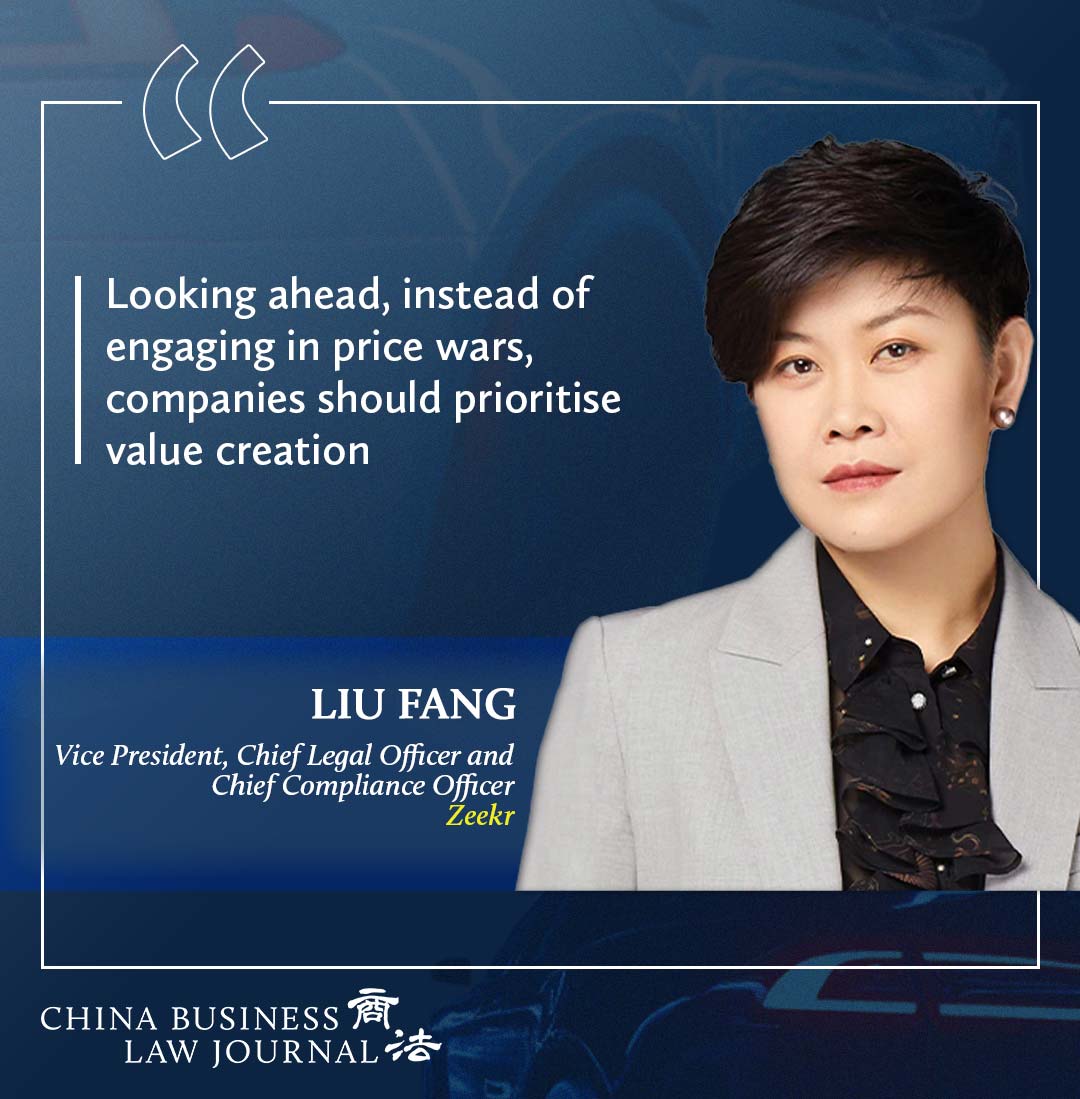
Mergers, restructuring lifelines
With price wars eroding profits and bankruptcy risks rising, consolidation is becoming a strategic escape. Recent examples include state-owned automakers Dongfeng Motor Group and Changan Automobile merging to pool resources for smart driving tech, and Chinese auto giant Geely’s Zeekr acquiring a 51% stake in Lynk & Co to streamline operations.
Liu notes this kind of major restructuring places heightened demands on in-house counsel. Her team has supported the company by performing the standard M&A due diligence and contract reviews. They also created the deal structure and addressed compliance issues related to the listed company’s information disclosures.
When it comes to compliance, Liu says: “The in-house team had to assess whether antitrust filing and other regulatory filings are needed based on domestic and international antitrust law.
“In addition, since Zeekr operates under a red-chip structure, it is necessary to take into account the regulatory requirements for outbound investment and to plan in advance the filing path and requirements of the relevant government departments.”
Public disclosure under capital markets regulation is also complex. As Zeekr trades in New York and Geely in Hong Kong, Zeekr has to follow the listing rules in both bourses. The in-house team had to hammer out disclosure plans at each critical deal milestone to ensure compliance and safeguard shareholder rights.
However, not all companies can engineer turnarounds. For struggling players, bankruptcy restructuring is the last resort.
The restructuring of some EV companies differs markedly from traditional fuel automakers. “Asset-light startups under the original equipment manufacturers (OEM) model face unique valuation hurdles in restructuring – they own no factories, require no production licences, and lack heavy assets like land or plants,” explains Chu Xiaoqing, a managing partner at Jincheng Tongda & Neal in Shanghai.
“From a legal practice perspective, investors consistently show greater appetite for businesses with tangible physical assets,” he adds.
These OEM crises and intensifying competition are now rippling into primary equity investment markets. Chu notes a visible contraction in demand for legal services related to automotive equity financing – a telling barometer of dwindling investor confidence.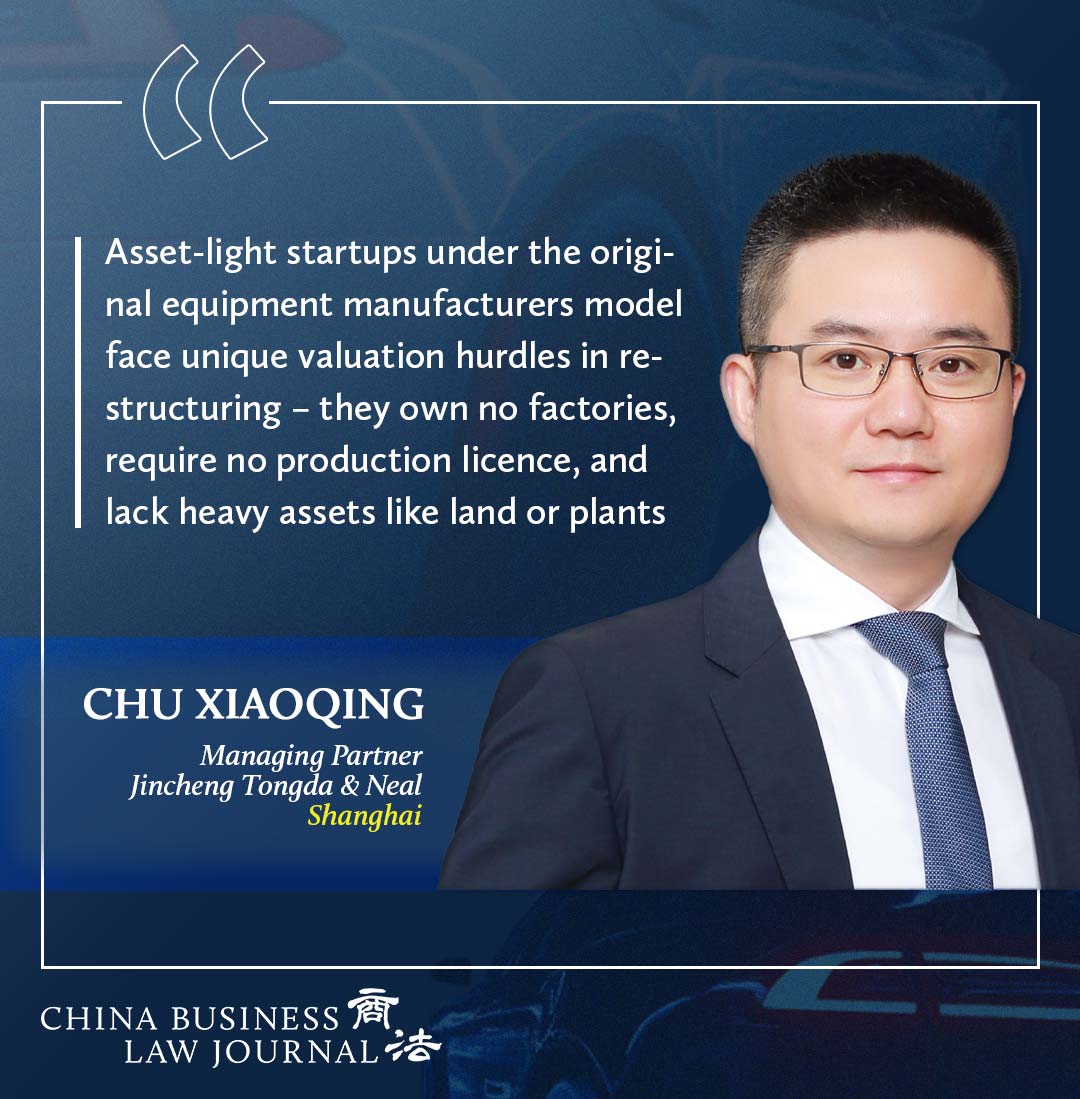
You must be a
subscribersubscribersubscribersubscriber
to read this content, please
subscribesubscribesubscribesubscribe
today.
For group subscribers, please click here to access.
Interested in group subscription? Please contact us.
你需要登录去解锁本文内容。欢迎注册账号。如果想阅读月刊所有文章,欢迎成为我们的订阅会员成为我们的订阅会员。