









Corporate governance of Japanese public companies has been dramatically enhanced through a series of policy initiatives announced by the authorities in Japan, namely the Financial Services Agency (FSA), the Ministry of Economy, Trade and Industry (METI), and the Tokyo Stock Exchange (TSE). Among those were the TSE’s Corporate Governance Code (2015, as updated) (CGC) and the FSA’s Stewardship Code (2014, as updated) (SC). Seeking to comply with the CGC, the vast majority of TSE-listed issuers have tried to diversify their boards through the election of multiple independent outside directors and have established board committees for director nomination and compensation. The SC encourages institutional investors to act to satisfy their fiduciary duties to their client investors as a result of which high-quality corporate governance was sought at their investee companies, and also require them to disclose how they exercised their voting rights at shareholders meetings.
Takeover guidelines
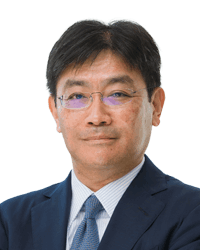
Senior Partner
TMI Associates
Tokyo
Tel: +81 3 6438 4588
Email: iwakura-plus@tmi.gr.jp
One of the most recent and critical policies, in 2023 the METI released the “Guidelines for Corporate Takeovers –Enhancing Corporate Value and Securing Shareholders’ Interests” (Takeover Guidelines). The Takeover Guidelines have drastically changed the M&A market in Japan. Prior to the release, it was long considered taboo to pursue “hostile” takeovers to which the target company’s board of directors did not consent or solicit. The purpose of the Takeover Guidelines was to present principles and best practices focusing on M&A transactions where an acquiror obtains control over a listed company.
The Takeover Guidelines have the following three basic principles:
- Whether an acquisition is desirable should be determined on the basis of whether it will enhance corporate value and shareholders’ common interests;
- The rational intent of shareholders should be relied on in matters involving the control of a target company; and
- The acquiring party and the target company should proactively provide information useful for shareholders’ decision making and ensure transparency.
Moreover, the Takeover Guidelines set out in detail how the board of directors of a target company should respond to a takeover proposal, and to what extent and how the target company can use anti-takeover measures against an unsolicited takeover attempt. Most importantly, the Takeover Guidelines expressly require the board of directors of a target company to give “sincere consideration” if the proposal by a potential acquiror is a “bona fide offer”, even if it was unsolicited, instead of declining to review the proposal. The Takeover Guidelines is a “soft” law, but nonetheless it has become standard practice to look at its principles when faced with a possible transaction.

Partner
TMI Associates
Tokyo
Tel: +81 3 6438 4592
Email: yuji_nakano@tmi.gr.jp
Shortly after the Takeover Guidelines were published, Nidec Corporation, the largest motor manufacturer in the world and a strategic acquiror, proposed an unsolicited acquisition of Takisawa. Since this type of acquiror hardly ever attempted an unsolicited acquisition in the previous M&A market, this transaction dramatically changed the game. Nidec repeatedly referred to the concepts contained in the Takeover Guidelines and successfully closed its acquisition. Since then, there has been an increasing number of unsolicited acquisition attempts, such as with one of Japan’s largest life insurance companies, Dai-ichi Life’s prevailing offer in a bidding war over Benefit One. (TMI Associates has been involved in a variety of these transactions, including representing Nidec in the Takisawa acquisition.)
TSE request
In 2023, the TSE issued a request to take “Action to Implement Management that is Conscious of the Cost of Capital and Stock Price”. In this announcement, companies listed on the TSE’s Prime and Standard sections were requested to manage themselves using indicators of the cost of capital and taking into consideration their market share price, rather than the historically customary focus on gross sales and level of profits.

Partner
TMI Associates
Tokyo
Tel: +81 3 6438 5312
Email: junya_horiki@tmi.gr.jp
Like the Takeover Guidelines, this TSE guidance is also not legally binding on listed companies, but it has had a significant impact, especially on listed companies with a price book-value ratio below 1.0 or a return on equity below 8%. Pursuant to this request, listed companies should evaluate their own capital costs and their capital profitability; consider plans for improvement, if appropriate; and update their improvement plans through dialogue with shareholders.
Together with the Takeover Guidelines, there now is a realistic possibility that listed companies with inefficient profitability can easily become a target of unsolicited acquisition proposals. This, in turn, has raised the awareness of company management on the need to focus on capital cost efficiency.
Other developments
- Reduction of factors blocking “healthy” takeovers
Previously in Japan, there were many listed subsidiaries with parent companies. This had been criticised because of the threat that the parent company may pursue its own interests by harming the interests of minority shareholders of the listed subsidiary. As a result of the CGC and other policies, there has been a notable decrease in the number of listed subsidiaries, as well as a reduction in cross-shareholdings between companies that are friendly to each other’s management. Further, companies which had implemented takeover defence measures (Japanese poison pills) when there was no imminently threatened hostile action (as compared to adopting defence measures when faced with an actual takeover threat by an acquiror) are now abolishing their pills.
These trends encourage healthy takeovers by new potential owners who can better serve to improve the company’s corporate value and shareholders’ common interests.
- Diversified board composition
As a result of the CGC, most listed companies are also intentionally trying to diversify their board composition in terms of skills, gender and nationality, among other factors.
- Management incentive compensation
Traditionally, remuneration of Japanese companies’ management was comprised of fixed monetary compensation and an annual bonus. In contrast, as of 2023, approximately 75% of all listed companies have adopted incentive compensation arrangements such as through the award of restricted stock, incentivising the management to increase the mid- to long-term corporate value of the company.
- Disclosure of sustainability and other non-financial information
Sustainability and other non-financial information effecting a company, such as climate change, gender and diversity, human rights, intellectual property, human capital, suppliers, business challenges and management risks, are considered basic items to be constructively discussed with a company’s stakeholders. Based on an amend-ment of the ordinance regarding corporate disclosures in 2023, listed companies are required to enhance disclosure of such information in their securities reports.
Expected developments in 2024-25
- Major reformation of tender offer rules and large shareholding reports
In March 2024, a major reformation bill aimed at the tender offer rules and the large shareholding report system was adopted. This amendment will take effect within two years (the exact date has yet to be determined).
Through this reformation, the tender offer rules will apply to a broader range of transactions that have a material impact on the controlling ownership of companies to enhance its transparency and fairness. Also, the large shareholding report system, which obligates investors with more than a 5% stake in a listed company to disclose their identity, the purpose of the investment (including if they intend to make important proposals to the company, if applicable) and other information, will be revised so that this disclosure obligation does not unduly discourage collaborative engagement by institutional investors.
- Improvement in quality of independent outside directors
Now that most listed companies elect independent outside directors, nominating director candidates that have requisite quality and abilities should lead to further promotion of corporate governance. Efforts are being made to suggest best practices of the independent outside directors, including through publications and revisions of guidelines by the METI and TSE on this topic.
- Information disclosure in English
In February 2024, the TSE announced that, effective April 2025, companies listed on its Prime section will be obligated to disclose their financial statements and make timely disclosures in the English language, and are encouraged to do the same for other information, for the sake of the needs of international investors.
Remarks
Through these corporate governance developments, it is anticipated that Japanese public companies will be managed pursuing further enhancement of their corporate value and shareholders’ common interests, as well as to accelerate their dialogue with institutional investors.
TMI ASSOCIATES
23/F, Roppongi Hills Mori Tower
6-10-1 Roppongi, Minato-ku
Tokyo – 106-6123, Japan
Tel: +81 3 6438 5511
Email: info_general@tmi.gr.jp