









Korean lawyers, who gathered at the 10th Seoul ADR Festival, say the time is right for the country to realise its ambitions of becoming a recognised player in the region’s arbitration market, but the sector needs more support from local and international businesses.
Their comments echoed the words of the Korean Commercial Arbitration Board (KCAB) International president Seung Wha Chang, who told Asia Business Law Journal as the conference began last week, that his strategy would be to target civil law jurisdictions and make South Korea a go-to arbitration hub.
South Korea is one of Asia’s richest economies and it is common for Korean companies operating globally to engage in international arbitration. However, both domestic and foreign parties rarely choose South Korea as a venue or select the KCAB as an arbitration institution.
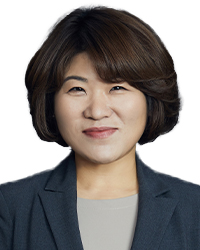
“I believe we need now to think seriously about whether Korea can offer the procedural reliability and validity to serve as the place of arbitration satisfying both common law and civil law systems,” Jinhee Kim, global practice chair at Jipyong, told Asia Business Law Journal.
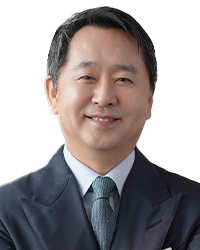
Kevin Kap-You Kim, a senior partner at Peter & Kim, said Seoul had immense potential given that “the market is seeking alternatives to Singapore and Hong Kong, particularly looking for arbitration venues in Northeast Asia”.
Sae Youn Kim, a senior member of the international arbitration and cross-border litigation practice at Kim & Chang, added: “Now is the time for Korea to gain momentum. If we make a lot of pitches now, in other words, if we plant many seeds now, we will be able to reap the benefits in a few years’ time.”
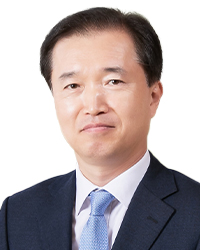
To achieve this, Byung-Chol Yoon, a partner and member of the same practice group at Kim & Chang, said the perception of businesspeople needed to be improved. “When negotiating contracts, it is crucial to recognise the importance of international arbitration and include relevant clauses. This will ensure an increase in arbitration cases in Korea.”
Kap-You Kim agreed and said South Korea had all the resources needed for international arbitration, including apt lawyers, competent arbitrators and stable courts. However, he said companies tended not to think that way. “The important fact is that even Korean companies do not insist on arbitration in Korea when drafting contracts. Korean companies should advocate for arbitration in Korea,” he said.

The lawyers ABLJ spoke to at the conference also identified that language problems played a role in preventing South Korea from becoming an international arbitration hub, like Singapore and Hong Kong. The lawyers pointed out that the language still acted as a barrier, but not as much as before.
“As generational changes occur among Korean lawyers, a new strength is rapidly emerging,” said Jinhee Kim. “Young lawyers in Korea who never studied abroad now are able to advocate fluently in English.”
Sae Youn Kim agreed. “Singapore and Hong Kong used to pitch themselves as English-speaking and easy-to-understand,” she said. “The Korean government has now recognised the necessity and has made significant progress in translating Korean law into English.”
This year’s Seoul ADR Festival was held for five days from 28 October to 1 November near the Trade Tower in the capital, where KCAB is located. KCAB officials said more than 350 participants from over 40 jurisdictions attended the festival.