










In view of unyielding geopolitical challenges and alluring promises on the tech front, businesses are beginning to see compliance as not just a line of defence, but a driver for growth. Kevin Cheng reports
Comedians often say “to try to please everyone is to end up pleasing no one”. Nevertheless, the more ambitious Chinese companies, caught between a burning need for outbound investment and an increasingly challenging landscape of international compliance, are attempting to do just that.
The task is formidable. The return of Donald Trump and his “America first” policy in the Oval Office has ramped up concerns over the already murky prospects for equitable international trade. The EU has also moved to intensify tariff and import requirements for existing and potential trade partners. Even back home, strengthened regulatory efforts are keeping businesses and their legal counsel on their toes.
On the bright side, there are incentive policies on the horizon designed to inject vitality to certain sluggish industries, as many hold out hope for opportunities brought forth by AI.
Whatever future awaits, companies from various industries, whether in their prime or struggling to make a comeback, have come to agree on one thing: Compliance is the key to going forward, and when embraced as part of a company’s strategies, compliance can be more than a box that must be ticked, but a solution for, and even driver of, growth.
Testing the waters
Since Trump’s second term began, the US has announced a new 10% tariff on all Chinese imports, which was since raised to 20%. Perhaps more surprisingly was a 25% tariff on most imports from Canada and Mexico, making it abundantly clear that free trade and improved relations with trade partners are not on the current administration’s immediate agenda.
The EU, itself now under threat of increased US tariffs, continues its de-risking strategy that seeks to ease its reliance on China in key sectors.
“Apart from all the security reviews for high-tech and sensitive sectors under existing EU foreign investment regulations, we see a more frequent application of the Foreign Subsidies Regulation (FSR) in the review of M&A and public sector bidding in EU territories,” says Kenneth Zhou, Asia-Pacific North head of legal and compliance at SIG Group.
He adds that when such a review is initiated by the European Commission, it could cover foreign subsidies as far back as five years before the FSR’s implementation, which could be problematic for Chinese companies that have “enjoyed government grants or preferential treatments differing from the usual market practices”.
Even so, Chinese businesses’ enthusiasm in outbound investments remain overall undented by these pushbacks, although they are compelled to be more mindful of the where and how.
According to statistics compiled by the Ministry of Commerce and the State Administration of Foreign Exchange, China’s total outward direct investment (ODI) increased by 10.1% year-on-year to USD162.8 billion in 2024. Total overseas M&A value announced by Chinese enterprises, as reported by Ernst & Young, however, dropped by 31% year-on-year to USD30.7 billion.
This could be attributable to a 10-year low in both value and deal volume of M&A activities by Chinese businesses in the US, despite increases recorded in investments to Africa, Japan, South Korea, the Nordics, India and Brazil.
Summing up the choices now faced by outbound Chinese businesses, Zhou says that they “either choose the route of complete compliance, as in complying with the laws and regulations of the US, EU and China all at once”, or “avoid the US and EU entirely and focus on greenfield investments and M&A along the Belt and Road, or in the Global South”.
He adds that most multinational companies choose the former, but it is becoming increasingly difficult to do so.
Wu Dong, a Shanghai-based senior partner at Hui Ye Law Firm, similarly observes a marked uptick in the trend of “going global” among Chinese companies, especially to Middle Eastern destinations like Saudi Arabia and the UAE.
Wu sees the recent meeting between Han Zheng, vice president of China, and US business leaders – Elon Musk included – as a positive sign, and is encouraged by the statement that they see promising prospects in the Chinese economy and development opportunities.
“There will definitely be many Chinese companies investing and setting up factories in the US,” he says, “which is why I anticipate a further surge in the needs for outbound services in 2025.”
Zhou also detects opportunities amid the challenges. “With geopolitical troubles abundant, a growing number of multinational companies and their leaderships are allowing ideology and ‘political correctness’ to affect their supply chain procurement,” he says.
“When such companies restructure their global business or exit China, it may present great opportunities for Chinese companies to either acquire their assets in China or package them for a spin-off listing.”
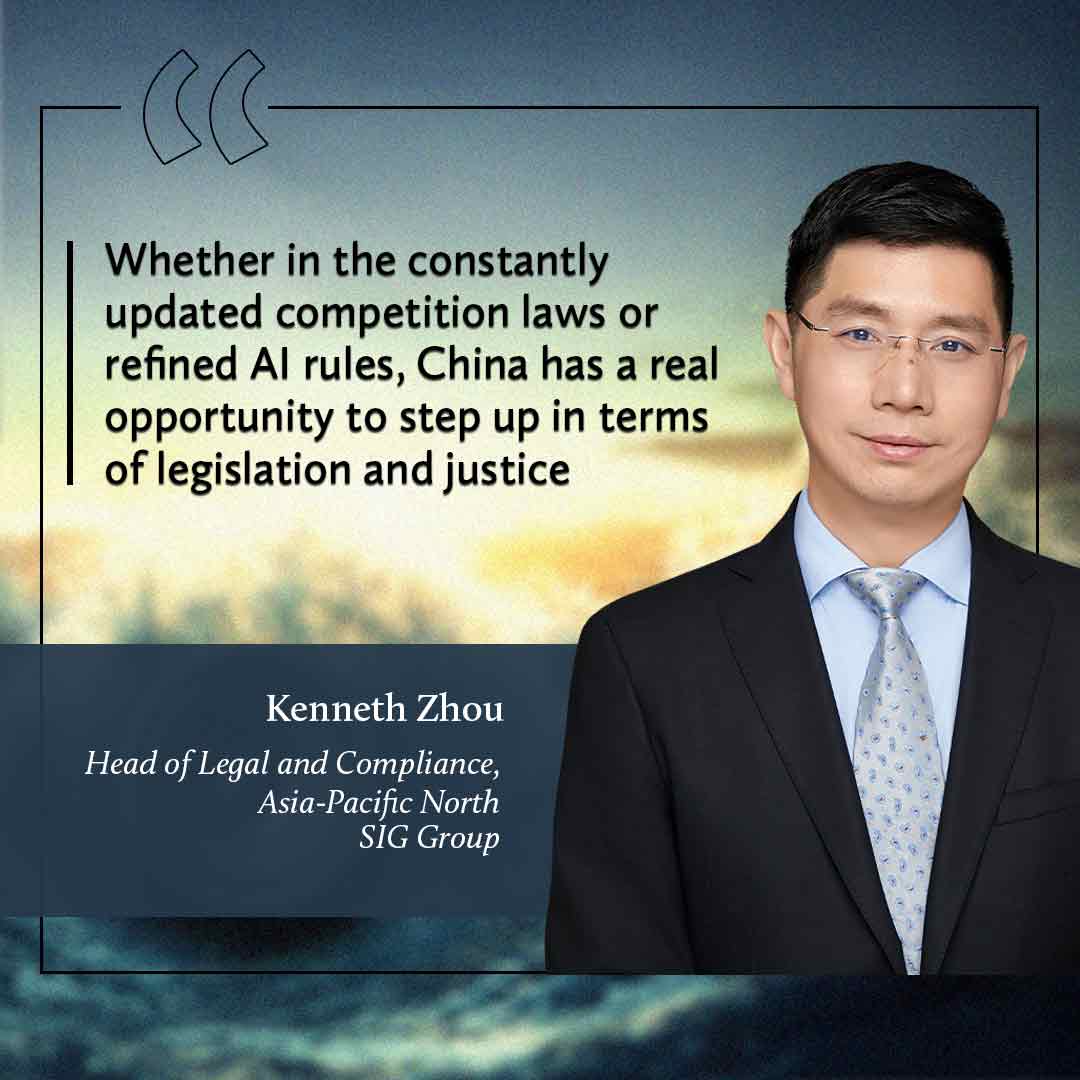
As Chinese companies actively embrace internationalisation, Zhou advises them to take the opportunity to learn the legal rules of the international market. In some emerging areas, he says, Chinese players may even become the rule makers, instead of merely the learners.
“Whether in the constantly updated competition laws or refined AI rules, China has a real opportunity to step up in terms of legislation and justice,” he says.
Overseas compliance
While the pressure for compliance in overseas jurisdictions applies to everyone, some industries are feeling more heat than others.
Sonoscape, a Shenzhen-based medical manufacturer of ultrasound and high-definition endoscopy systems, is subject to risks brought by potential adjustments to export restrictions for sensitive technologies and products, especially in the high-tech medical device sector.
Ye Yuting, head of compliance at the company, says that this not only affects their global supply chain network, but compels businesses to strictly observe foreign export control regulations, ensuring that their international activities remain legal and compliant.
“Companies must re-evaluate their global supply chain, diversify their supply channels and, at the same time, set up a sound internal compliance system to deal with potential risks,” she says.
One of the most trending topics in the healthcare industry in recent years is the anti-corruption campaign, which is expected to continue in 2025.
While the Central Commission for Discipline Inspection is sweeping the domestic sector for any signs of corruption, especially in the bidding process, Ye says that the international community is also increasingly alerted to corruption in commercial activities.
“Companies need to dial up internal anti-corruption to make sure all activities are in line with relevant international regulations, such as the US Foreign Corrupt Practices Act (FCPA) and the UK Bribery Act 2010,” she says.
Energy players are looking forward to investment opportunities in renewable energy such as wind power and photovoltaics, especially in the Middle East, North Africa and other countries along the Belt and Road Initiative.
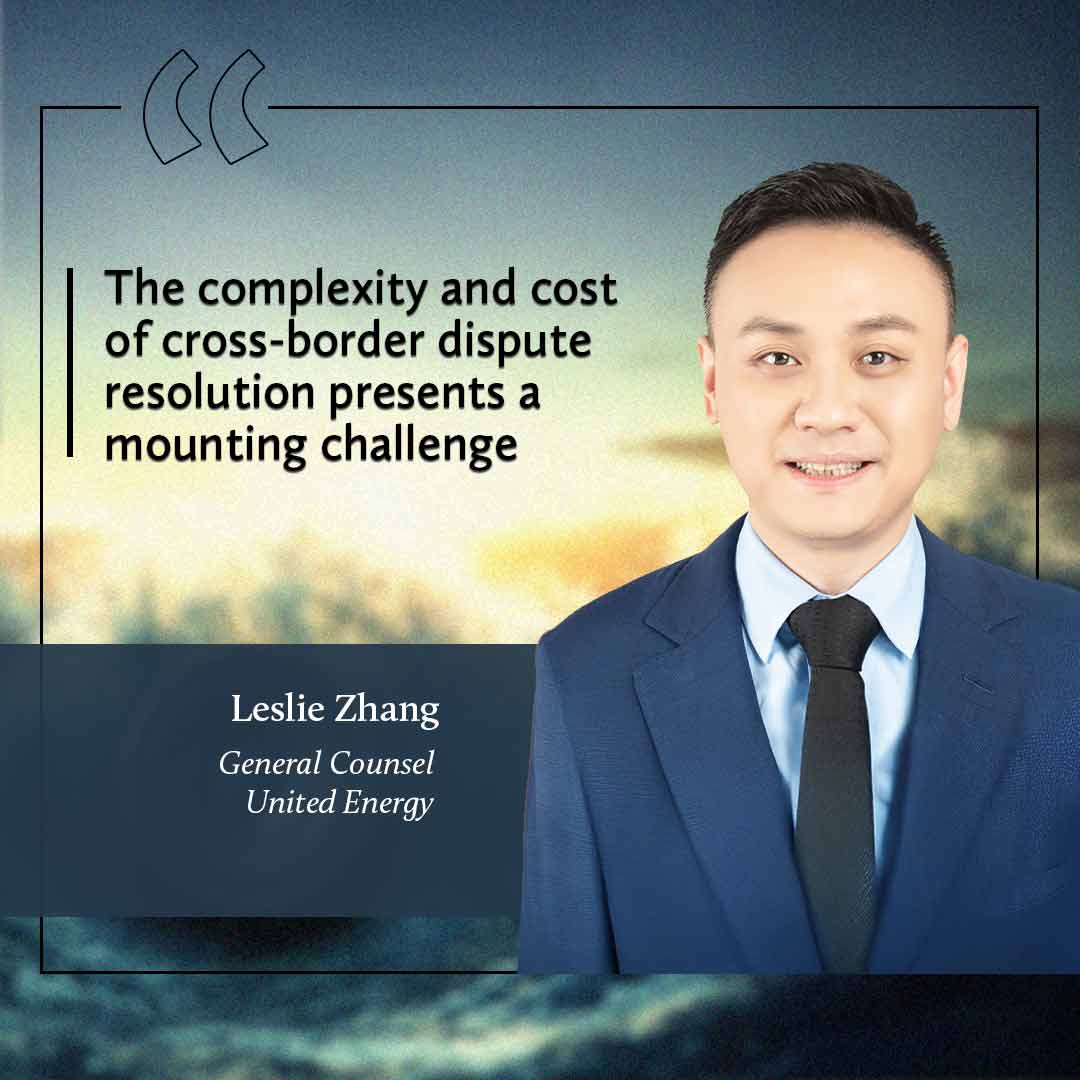
However, Leslie Zhang, general counsel at United Energy, cautions that overseas expansions inevitably lead to increased risks in legal disputes. “The complexity and cost of cross-border dispute resolution presents a mounting challenge,” he says.
Joe Zhou, chief compliance officer of China International Capital Corporation (CICC), sees vast opportunities for investment banks in the outbound wave, and the growing needs of both individual and institutional investors to allocate and price assets globally.
But he also recognises that adapting to the laws, regulations and market practices of various countries and regions can be tough.
“Outbound Chinese investment banks must brace for compliance risks, market risks and cultural shocks,” he says. “As for local branding and gaining the trust of clients in the regions, these things are no less demanding.” In this regard, he advocates for stronger ties with international law firms.
Vicky Lord, managing partner at the Shanghai office of Harneys, offers the use of offshore structures to mitigate the risks in “navigating global political headwinds”.
“In terms of opportunities, we see increased demand for compliance services,” she says, citing the implementation of the amendment to BVI Business Companies Act in January 2025 as a contributing factor to the surge.
You must be a
subscribersubscribersubscribersubscriber
to read this content, please
subscribesubscribesubscribesubscribe
today.
For group subscribers, please click here to access.
Interested in group subscription? Please contact us.
你需要登录去解锁本文内容。欢迎注册账号。如果想阅读月刊所有文章,欢迎成为我们的订阅会员成为我们的订阅会员。