





The record fine for an individual organiser, RMB5 million, and RMB360 million (USD50.2 million) in combined penalties imposed on four pharmaceutical companies for a monopoly agreement are signs China’s authorities aim to deter illegal behaviour in this sector, says an antitrust specialist.
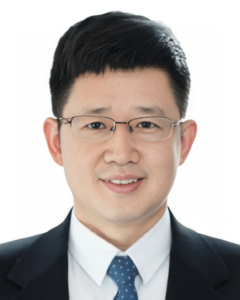
Huang Wei, managing partner at Tian Yuan Law Firm and an antitrust law expert, believes the high penalties “send a strong signal that antitrust enforcement agencies will continue to intensify their efforts in the pharmaceutical sector, emphasising antitrust, protecting livelihoods and [providing a] strong deterrence”.
In June 2025, local watchdog, the Tianjin Market Supervision Administration, determined that Guo Xiangguo organised the verbal monopoly agreement between Lianhuan Pharmaceutical, Tianyao Pharmaceuticals, Xianju Pharmaceutical and Guokang Ruijin Pharmaceutical.
Guo made verbal agreements with each company separately where they would withhold supplies of sodium dexamethasone raw materials to inflate prices.
He received the maximum RMB5 million penalty, setting a record for the highest fine against an individual under the revised 2022 Anti-Monopoly Law, while each of the four company heads was fined RMB600,000.
Huang said this case was the first to hold an individual accountable as an organiser of a monopoly agreement following the 2022 revisions. The revisions explicitly include “organising or substantially assisting in a monopoly agreement” as illegal behaviour.
He emphasised that the heavy penalties against organisers and executives highlight the legislative direction in strengthening personal accountability.
“This case achieves ‘triple accountability’ for organisers, companies and responsible individuals, addressing the longstanding issue of enforcement that only penalised companies and not individuals,” Huang said.
All four companies were fined 8% of their sales from the previous year. However, two companies, Tianyao Pharmaceuticals and Lianhuan Pharmaceutical, which voluntarily reported the monopoly and provided significant evidence, received an 80% and 30% reduction in penalties, respectively.
Huang reminded companies to carefully assess potential horizontal monopoly risks and fully utilise leniency provisions when necessary, striving for maximum reductions at the earliest possible stage.
He said the pharmaceutical industry had always been a key area for antitrust enforcement as it involved public welfare, and this case occurred amid the covid-19 pandemic, with the raw materials involved being used in vaccines for treating covid-19.
“The high-pressure antitrust environment in the pharmaceutical sector will continue and companies should enhance their awareness of antitrust compliance,” he said.