









Faced with swift regulatory change and turbulent global economics, businesses must choose unforeseen paths and yet avoid stumbling beyond the limits of their operations. Managers of both domestic and international law firms in first-tier cities offer their best practice advice. Luna Jin reports
AS THE SAYING GOES, when it rains, it pours. Similarly, companies in a downturn face not only operational challenges but often find themselves entangled in legal disputes.
Apart from tackling immediate disputes, general counsel must also retain a focus on the bigger picture, steering management towards crafting judicious medium to long-term strategies that harmonise risks and rewards. For in-house teams, this demands a dual understanding of ever-evolving global and local regulatory landscapes while remaining finely attuned to pivotal economic shifts.
The current discourse surrounding the trajectory of the Chinese economy is a tapestry of diverse opinions and perspectives. While some foresee a potential “Japanisation”, with sluggish growth and subdued consumer spending, others underscore the potential of the country’s emerging growth engines and the indelible impact of its policymakers.
Given volatile geopolitical and market terrains, how can businesses deftly navigate through uncertainty? For China Business Law Journal’s mid-year market research, our editorial team visited dozens of Chinese and foreign law firms in Beijing, Shanghai, Guangzhou and Shenzhen to seek answers from firm managers and senior practitioners.
We discovered that, despite a prevailing ambiguity, in-house teams still have much to offer – by tracking regulatory and judicial trends, discerning the nuanced pathways of do’s and don’ts, and guiding businesses away from common pitfalls; and by leveraging a mix of legal acumen and business savvy to seize special opportunities within specific industries.

Corporate financing
Among the myriad concerns gripping companies, investors, startups and pre-IPOs, the focus gravitates towards the future of the primary and secondary markets that finance businesses. Particular attention rests on the fate of China’s capital markets amid a current environment of strict regulation.
Since the second half of 2023, A-share IPO issuance has significantly tightened, while Hong Kong and US listings face the challenges of undervaluation and China-US tensions, respectively. Meanwhile, in the private equity market, the three major segments of fundraising, investment and exit have been severely hampered after a retreat of US dollar funds.
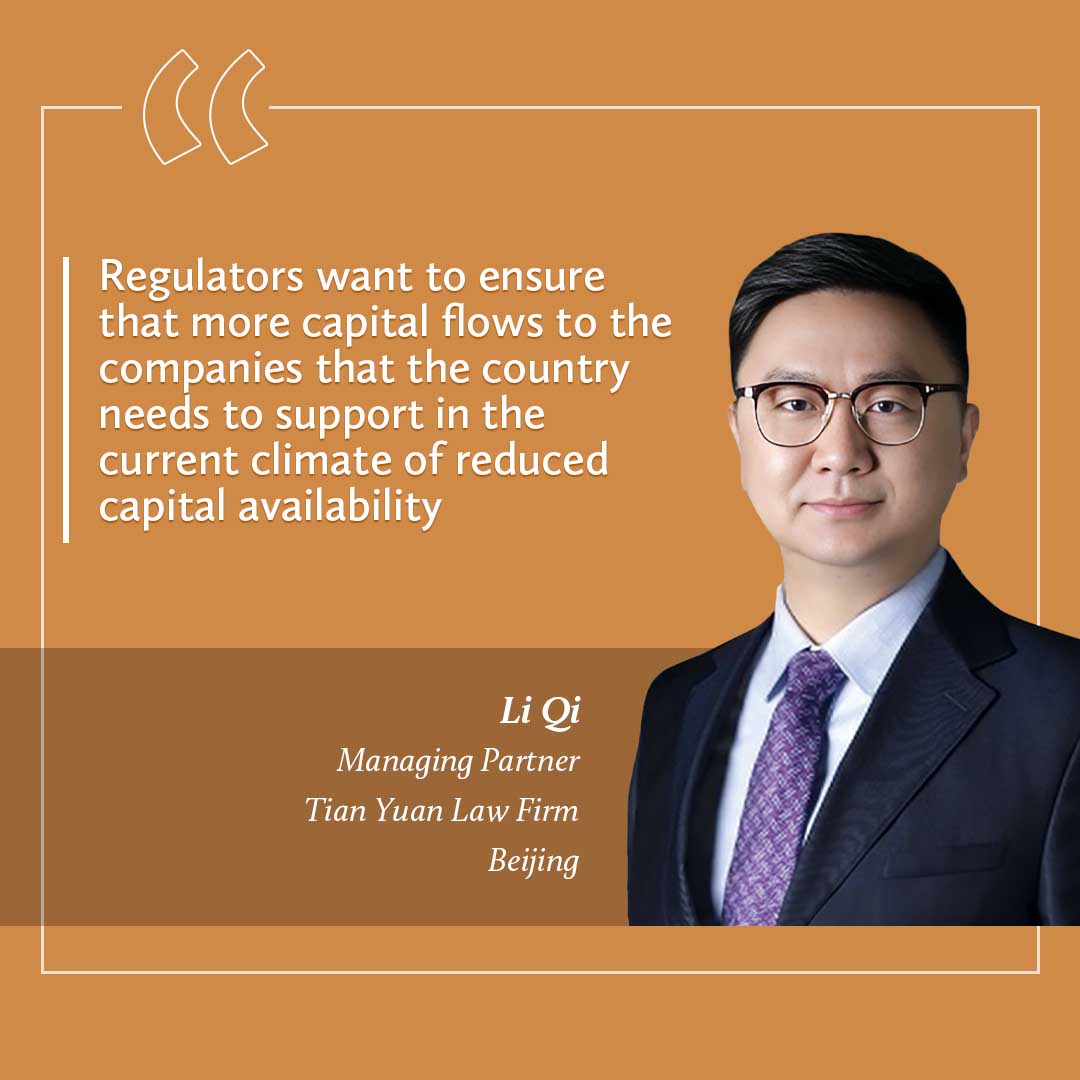
Li Qi, managing partner at Tian Yuan Law Firm in Beijing, says the status quo will remain in the short term. “Regulators want to ensure that more capital flows to the companies that the country needs to support in the current climate of reduced capital availability,” he says.
The central government champions industries that are pivotal to securing financing, particularly those capable of fostering what President Xi Jinping terms “new quality productive forces”. These industries span new energy, new materials, advanced manufacturing, electronics and information, among other emerging sectors of strategic significance. In the government’s latest work report, “accelerating the development of new quality productive forces” was listed as one of the 10 major tasks of this year.
Although formal policy documents delineating red lines for scrutinising IPO applicants remain elusive, reality paints a grim picture for startups and entities seeking financing in certain sectors.
“It’s very difficult for startups to raise money and the battle lines are lengthening,” says Sun Junhuang, a Shanghai-based partner at DeHeng Law Offices.
“Investors exhibit caution, holding back unless bullish on industry prospects, satisfied with valuations and foreseeing growth potential. Those industries that are on the traditional side and saturated with market players are struggling at the moment, both in terms of PE/VC [private equity/venture capital] financing and prospective IPOs.”
The China Securities Regulatory Commission (CSRC) implements extremely stringent standards during on-site inspections of companies filing for listing, examining everything from bank statements to working papers. This scrutiny results in many pre-IPO companies being deterred from the next step.
Newly revised provisions for on-site inspections of IPO enterprises, issued on 15 March, underscore an increased likelihood of inspections and have particularly strengthened the concept of “filing is liable”. This means even companies that withdraw IPO applications after inspection are accountable for any problems uncovered by inspectors.
“For companies, the pass rate of on-site inspections is so small that it is like walking a tightrope,” says Sun.

So, what is the endgame of the current tight regulations? Tian Yuan’s Li says that, outside regulation, the capital markets slump is fundamentally down to a sluggish economic environment.
He adds: “To truly alleviate the situation, the restoration of capital supply in the market is crucial.”
However, when an IPO exit path is blocked, companies are navigating through reorganisation mergers with listed entities to facilitate investment institution exits. And regulatory bodies continue to introduce supportive policies to catalyse such activities as the A-share market gains momentum.
“In particular, industry-based reorganisation mergers are gradually becoming the mainstream, and mergers driven by strategic emerging industry sectors are becoming more and more active,” says Zhang Qi, managing partner at L&H Law Firm’s Hangzhou headquarters.
She highlights the active nature of reorganisation mergers in industries like computer and communication equipment manufacturing, which are on the rise in both quantity and scale.
There is also strong demand from the buyers’ side. “In the case of the disappearance of the industry dividend, and market competition becoming more and more intense, it is more difficult for them to rely on the operation alone to promote the growth of the main business,” she says.
“Therefore, these companies have to compete at the strategic level, through industrial mergers and acquisitions, to improve their advantageous position in the supply chain.”

In addition, some state-owned enterprises – often referred to as “chain masters” – are also leveraging reorganisation mergers to bolster their dominance. Zhang says many of L&H’s state-owned clients are lately scouting for acquisition targets in sectors like infrastructure, new energy and new materials, and some have entered the negotiation process.
Zhang advises companies contemplating acquisitions to conduct the necessary due diligence examination of their target and its business before merging or receiving assets.
To reduce acquisition risk and future management costs, she says due diligence work should focus on the history, organisation structure, business, related parties, property, contracts, environmental protection, finance, labour and legal risks.
In addition, she warns that, during the transition period ahead of taking de facto control of a target business, “the seller or the management of the target company may act in bad faith to damage the company’s assets, financial condition and business operations”.
Opportunities in data
Data compliance and the integration of digital assets are endeavours that stem from escalating regulatory requirements, which are becoming a key focus for businesses. In recent years, China’s data legislative framework has matured and improved, enhancing corporate compliance obligations while setting the stage for unleashing data’s potential across industries.
Ulrike Glueck, managing partner of CMS China’s Shanghai office, has clients who place great importance on data compliance. She highlights the provisions for promoting and regulating cross-border data flow, issued by the Cyberspace Administration of China (CAC) on 22 March. “Companies need to pay close attention to these changes and take actions accordingly to make themselves compliant when transferring data abroad,” says Glueck.
These provisions encapsulate various exemption scenarios in line with international standards and easing restrictions on non-sensitive personal data, and are anticipated to alleviate burdens for many enterprises.
The CAC has also simplified the filing process with updated filing guidelines for the security assessment of cross-border data transfers and standard contracts for cross-border personal information transfers.
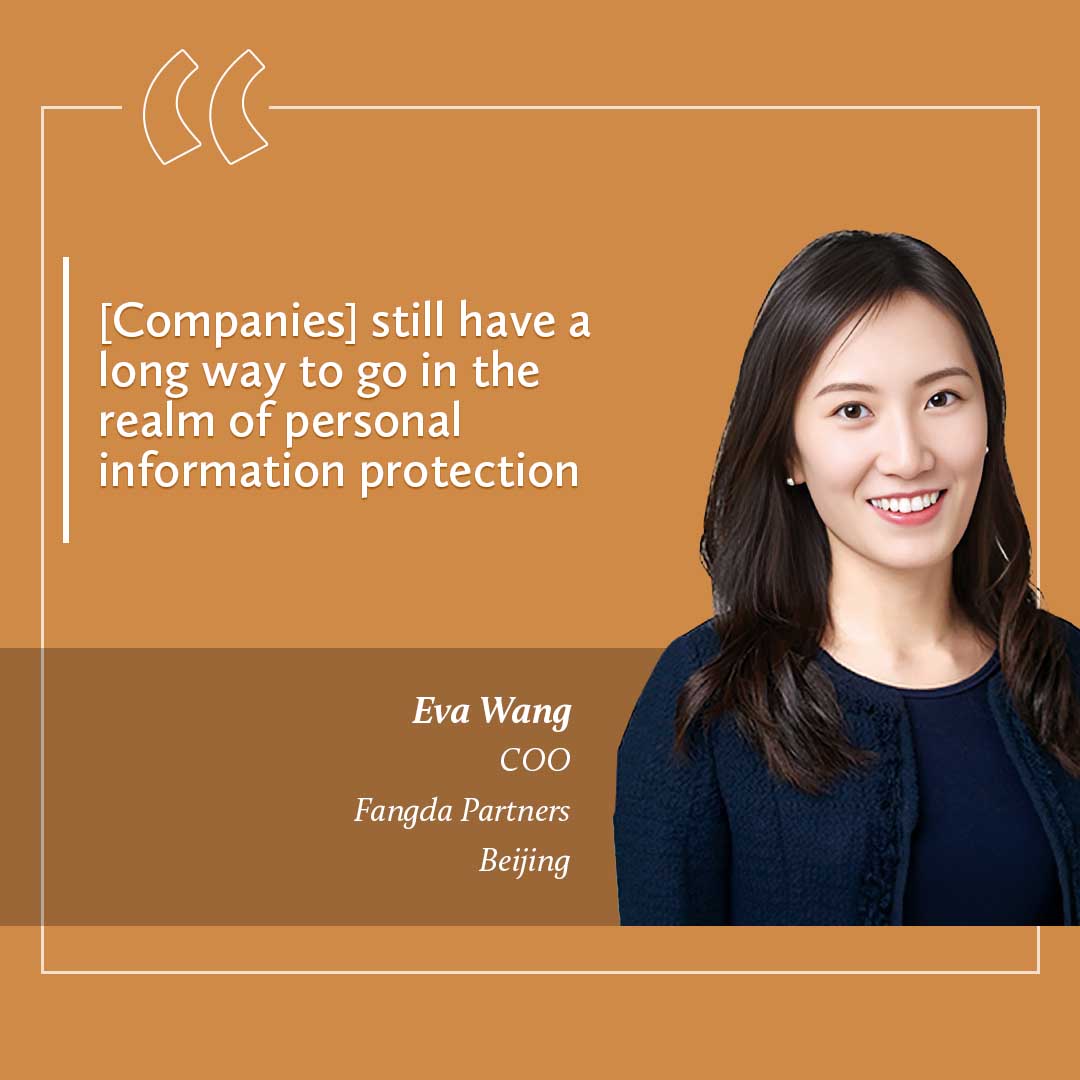
Despite these strides, Eva Wang, Beijing-based COO of Fangda Partners, says companies “still have a long way to go in the realm of personal information protection”.
The landscape of data compliance sprawls across scenarios and industries. Wang says Fangda has recently handled work in this field for its clients, which includes assisting well-known domestic and foreign companies to address administrative enforcement probes such as data access inquiries, and data leakage and cybersecurity inspections.
The firm also conducted pre-IPO data compliance due diligence examinations, completing compliance rectification and dealing with matters of cybersecurity review for several domestic companies in the industries of automated driving, cloud services, AI pharmaceutical research and development, automotive parts supply chain, smart waste recycling, and rural finance.
Beyond compliance lies a newfound policy favourability that has spurred companies to delve into their data reservoirs, turning raw data into measurable economic assets. Interim provisions on accounting of enterprises’ data resources, introduced by the Ministry of Finance, came into effect on 1 January this year. The provisions allow companies to account for their data resources; so-called “data as an asset in balance sheets”.
“The nation has elevated the valuation of data assets to a strategic echelon,” says Sun Feng, a partner at the Guangzhou office of East & Concord Partners.
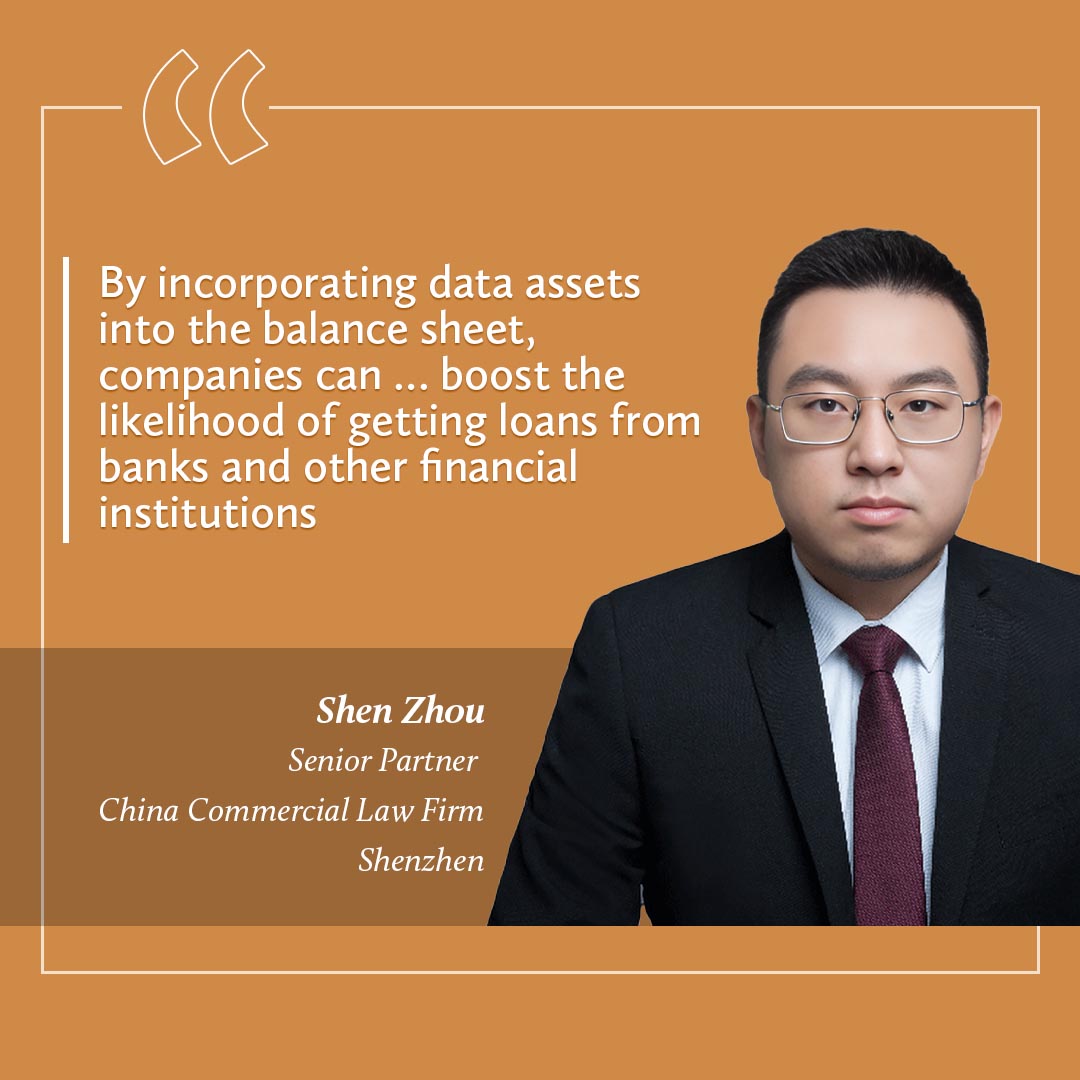
On the immediate horizon, the policy is anticipated to aid local state-owned enterprises in alleviating debt strain. “By incorporating data assets into the balance sheet, companies can enhance the appeal of their underlying assets, thus boosting the likelihood of getting loans from banks and other financial institutions,” says Shen Zhou, a Shenzhen-based senior partner at China Commercial Law Firm.
In the long term, he says, “data assets serve as the bedrock for new quality productive forces and forthcoming technological innovations”.
Forced to go global
Many partners observe a fervent trend of Chinese companies actively expanding into overseas markets. Behind this phenomenon lies not only the internal drive of China needing to transition from being the world’s factory to upgrading to high-end industries, but also the poignant dilemma of surplus production capacity.
With the economy trending downwards and market competition intensifying, Chinese companies now find it increasingly challenging to solely rely on the domestic market to absorb excess capacity. They are then compelled to seek a way out of the domestic rat race through overseas markets.
Overly competitive Chinese companies have even made foreign peers shy away. “The retreat of Japanese and South Korean manufacturing businesses from China, and the shrinking of their operations, may not necessarily be due to deteriorating international relations but more because they have lost to local Chinese enterprises in competition,” observes Tian Yuan’s Li.
Simultaneously, successful precedents of some Chinese companies penetrating overseas markets have made the path to internationalisation very attractive. “Against a backdrop of high overseas demand, Chinese companies with a significant proportion of their business operations overseas have achieved commendable financial performance,” says Zhang, of L&H.
In the overseas market, Chinese-manufactured consumer goods are undergoing a transformation from cost competitiveness to brand value visibility. Zhang says that, “compared to the past, Chinese companies venturing abroad have evolved from simple commodity sales to a global strategy encompassing operations, brand building and innovation. By establishing production bases overseas and implementing localised operations, Chinese companies are engaging in a more profound and comprehensive strategic deployment.”
For certain industries, going global is an inevitable path for their development. Wang, of Fangda, says it remains a dominant trend for leading Chinese medical technology companies.
“The technological and capital accumulation achieved through domestic market success, investor demand for growth, and companies’ pursuit of broader overseas markets are driving an increasing number of Chinese medical technology companies to actively step onto the international stage for substantial development,” she says.
Private companies from relatively developed economic regions are actively exploring the path to global expansion. “With the emergence of industrial parks, particularly in Zhejiang and Guangdong, a phenomenon of ‘overseas expansion in group’ has arisen among private companies, mainly targeting destinations in Southeast Asia and Mexico,” says Zhang Guodong, managing partner in the Beijing office of Jincheng Tongda & Neal.
The appeal of Chinese companies varies across Southeast Asian countries, according to Zhu Xiaoqing, Shanghai-based senior partner of Co-effort Law Firm. “Indonesia boasts a significant population of Chinese descent, primarily from Fujian,” he notes. “Chinese people have long been establishing factories and industrial parks there, making Indonesia a widely recognised destination for overseas expansion.

“Thailand is less industrialised, so certain Chinese companies may go there to develop real estate and tourism, but industrialised industries will not go there.”
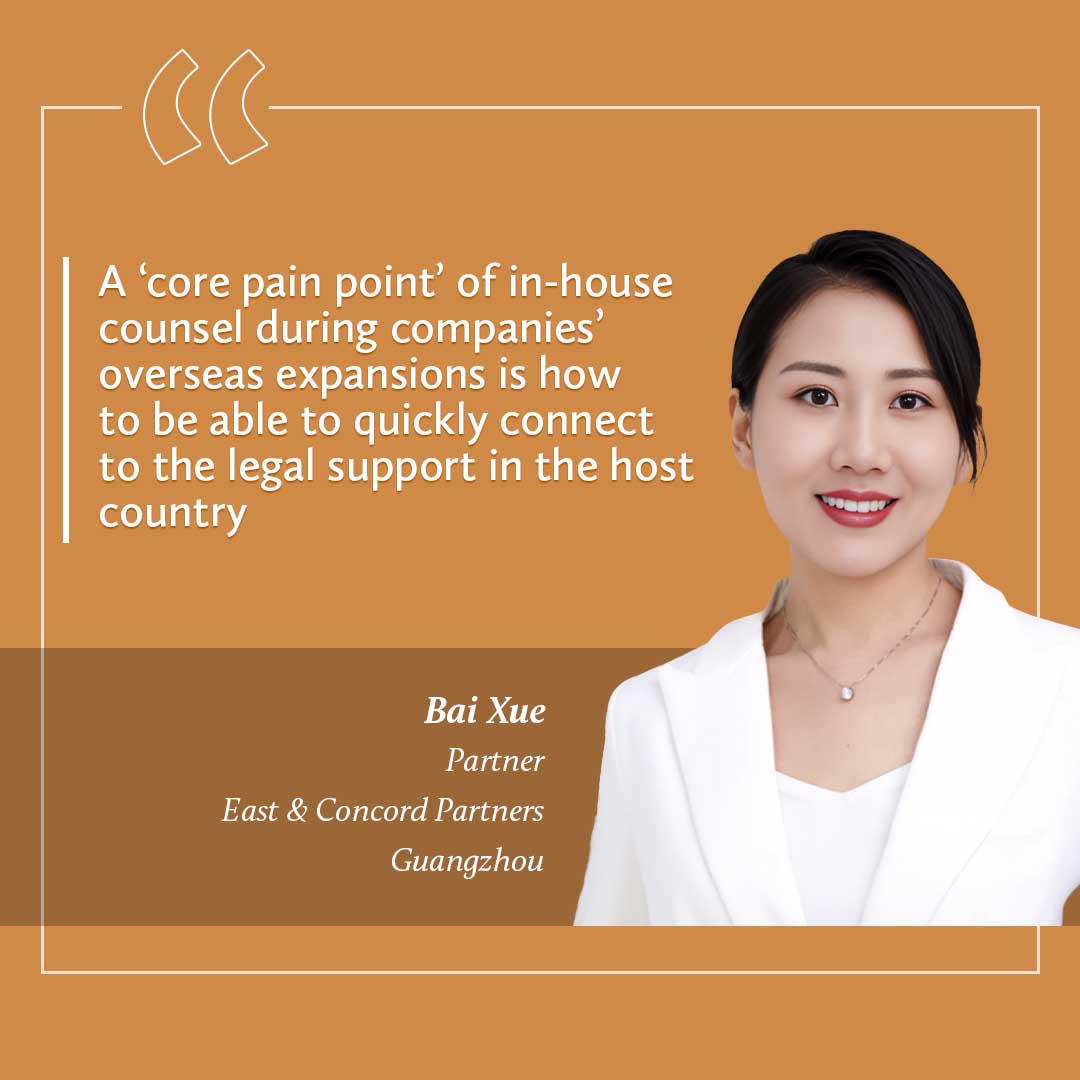
Language barriers and unfamiliarity with local legal markets present significant challenges for companies when managing local legal affairs. Bai Xue, a partner at East & Concord’s Guangzhou office, says “a ‘core pain point’ of in-house counsel during companies’ overseas expansions is how to be able to quickly connect to the legal support in the host country”.
“Apart from legal aspects, clients also focus on tax compliance and human resource management because deploying executives and hiring local staff are primary issues that companies need to address,” she says.
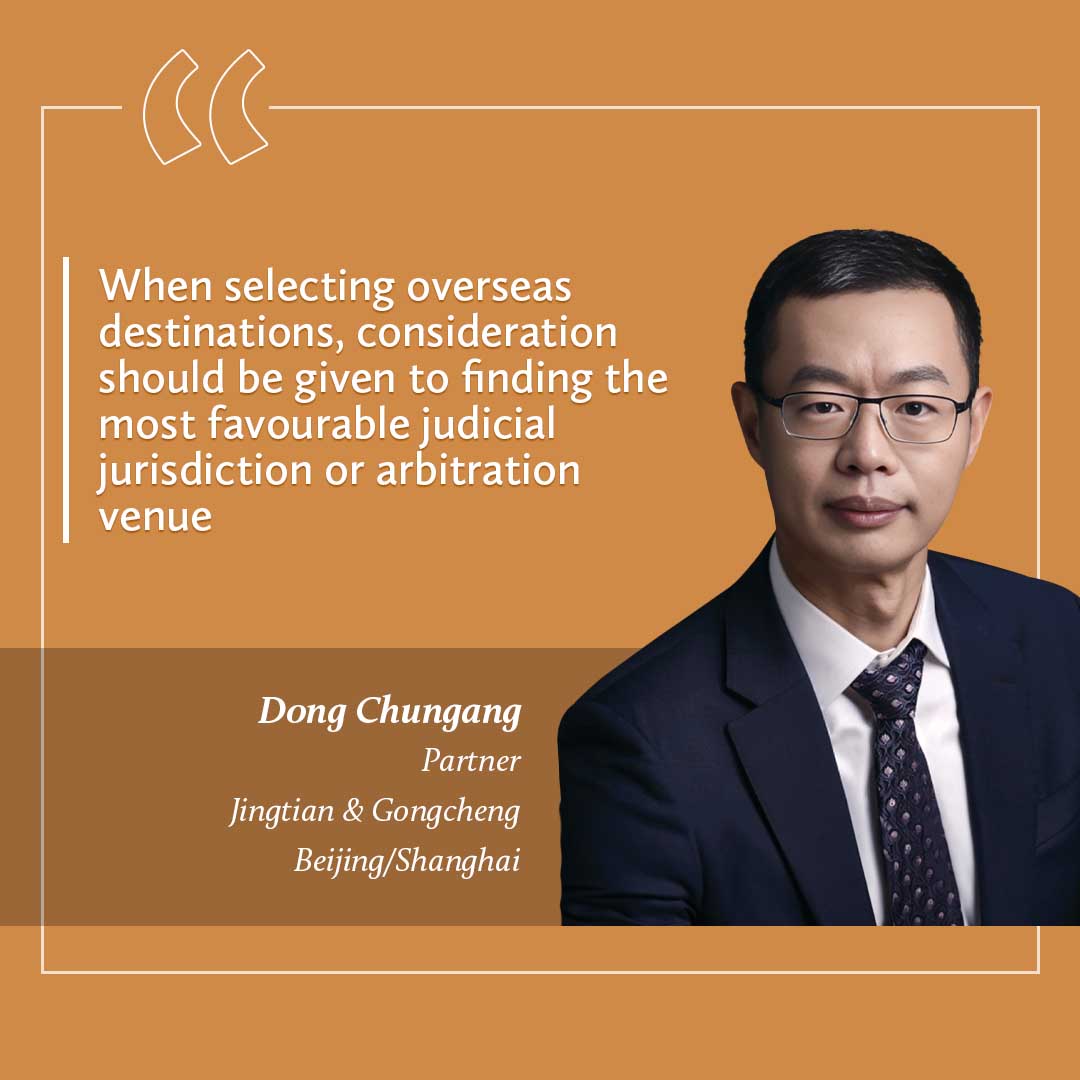
Another critical task for overseas companies is strategically managing dispute risks, says Dong Chungang, a partner at Jingtian & Gongcheng based in Beijing and Shanghai. “Chinese enterprises need to be adept at managing dispute risks from a dispute resolution perspective during their overseas expansion, utilising mechanisms such as bilateral treaties like investor protection to safeguard their interests,” he says.
“When selecting overseas destinations, consideration should be given to finding the most favourable judicial jurisdiction or arbitration venue, known as forum shopping, or by meeting the minimum legal requirements to be packaged as an investor of a particular country.”
By way of example, he says if a Chinese company establishes a company in Singapore and encounters a dispute during investment in the US, it could consider using a bilateral treaty between Singapore and the US to protect itself.
Expanding into global markets can broaden revenue sources for Chinese companies. However, rapid growth of emerging industries such as renewable energy and automobile manufacturing is truly adding depth to the internationalisation of Chinese companies.
These emerging industries are rich in intellectual property, and legal services for overseas IP layout are in high demand by Chinese companies with overseas expansion plans.
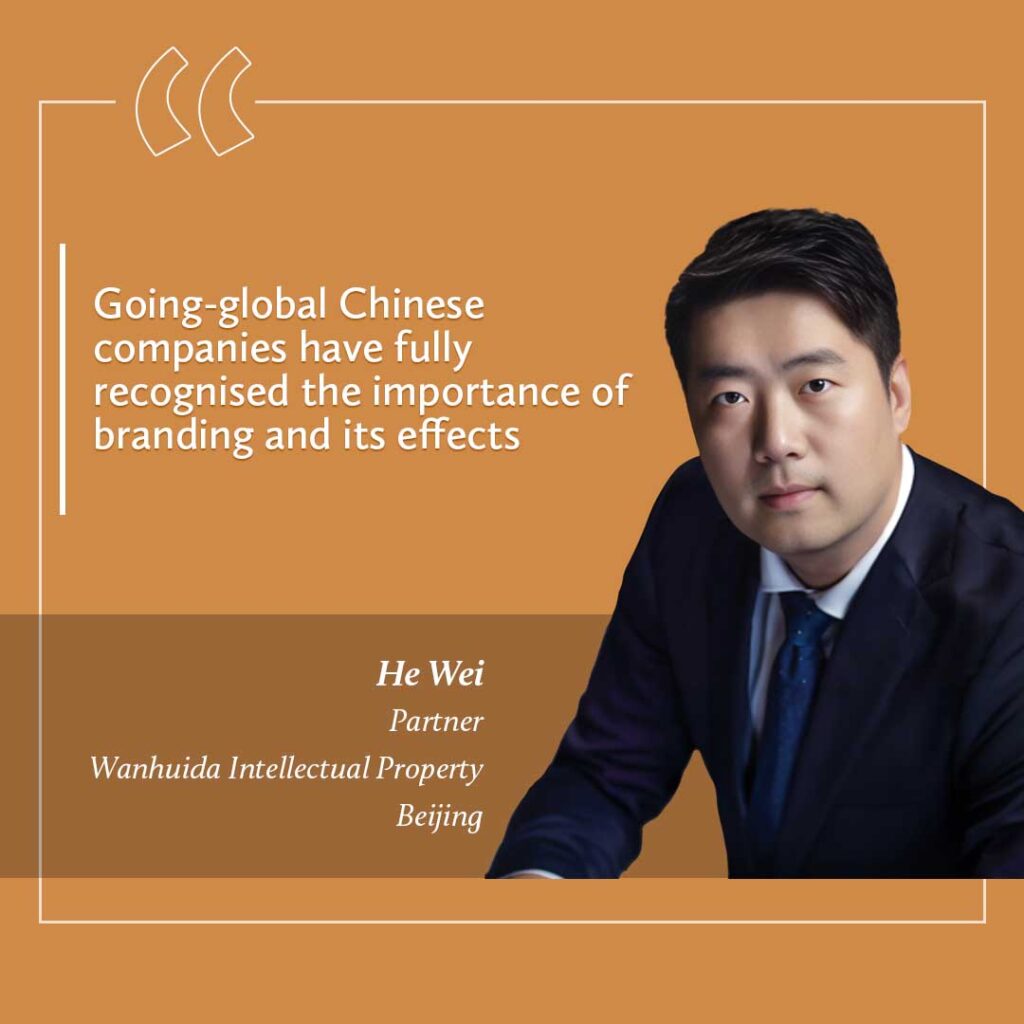
He Wei, a partner of Wanhuida Intellectual Property in Beijing, says this is especially so in active industries like new energy, automobiles, e-commerce platforms and digital products. “This trend signifies that these going-global Chinese companies have fully recognised the importance of branding and its effects,” he says.
“By creating brands that are distinctive, culturally and in terms of consumption habits close to the target market, Chinese companies can establish close connections with overseas consumers, gain their recognition and trust, and firmly establish themselves in overseas markets.”
Hatty Cui, the Beijing-based China general manager of Rouse China, says Chinese companies have established a more comprehensive and in-depth IP protection system. Apart from trademark registration and protection, the focal points for these companies have grown to include patents, trade secrets, design patents and overall overseas IP strategies.
“Companies face a variety of obstacles to defend their rights and risks of infringement during the process of marketing their products and services overseas, so their demand for legal services related to overseas IP laws in various countries and regions has become more diversified, professional and complex,” she says.
More Insights