










Elections, political tensions, accelerated regulation and shifting sands of opportunity are some of the factors influencing law firm movements in the region. Like never before, the turnstyle of firm exits and entries provides a pulse count of regional business, writes Brian Yap
Law firms across Asia are experiencing differing challenges and opportunities in light of today’s events, which range from elections and regulatory changes to rising interest rates and US-China tensions. In China, while talk of exits by global law firms amid the country’s strained relations with the US has flooded mass media, a reverse trend of expansion into the world’s second-largest economy by other international law firms has been in motion.
India has also been bucking a trend by running a robust equity capital market during a general downturn in initial public offerings across Asia under a high interest rate environment.
The Philippines has moved into the limelight as a previously overlooked market, with two of Japan’s largest law firms having recently established outposts in the country. Thanks to regulatory changes and government-led economic initiatives, law firms in the country have been benefitting from growing deal activity in sectors including energy, infrastructure and construction.
Regulatory changes in Thailand and South Korea in the capital markets and financial technology sectors, respectively, have been keeping investors on edge. But the regulatory tightening measures have also sent companies knocking on law firms’ doors.
Law firms have also been reaching out to an increasing amount of investment by Japanese and Chinese companies in Southeast Asia amid China’s economic slowdown.
For some Vietnamese firms, the growing amount of Southeast Asia-bound investment has been significant enough to consider striking strategic alliances with Chinese law firm partners to tap into a wider pool of Chinese investors.
Indonesia has been suffering from sluggish activity in the IPO market, but a smooth presidential election in February has led to a gradual pickup in market sentiment and deals. Along with an active flow of inbound M&A deals by foreign strategic investors, new regulations in the insurance space could trigger more corporate work, according to local lawyers.
China
Mainland China’s legal market has been marked by a series of exits and retrenchments by international law firms, particularly those headquartered in the US, amid continuing tensions between the US and China.
But while news including Akin’s Beijing office closure and Dentons’ end of its alliance with Dacheng Law Offices have made headlines in the past year, a number of global and regional law firms are reversing this trend and have set their sights on opportunities in China, particularly in the country’s Guangdong-Hong Kong-Macau Greater Bay Area (GBA).
These foreign players, many of whom have already been running operations in China for years, have been expanding their presence in the world’s second-largest economy with new office launches or strategic lateral partner hires.
Senior partners at those firms told 含羞草社区 that, particularly with the recent expansion of the Qianhai Shenzhen-Hong Kong Modern Service Industry Co-operation Zone, a special economic area in southern China, there is a fresh spring of legal work ranging from dispute resolution and intellectual property to shipping, technology and aviation for foreign law firms to tap into.
“As a firm, we are structured to be sector-focused, so that includes aviation, shipping, construction, commodities, insurance, energy and six of the pillars, and these are all core areas of China’s economy,” says Justin Sun, a partner at Holman Fenwick Willan and the chief representative of the firm’s newly launched Qianhai office.
In the past year, Holman Fenwick Willan, Morgan Lewis, Bird & Bird, Quinn Emanuel and Allen & Gledhill have opened new offices in China. Malaysia-based firm Ricky Tan & Co and Cyprus-based Areti Charidemou & Associates also received approval from China’s Ministry of Justice last year to launch operations in the country.
Morgan Lewis and Bird & Bird, which run offices in Hong Kong, Beijing and Shanghai, both launched new offices in Shenzhen, known as China’s technology capital and home to conglomerates such as Huawei, ZTE Corporation and Tencent Holdings.
Both firms expanded into Shenzhen intending to tap into the deep pool of Chinese technology and life sciences companies there. In Morgan Lewis’ case, its Shenzhen office “will expand the firm’s intellectual property reach in China, with the team litigating the full range of IP cases, including patent and trade secrets disputes”, among other things, according to the firm.
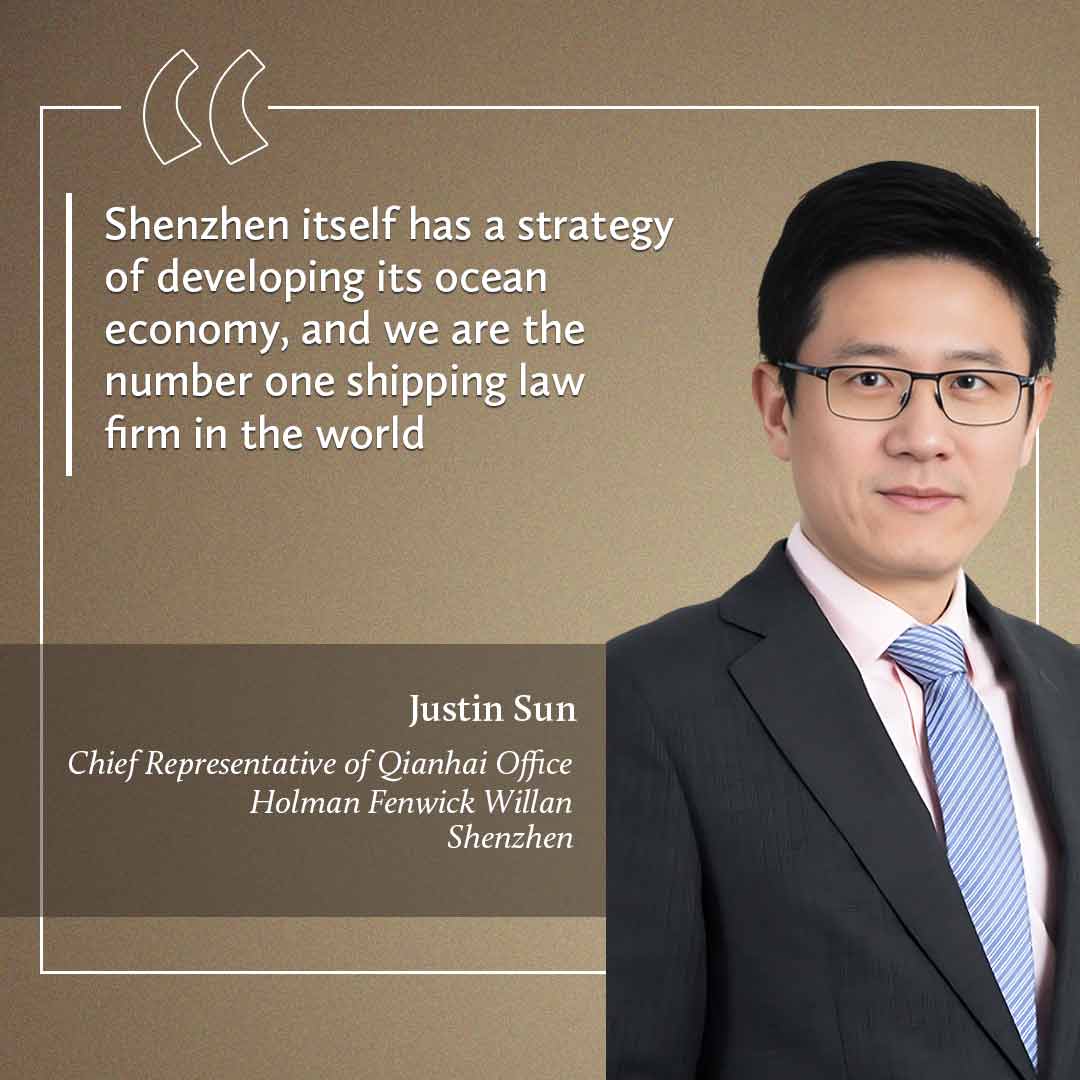
Holman Fenwick Willan, which has offices in Shanghai and Hong Kong, specifically picked Shenzhen’s Qianhai for its China expansion because the development initiatives set for the special economic zone match the bread-and-butter offerings of the UK firm.
“Shenzhen itself has a strategy of developing its ocean economy, and we are the number one shipping law firm in the world. When we started thinking about it, the partners in Hong Kong collectively felt that was where we should be doing something,” says Sun.
For regional players such as Rajah & Tann and Allen & Gledhill, two of Singapore’s largest law firms and both with offices in Shanghai, there is and will continue to be outbound investment work coming out of China into the Southeast Asian region that can be seized.
Kelvin Poon, a deputy managing partner of Rajah & Tann in Singapore and head of the firm’s international arbitration practice, says: “One key market that we see likely to be powering and driving the growth of the dispute resolution practice market in Singapore is actually North Asia and, particularly, the Greater China influence.”
Rajah & Tann’s recent hiring of international arbitration partner, Hew Kian Heong, from Shanghai-based Kewei Law Firm, Herbert Smith Freehills’ joint operation firm in China, is an example of the Singapore firm’s effort to sharpen its offering to Chinese companies.
“Hew is an industry veteran and has been in China for a long time. [Through him] we can have a much closer touch point with clients across China and new sectors, and bring more of our partners into relationships with these clients,” says Poon.
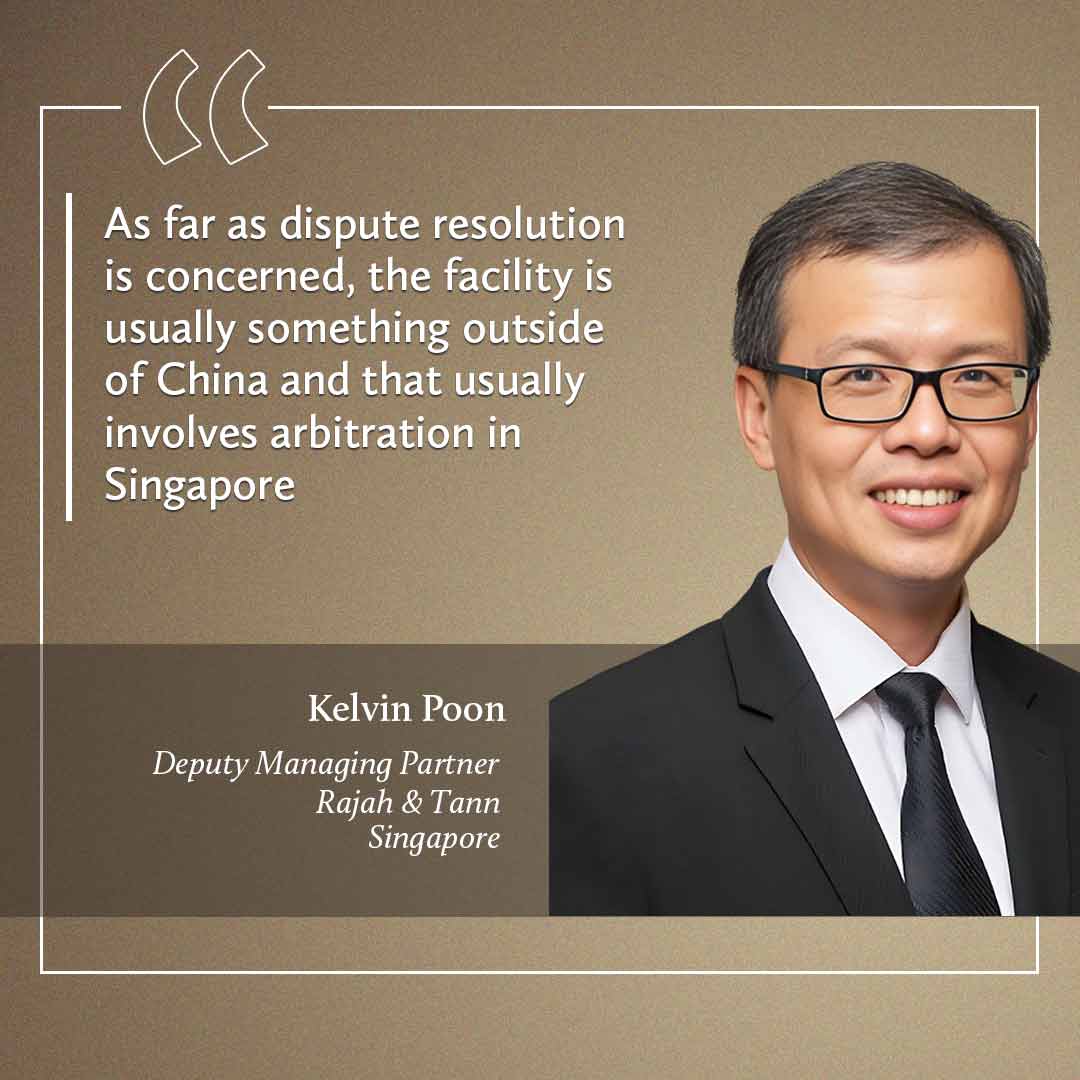
That closeness is important for securing mandates from Chinese companies for their investments into Southeast Asia, including those for energy and infrastructure projects. “We are not in China to practise domestic Chinese law, with Hew and his team acting for Chinese clients on projects overseas.
“As far as dispute resolution is concerned, the facility is usually something outside of China and that usually involves arbitration in Singapore,” says Poon.
India
India, the world’s fifth-largest economy, took the international legal market by surprise in March last year when the Bar Council of India announced the liberalisation of the country’s legal market to admit foreign law firms. One year on, both Asia-based and Western law firms have generally remained in wait-and-see mode, awaiting relevant rules to be clarified and a regulatory framework to be established before any office launches.
Meanwhile, the Indian legal market, according to senior partners at both domestic and international law firms, is very active in work relating to equity capital markets, cross-border M&A and leveraged finance.
Affected by high interest rates and other issues, bourses in Asian markets such as Thailand, Singapore, Hong Kong and the Philippines have been suffering from a continuing slowdown in IPOs. But, “thanks to strong domestic growth and robust retail markets, India has seen law firms in the country benefitting from a strong pickup in capital raising and IPO work by Indian companies,” says Cyril Shroff, the managing partner of Cyril Amarchand Mangaldas (CAM) in Mumbai.

Global law firms such as Allen & Overy, which has an established India practice in Singapore, have also benefitted from a high volume of legal work from areas including equity capital markets.
Pallavi Gopinath Aney, a partner in the international capital markets practice of Allen & Overy’s Singapore office and joint chair of the firm’s India group, says: “In the equity capital markets space, we are seeing different types of issuers looking to list, ranging from homegrown new-age technology companies or unicorns to the Indian subsidiaries of large foreign multinational companies.”
The Bombay Stock Exchange and the National Stock Exchange recorded 31 IPOs in the fourth quarter of last year, representing a 72% increase over the same period in 2022, according to statistics from EY India. South Korea’s Hyundai Motor has also recently been reported to be considering listing its India unit to raise at least USD3 billion.
“The younger technology companies tend to have a large investor base in the capital structure looking for an exit. We are also seeing other IPOs being driven by private equity exits,” says Aney.
The cross-border M&A space recently stole the limelight with news of the Walt Disney Company’s USD8.5 billion merger with Reliance Industries in India. This blockbuster merger has brought together six international and domestic Indian law firms.
Skadden, as well as Khaitan & Co, and Shardul Amarchand Mangaldas & Co are advising Reliance Industries and Viacom18 Media on the transaction. Cleary Gottlieb, Covington, and AZB & Partners are representing Disney in the deal.
Rabindra Jhunjhunwala, a partner and senior member in the corporate and commercial practice group of Khaitan & Co in Mumbai, says his firm has been occupied with M&A work coming from information technology, manufacturing, financial services and healthcare.
“These are the sectors that have seen the maximum push from the government of India, which is why private capital also backed these sectors, resulting in increased deal activity,” he says.
An increase in investment coming from US and Japanese companies amid a slowdown in China’s economy has also been fuelling work in the M&A and investment space, along with employment, disputes and intellectual property matters, according to Shroff, of CAM.
You must be a
subscribersubscribersubscribersubscriber
to read this content, please
subscribesubscribesubscribesubscribe
today.
For group subscribers, please click here to access.
Interested in group subscription? Please contact us.
你需要登录去解锁本文内容。欢迎注册账号。如果想阅读月刊所有文章,欢迎成为我们的订阅会员成为我们的订阅会员。