









Courts in Hong Kong – generally a creditor-friendly jurisdiction – may wind up local companies and, if certain conditions are met, foreign companies incorporated in other jurisdictions. Hong Kong has no statutory corporate rescue regime similar to the UK administration regime and the US chapter 11 debtor-in-possession regime.
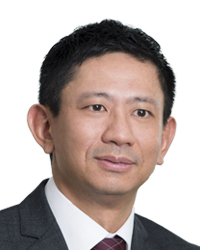
Partner
Latham & Watkins
Hong Kong
Tel: +852 2912 2570
Email: howard.lam@lw.com
The Hong Kong provisional liquidation regime also does not provide a viable tool for debtors to restructure debts because:
- the powers of the management are displaced by the court-appointed provisional liquidator; and
- a provisional liquidator cannot be appointed solely to restructure a company’s debts.
Schemes of arrangement remain an important restructuring tool but do not provide the debtor with any moratorium against creditors’ actions (including filing for the winding-up of the debtor). Accordingly, distressed conglomerates have had to find creative arguments to fend off winding-up petitions and to find breathing space to restructure their debts.
This article summarises how the courts have recently addressed arguments from debtors to dismiss winding-up petitions or adjourn winding-up hearings on the following bases:
- Bondholders’ standing to petition for winding-up;
- Adjournments to further restructuring discussions;
- Soft-touch provisional liquidations in the company’s place of incorporation; and
- Disputes concerning debts subject to arbitration clauses and/or exclusive jurisdiction clauses
Bondholders’ winding-up petitions

Counsel
Latham & Watkins
Hong Kong
Tel: +852 2912 2643
Email: flora.innes@lw.com
In recent bond defaults, debtors have sought to dismiss winding-up petitions from indirect beneficial bondholders on the basis of lack of standing. They argue that the indirect beneficial bondholders are not creditors, nor contingent or prospective creditors with standing to petition for winding-up in Hong Kong.
This is because, in a global note structure, the trustee holds the benefit of the bonds, and the actual global note itself is typically held by a common depository (or its nominee) as a single holder, while indirect beneficial bondholders hold their interests in the global note only indirectly through the clearing system via various layers of custodians and other intermediaries.
In the case of Leading, the court refused to recognise indirect beneficial bondholders’ standing to present a winding-up petition as a contingent creditor. The court found that an “existing obligation” is required for a person to qualify as a contingent creditor, and in the case of an indirect beneficial bondholder, no such obligation arose unless a definitive note is issued.
The court considered that the global note structure for bonds is premised on action to be pursued by the trustee exclusively on behalf of the bondholders as a class, as can been inferred from the “no action” clause, and recognising a mere beneficial holder of the note as a contingent creditor may lead to duplicity of action and give rise to potential abuse.
The Leading decision is significant because it means that, to overcome the standing hurdle, indirect beneficial bondholders must work proactively with the trustee and factor in minimum instruction thresholds and trustees’ indemnity requirements. These requirements (and associated costs) may discourage bondholders from taking action against debtors following a default.
In typical New York law indentures, bondholders must hold at least 25% in outstanding principal amount of the bond tranche (which may be a sizeable stake) to instruct the trustee to take action. The indentures typically do not oblige trustees to take action until instructing bondholders provide satisfactory pre-funding and indemnity.
Restructuring discussions

Associate
Latham & Watkins
Hong Kong
Tel: +852 2912 2717
Email: anthony.chan@lw.com
Debtors have also sought adjournment of winding-up hearings on the basis that negotiating and implementing a company’s debt restructuring needs time. Recent cases reaffirm that it is not sufficient for a company to cite commercial discussions with creditors or generally assert that it has been actively pursuing a restructuring proposal.
In the Jiayuan case, the court indicated the debtor should demonstrate that it has prepared a concrete restructuring proposal with the support of the requisite majorities of creditors to prove that adjourning the petition serves some useful purpose.
The court did not allow further adjournment of the winding-up hearing if:
- the debtor announced its intention to terminate the exchange offer, which was intended to consummate the restructuring;
- the winding-up hearing has been adjourned for eight months without meaningful progress; and
- some creditors supported the debtor’s immediate winding-up.
In the Dexin case, although the company is listed, the court issued a winding-up order against the company on the first hearing before the company judge without any adjournment. The company could not produce even a term sheet for the restructuring after the company has been in default of payment on its notes for over 18 months. Apparently only a small percentage of its noteholders opposed the winding-up.
Soft-touch provisional liquidations in the company’s place of incorporation. Given the absence of a statutory moratorium regime, distressed Hong Kong companies incorporated in offshore jurisdictions have sought to appoint a “soft-touch” provisional liquidator in the offshore jurisdiction where they are incorporated (e.g. Cayman Islands). Subject to recognition by Hong Kong courts, this would allow them to:
- Benefit from the stay of proceedings in the “soft-touch” provisional liquidation; and
- Use the offshore soft-touch provisional liquidation to seek adjournment of the Hong Kong winding-up hearing (if filed in Hong Kong).
In recent cases, the effectiveness of the above-mentioned technique has become questionable given that the courts have become more conservative in recognising liquidators and provisional liquidators appointed in a foreign jurisdiction where the company is incorporated, if the company has sufficient connection with Hong Kong and could have been wound up there.
Thus, debtors with their centre of main interest in Hong Kong and local creditors cannot readily rely on offshore soft-touch liquidations to import a moratorium into Hong Kong as a slingshot tactic to fend off winding-up petitions, or to appoint provisional liquidators solely to pursue a restructuring.
In the Lamtex case, the court ruled that recognition of an offshore provisional liquidator does not automatically give rise to a stay of proceedings. It declined to adjourn the Hong Kong winding-up petition to give primacy to the company’s Bermudan proceedings and appointment of provisional liquidators, as doing so would be artificial given the company’s centre of main interest and its creditors were in mainland China and Hong Kong.
Similarly, in the China Bozza case, the court was concerned that the soft-touch provisional liquidators failed to show regard to creditors’ interests by not providing details of the restructuring, or evidence to support the application for their appointment. The court found it unnecessary to appoint offshore provisional liquidators for the restructuring. To adjourn the petition in Hong Kong, the company should have sought restructuring advice locally and negotiated with creditors instead.
Disputes concerning debts subject to arbitration clauses and/or exclusive jurisdiction clauses. Debtors have also sought to argue that if there is a dispute over the underlying debts and such debts are subject to arbitration or exclusive jurisdiction clauses, the court should stay the winding-up proceedings so that the proper forum can resolve the underlying disputes.
In recent cases, the court deferred disputes of the underlying debt to the pre-agreed dispute resolution forum, except in countervailing factors such as when the dispute borders on the frivolous, or abuse of process. This approach makes it more difficult for creditors to use winding-up petitions as a pressure point or recovery tactic if the underlying agreements contain arbitration clauses and exclusive jurisdiction clauses in favour of non-Hong Kong courts.
In the Guy Lam case, the court affirmed the principle barring countervailing factors such as risk of insolvency affecting third parties, or a dispute that borders on the frivolous or abuse of process, the court would stay winding-up proceedings so that the dispute can be resolved in the foreign court specified in the exclusive jurisdiction clause.
In the Simplicity case, the court considered the situation in which the debtor company had not complied with an arbitration clause by failing to actively pursue arbitration. The court held that an intention to arbitrate was sufficient to stay the winding-up petition, in the absence of a “frivolous or abuse of process” defence.
In the Arjowiggins case, the court upheld a stay on a winding-up petition in which the debtor company raised a cross-claim subject to an arbitration agreement.
The Hong Kong courts’ approach is different from that in the latest Privy Council decision in the Halimeda case, which held that winding-up petitions will no longer be subject to an automatic stay even if the disputed debt is subject to an arbitration or exclusive jurisdiction clause. How the Hong Kong Court will reconcile between Halimeda and the line of authorities described above remains uncertain.
 LATHAM & WATKINS
18th Floor, One Exchange Square,
8 Connaught Place, Central, Hong Kong
Contact details:
Tel: +852 2912 2500