




In the international arbitration community, there is a well-known saying: “Arbitration is only as good as the arbitrators.”
For parties involved, the selection of arbitrators is the most important procedural right; for arbitrators, the benefits of arbitration proceedings largely depend on the tribunal’s functioning and, for arbitration institutions, a well-balanced tribunal is essential to ensure the quality of arbitral awards and the reputation of the institution.
All arbitration rules contain provisions on tribunal formation, with only slight differences in wording. However, the actual practice of tribunal formation varies significantly. Ensuring parties’ rights to select arbitrators, maintaining the professionalism of tribunal formation, and reconciling efficiency with fairness in complex cases are all issues that need to be addressed in practice. So, how does the formation of a tribunal transpire at the Hong Kong International Arbitration Centre (HKIAC)?
Autonomy in arbitrator selection
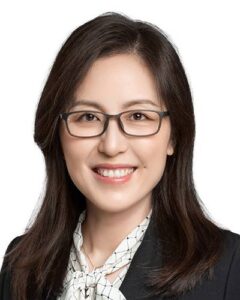
Deputy secretary-general
Hong Kong International Arbitration Centre
The HKIAC ardently upholds parties’ autonomy in choosing arbitrators. Offering a panel and a list of arbitrators, along with specialised rosters for arbitrators in financial and intellectual property disputes, the HKIAC allows parties unrestricted selection from or beyond these lists. At the HKIAC, parties exercise great freedom in selecting arbitrators, devoid of constraints regarding arbitrators’ age, profession or legal qualifications.
When selecting an arbitrator, parties may opt for a direct choice or furnish a detailed “profile” outlining desired expertise, years of practice, legal qualifications, nationality, etc. The HKIAC stands steady to facilitate arbitrator appointment based on these specifications.
In scenarios when a party fails to participate, waives selection rights, or an impasse emerges in selecting a sole arbitrator, the HKIAC will assume the responsibility of appointing the arbitrator. This internal appointment process is governed by principles of “predictability” and “professionalism”.
Predictability in arbitrator appointments is underpinned by adherence to the HKIAC’s Practice Note on Appointment of Arbitrators. This practice note outlines various factors the HKIAC considers, including but not limited to parties’ identities, the identity of their legal representatives and co-arbitrators, arbitrators’ proposed fees, governing law, seat of arbitration, language of arbitration, and contract language.
The purpose is to match each case with the most suitable arbitrator, ensuring parties’ expectations are met and fostering transparency in the HKIAC appointment process.
Additionally, professionalism is exemplified by the HKIAC’s Appointments Committee, currently comprising 11 distinguished lawyers and senior arbitrators from seven jurisdictions: Hong Kong, mainland China, the UK, Germany, South Korea, Australia and Singapore. The names of the members can be found on the HKIAC’s website.
In practice, the HKIAC Secretariat prepares detailed case reports and legal analyses (e.g., analysing IBA Rules and legal views from different jurisdictions) and submits them to the Appointments Committee, along with recommended candidates. The members of the committee then provide professional opinions, review the candidates, and make adjustments as needed.
Appointing a presiding arbitrator
The presiding arbitrator is first nominated by the co-arbitrators selected by the parties, as provided in article 8 of the 2024 edition of the HKIAC Administered Arbitration Rules:
“…8.1(d) the two arbitrators so appointed shall designate a third arbitrator, who shall act as the presiding arbitrator. Failing such designation within 30 days from the confirmation or appointment of the second arbitrator, the HKIAC shall appoint the presiding arbitrator.”
In practice, a significant portion of presiding arbitrators are jointly selected by co-arbitrators. This reflects the significance of the disputes’ value. Cases administered by the HKIAC in 2023 averaged USD60 million, with parties frequently represented by top-tier law firms that customarily exercise their right to select co-arbitrators. Co-arbitrators are usually carefully selected by the parties and often collaborate to appoint a trusted presiding arbitrator, thus ensuring tribunal composition integrity.
To guarantee the independence and impartiality of the presiding or sole arbitrator, article 11 of the HKIAC Administered Arbitration Rules mandates a “neutral nationality”:
“11.2 Subject to Article 11.3, as a general rule, where the parties to an arbitration under these Rules are of different nationalities, a sole or presiding arbitrator shall not have the same nationality as any party unless specifically agreed otherwise by all parties.”
It is also worth mentioning Hong Kong’s unique position. As the only common law jurisdiction in Greater China, Hong Kong has a large pool of arbitrators with legal expertise, linguistic proficiency and cultural sensitivities. In light of this, the HKIAC often consults parties on whether they would consider or object to the appointment of a presiding or sole arbitrator holding a Hong Kong passport.
Since 2018, objections have been rare, indicative of the market’s high trust in the neutrality and professionalism of Hong Kong arbitrators.
Diversity in tribunal composition
The HKIAC actively advocates diversity in tribunal formation and, in 2016, it signed the “Equal Representation in Arbitration Pledge”. This was followed by the 2018 launch of the “Women in Arbitration” (WIA) initiative to foster diversity in arbitration based on gender, age, culture and other factors.
The 2024 HKIAC Administered Arbitration Rules explicitly incorporate diversity into article 9. Parties are “encouraged” to consider diversity when selecting arbitrators while the HKIAC shall take diversity into account when appointing arbitrators.
Including the promotion of diversity in the arbitration rules is a forward-looking initiative globally. It demonstrates the HKIAC’s commitment to nurturing diversity in tribunal composition, which enhances the integrity of arbitration proceedings and the fairness of arbitral awards.
Conclusion
The HKIAC wholehearted upholds parties’ autonomy in rules and practices governing the tribunal formation. With an experienced and international Appointments Committee, it ensures the most fitting arbitrator is found for each unique case. Furthermore, the HKIAC encourages parties to actively consider diversity in arbitrator selection, contributing to the overall progress of the arbitration industry.
Leveraging its unique legal framework and profound understanding of the global arbitrator landscape, the HKIAC offers world-class tribunal formation services not only for institutional arbitration but also for ad hoc arbitration seated in Hong Kong.
Yang Ling is deputy secretary-general at Hong Kong International Arbitration Centre
JOIN OUR FORUM
China Business Law Journal welcomes your responses to articles that appear in the Dispute Digest section. In line with our desire to make this section a regular forum of ideas, cases and observations, we also invite you to contribute. Articles should ideally be about 900 English words and 1,500 Chinese characters in length. Please send them to cblj@law.asia. We will publish the best and most topical articles each month.