



A slowing economy has exposed China’s insolvency regime as a system grappling with outdated legislation, growing cross-border complexities, and a cultural mindset reluctant to change. Yet, within these challenges lie opportunities for reform, writes Luna Jin
In an ancient Chinese fable, the renowned physician Bian Que warns a ruler about a minor illness, only to be dismissed. He returns twice more, each time urging action as the illness worsens. By the fourth visit, the physician leaves silently – the illness has become terminal, and the ruler dies.
This frequently quoted tale brings to mind China’s corporate insolvency landscape, where businesses often delay seeking help until financial troubles spiral out of control.
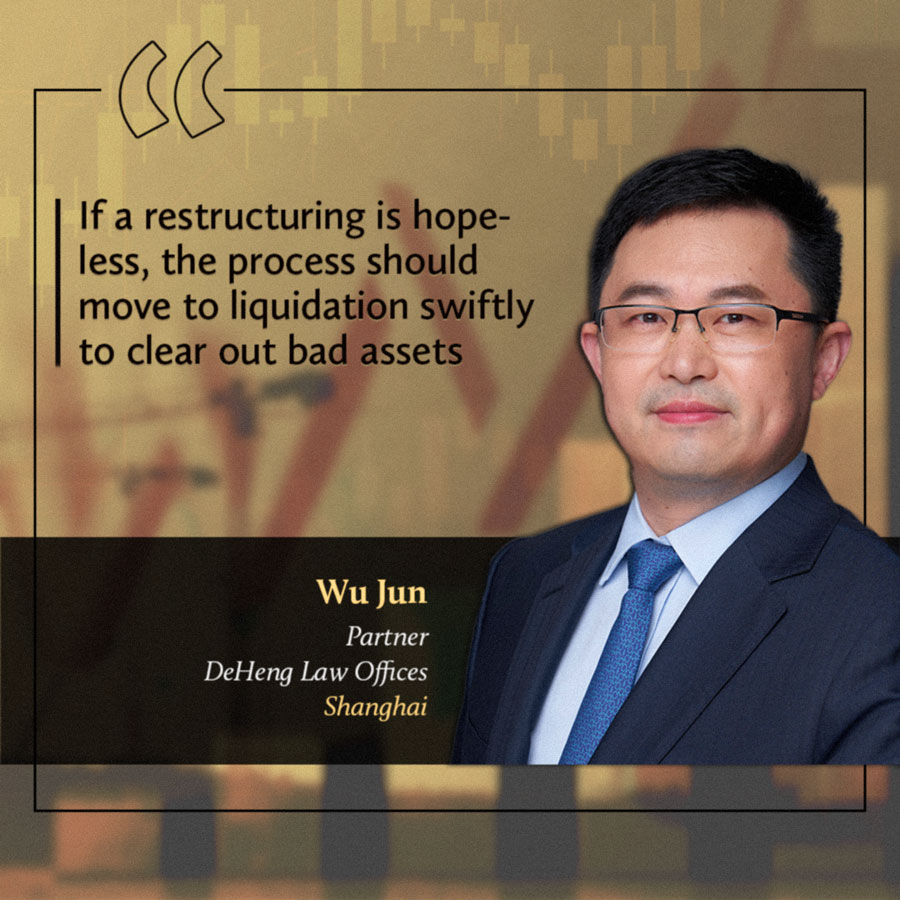
“This isn’t a legal issue – it’s a cultural one,” says Wu Jun, a partner at DeHeng Law Offices in Shanghai.
Cultural stigma, structural inefficiencies and a weak legislative framework have historically hindered companies from using insolvency tools effectively. With high-profile bankruptcies making headlines, particularly in the real estate sector, the country’s insolvency regime has come under intense scrutiny.
Yet, even as these challenges mount, reforms and innovations are reshaping the field, providing both hope and hurdles for debtors and creditors alike.
What’s driving bankruptcy spike?
As the Chinese economy faces headwinds, bankruptcy cases have surged. Wu observes that filings are rising not only in major economic hubs, but also in traditionally quieter regions like the northwest, which now report a growing number of cases.
“There’s a clear trend toward more cases across the country,” says Wu. However, he points out an ironic twist: while the volume of cases is rising, investor participation in distressed assets is declining, and the amounts being invested are shrinking.
Industries hit hardest by overcapacity – such as new energy vehicles and photovoltaics – are becoming the main targets of bankruptcy filings. But 2024 has seen fast-moving consumer goods emerge as the sector most affected, according to Wu.
Similarly, a Shenzhen-based partner at Zhong Lun Law Firm, highlights the real estate sector’s outsized role in the crisis. “The financial troubles of real estate developers have cascaded through their supply chains, impacting construction, renovation, and related industries,” he says.
The ripple effects are particularly severe. Xu explains that the economic slowdown has made investors more cautious, increasing the difficulty of achieving successful restructurings.
Market dynamics are also reshaping debt resolution. “Debt repayment methods are becoming more diverse, with equity-for-debt swaps and property trust arrangements increasingly common,” says Xu. Yet, he points out that disputes over the valuation of equity used for debt repayment have become a significant sticking point in many cases.
Legislative overhaul and reforms
China’s corporate bankruptcy law, introduced in 2006, is widely seen as outdated. As early as 2021, the Enterprise Bankruptcy Law was put on the legislative agenda for amendments by the National People’s Congress (NPC), on addressing systemic inefficiencies and adapting to evolving economic challenges. Key priorities include strengthening pre-restructuring mechanisms, improving protections for creditors, streamlining bankruptcy procedures for related entities, and enhancing rules for cross-border insolvency to align with international practices.
However, the proposed amendments are still under review, much like the prolonged revision of the Company Law due to its far-reaching implications.
Among these discussions, Wu points to inefficiencies in the current system’s voting mechanism for restructuring plans. “China could learn from the US Bankruptcy Code by exempting certain creditors from voting when their opposition is predictable, such as when ordinary creditors face a repayment rate of less than 5%,” he suggests.
He also calls for clear time limits on restructuring plans to prevent indefinite delays, citing a case he handled that has been stuck in limbo for nine years. “If a restructuring is hopeless, the process should move to liquidation swiftly to clear out bad assets,” he says.
Xu proposes giving debtors more control during restructuring to encourage earlier intervention. “The fear of losing control often prevents businesses from seeking restructuring until it’s too late,” he explains.
He suggests that “bankruptcy law should be designed to encourage the use of debtor-in-possession models, incentivising earlier applications for restructuring to improve efficiency and outcomes”.
Xu also calls for changes to the process of appointing court administrators, suggesting that debtors and creditors be allowed to nominate candidates, a practice more in line with international standards.
On the judicial and practice fronts, China’s insolvency regime has undergone significant reforms in recent years, including pilot programmes for personal bankruptcy, the establishment of online bankruptcy platforms, and the introduction of pre-restructuring mechanisms. These measures aim to enhance procedural efficiency and transparency, but their implementation has been uneven.
Xu highlights the benefits of these reforms, particularly in improving access to information and streamlining procedures. “The use of technologies like 5G in courts, as seen in Shenzhen and Guangzhou, has significantly improved transparency and made it easier for stakeholders to participate in bankruptcy proceedings,” he says.
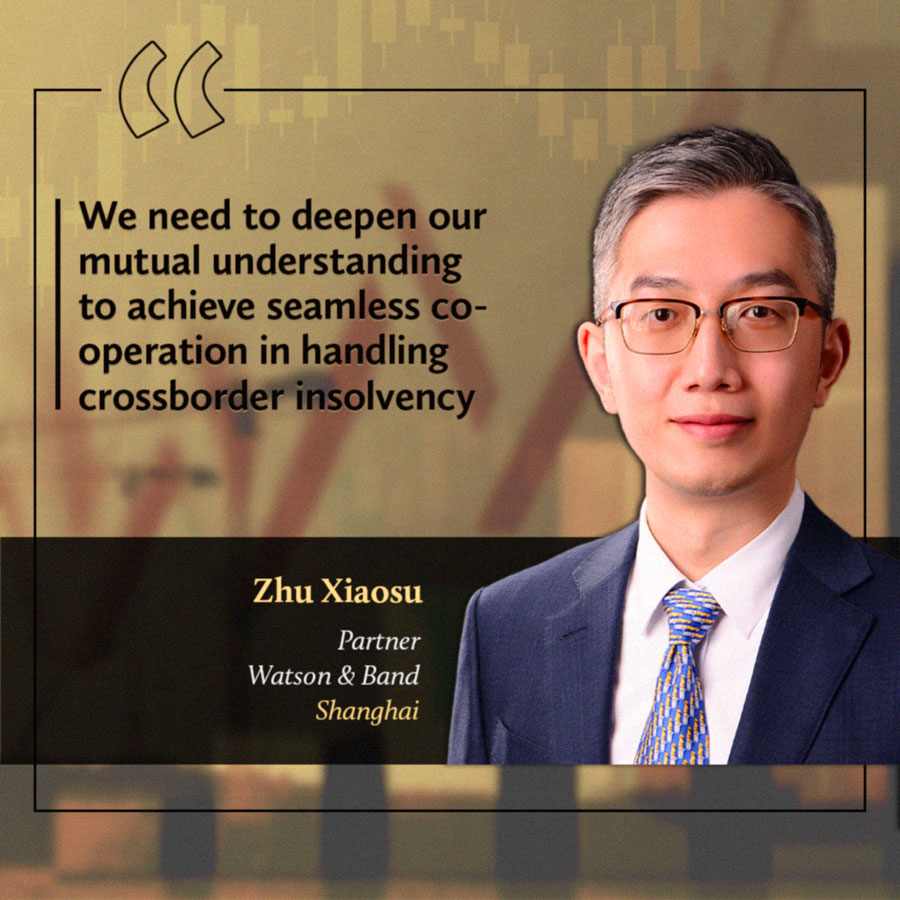
However, implementation challenges remain. Zhu Xiaosu, a partner at Watson & Band in Shanghai, points out that these reforms often place a heavy administrative burden on court-appointed managers. “Data input requirements can take up significant time, detracting from other critical tasks,” notes Zhu.
The reforms have also revealed gaps in the legal framework. For instance, while personal bankruptcy pilot programmes have been successful in places like Shenzhen, they have yet to address the plight of private company owners who remain personally liable for corporate debts.
It remains to be seen when the final draft will be adopted and enacted, according to Zhu, who has contributed to drafting revision proposals for the NPC. “We advocated for measures such as introducing consolidated bankruptcy procedures for related companies, improving tax policies for restructuring, and establishing a mechanism for the disposal of the debtor’s property and the distribution of the insolvency assets,” he says, adding that many of these suggestions have been incorporated into pending revisions of the law.
Cultural barriers
One of the most persistent challenges undermining the effectiveness of China’s insolvency regime is the cultural stigma attached to bankruptcy. Rooted in traditional values that equate financial failure with personal dishonour and loss of face, many businesses avoid seeking insolvency protection until it is too late. This delay often exacerbates financial distress, leaving fewer options for recovery.
Wu, of DeHeng, argues for initiatives to promote bankruptcy as a legitimate and reasonable business tool. He suggests improving public understanding and dispelling the negative perception that bankruptcy is equivalent to evading debts.
A common issue among Chinese companies is the misunderstanding of the true purpose of bankruptcy laws.
Zhu, of Watson & Band, has been dedicated to debunking the misunderstanding for about two decades. “Just as an illness should be treated early, many businesses only consider bankruptcy or restructuring tools after they are deeply mired in financial distress due to a lack of understanding about bankruptcy,” he says.
He highlights the importance of promoting a bankruptcy culture and educating businesses about its value as a tool for recovery, rather than a mark of failure.
To fundamentally transform the cultural reluctance of businesses to use insolvency tools, implementing institutional safeguards is undoubtedly an easy first step.
Xu, of Zhong Lun, notes that even when companies successfully restructure, their credit ratings often remain tarnished, limiting their ability to recover. Additionally, the personal liabilities of corporate executives, such as guarantees for company debts, are rarely addressed in restructuring plans, reducing their incentive to pursue formal insolvency proceedings.
This lingering stigma affects its ability to recover fully and thrive post-restructuring. Zhu says that more needs to be done to promote the benefits of early intervention and to hold executives accountable for delaying necessary bankruptcy filings. He cites attempts in Shanghai’s local legislation to address these issues, but notes that more practical examples are needed to test these provisions in real-world scenarios.
File or not to file? This is a question not just for private sectors, but also for public businesses. Wu calls for “exemption from decision-making responsibilities and risks for state-owned enterprises (SOEs) that agree to bankruptcy”.
Due to stricter government oversight and accountability for public assets, SOE executives face greater decision-making liability than privately owned firms. “State-owned financial institutions, under the current internal assessment and regulatory policies, are likely to lean towards opposing all restructuring decisions,” he adds.
You must be a
subscribersubscribersubscribersubscriber
to read this content, please
subscribesubscribesubscribesubscribe
today.
For group subscribers, please click here to access.
Interested in group subscription? Please contact us.
你需要登录去解锁本文内容。欢迎注册账号。如果想阅读月刊所有文章,欢迎成为我们的订阅会员成为我们的订阅会员。