




Among the countless cases handled by A-List lawyers over decades-long careers, they remember the ones that gave them inspiration, and even touched their heartstrings. Kevin Cheng reports
Working hours tend to blur together. Ask anyone on the street what they did at work the Wednesday before last, and you will likely get a blank stare, or worse, a scowl of annoyance. But ask what key moments they remember most vividly from their entire career, and you just may hear a story or two.
Recently, we did exactly that. We asked the winners of China Business Law Journal’s A-List 2024-25: What are the most memorable cases that you have participated in throughout your career?
Sadly, we can share only a fraction of the tales they told, but what follows offers a rare and insightful glimpse into the cases that shaped some of China’s leading legal minds.
Formative events
Many lawyers remember the cases that fundamentally made them better at what they do, teaching them lessons that, in turn, benefited their long-term practice to a degree often not easily measured.
Expertise is no strange concept for industry-focused professionals. Rachel Turner, a Shanghai-based partner at Pinsent Masons and proud holder of an engineering degree, thrives in resolving complex disputes in the infrastructure and energy sectors. But one case she cites, involving a power plant going wrong every which way, put her savviness to the test.
After working intensely with experts, they were able to trace all seemingly random issues to the fuel used in the plant, which Turner’s client was not responsible for. The hard-won victory, she said, “made me understand the value of knowing everything you can about your case”.
Sometimes, however, knowledge cannot save the day if faith does not give it a proper chance to shine first. Yun Dahui, a Beijing-based partner at Hylands Law Firm, recalls a dispute over a letter of credit during her second year of practice, which proved challenging due to the lack of any relevant guidance documents from domestic trials at the time.
To make matters worse, Yun “visited several experts in this area and received the unanimous answer” that they stood no chance of winning. Undeterred, she eventually found a similar case with a relevant ruling among a vast array of ICC Court of Arbitration cases, which facilitated a resolution via mediation that helped her client avoid a large sum of losses. “Of all aspects of my practice, the one I’m most proud of is that I do not give up easily,” she says.
The case of Sun? Tian Gang v Hong Kong and China Gas (Jilin) (2016) left a lasting impression on Ivan Chang, a Hong Kong-based partner at Reynolds Porter Chamberlain, who represented Sun.
Sun was initially arrested in 2005 on criminal charges and incarcerated until 2012. During this time, an arbitration brought against him by China Gas proceeded and concluded without his knowledge.
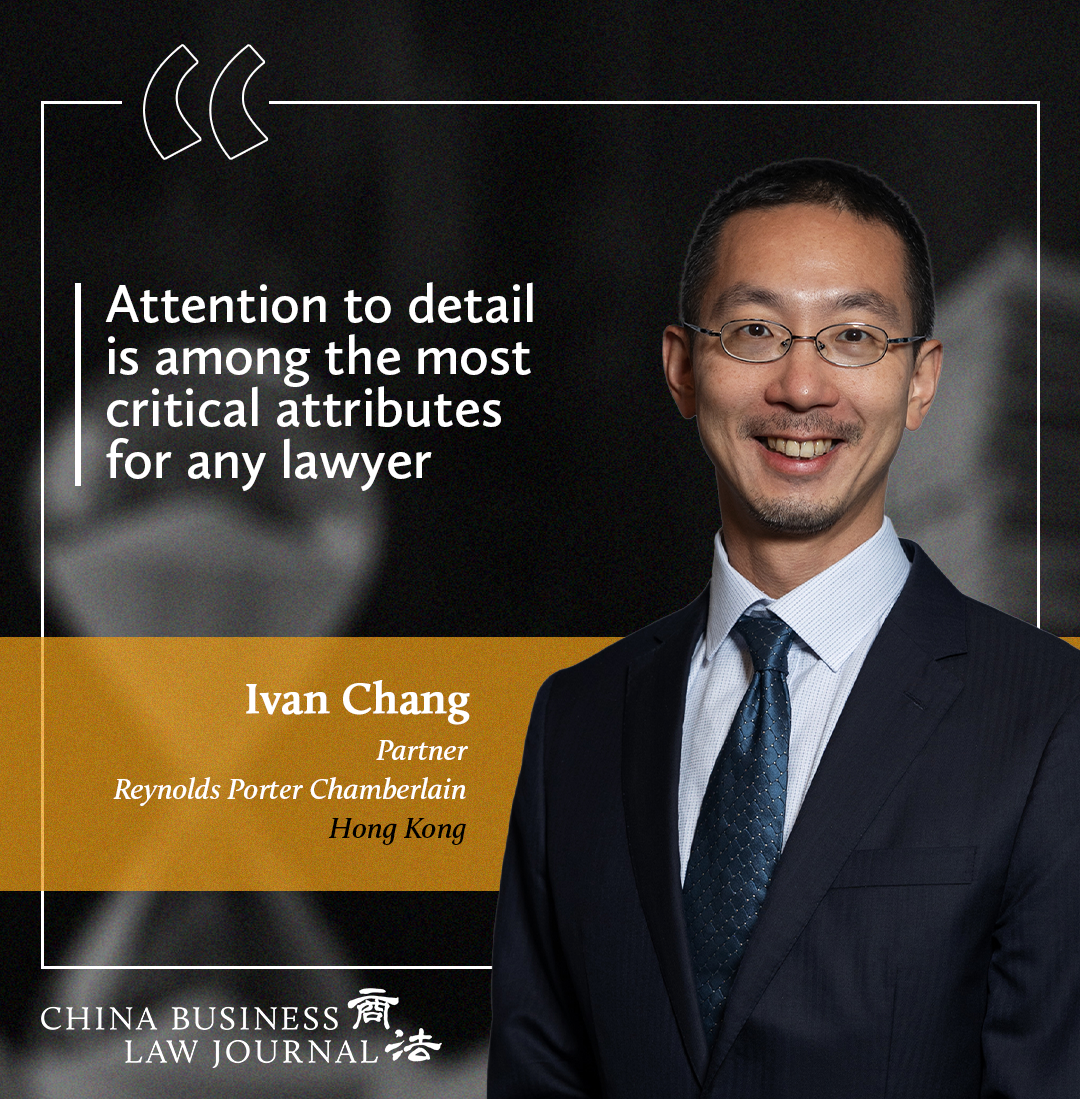
In 2016, the Hong Kong Court of First Instance supported Sun’s application to set aside the award after finding that the deliverer of the notice of arbitration failed to leave the document at one of the designated addresses for service. “This seemingly minor oversight proved decisive,” says Chang.
“This case reinforced for me that attention to detail is among the most critical attributes for any lawyer.”
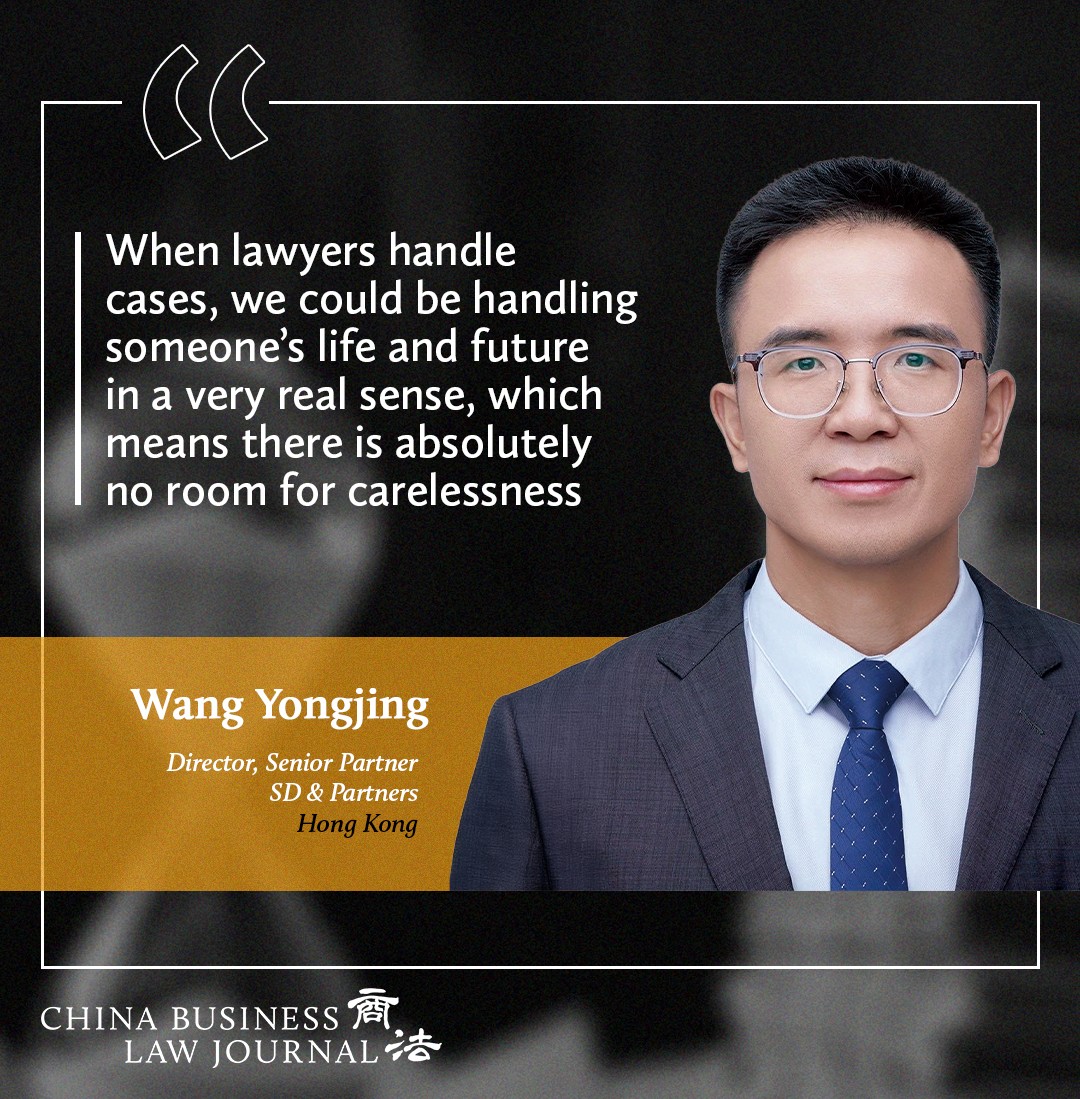
The consequences of neglecting key details can, on extreme occasions, mean the difference between life and death. Wang Yongjing, a director and senior partner at SD & Partners, recalls a homicide early in his career, where the victim died of a 3-centimetre-long wound. However, the weapon carried by the accused, whom Wang defended, was a butcher’s knife measured at 9 centimetres in length, a clear inconsistency that turned the case around.
According to Wang, this particular detail, if undetected, could have ended in an unwarranted capital punishment. “I learned from this incident that when lawyers handle cases, we could be handling someone’s life and future in a very real sense, which means there is absolutely no room for carelessness,” he says.
Too big to forget
Landmark projects, first-in-the-market deals and highly publicised cases are not only strong memories for the lawyers who managed to survive the extraordinary pressure, but also inerasable parts of society’s collective consciousness. These are the cases through which lawyers make a name for themselves and, for better or worse, by which they become remembered throughout their careers.
He Li, a partner and co-head of Asia (ex-Japan) at Davis Polk, advised the Agricultural Bank of China (ABC) in its A+H dual listing in 2010. “A monumental USD22 billion endeavour that at the time stood as the largest IPO in history,” he recalls.
He cites the crafting of ABC’s equity narrative as particularly challenging. “While the deal’s magnitude was undeniable, international investors were largely unfamiliar with China’s rural economies and the banking dynamics of its lower-tier cities,” says He.
To bridge the knowledge gap, He’s team introduced the concept of “county area business” to highlight the rural areas’ untapped potential, as well as incorporating a “mini prospectus within the main document” that focused exclusively on county areas.
“This strategic approach offered investors a clearer understanding of the market landscape and was well-received,” says He.
In 2023, Lyon Dong, a Shanghai-based partner at Grandall Law Firm, advised Rongsheng Petrochemical in the disposition of 10% equity to Saudi Aramco. In addition to going through anti-monopoly and national security reviews in both countries, the dance between petrochemical juggernauts required extensive study of foreign laws, regulations and applicable national compliance requirements.
Equally challenging to navigate were the distinct languages, cultural backgrounds and business environments of the parties.
“We quickly realised that negotiating with the top Middle East SOEs (state-owned enterprises) and their counsel greatly differs from negotiating with Chinese companies in terms of pace, style and communication methods,” says Dong. His team overcame the difficulties eventually, and brought the deal to a close in less than four months.
To Dong, the deal was as much a landmark case as an opportunity for professional growth. “For me, the case brought home the message that, for a cross-border transactional lawyer, intercultural communication, innovative business mindset and efficient teamwork are just as critical as solid legal competence,” he says.
Conor Warde, a partner at the Hong Kong office of CMS, is no stranger to danger, having dealt with “shipowners, banks and government agencies in a piracy and ransom situation in Africa”. But the case that had the greatest impact on him he traces to an earlier time when he was a junior associate. He was acting for a client heavily involved in the 2010 Deepwater Horizon incident, an offshore drilling rig explosion that tragically claimed 11 lives and caused one of the worst environmental disasters in history.
Caught in the metaphorical shockwave, Warde found himself “quickly learning how to manage both other colleagues [including partners] and challenging timelines”.
“It was the first time I realised that I could be a trusted adviser and leader as a lawyer, and it led me into my career as an international lawyer,” he says.
Should bad people be defended? Should a lawyer defend someone who publicly committed the worst type of offence imaginable?
Liang Yali, a senior partner at the Beijing head office of King & Capital Law Firm, had to ponder these questions before agreeing to represent Zhang Fan, one of the main instigators in the notorious 2014 McDonald’s cult murder in Zhaoyuan, Shandong, an incident that shocked and infuriated the nation. Taking on the case meant facing an incredible amount of public pressure.
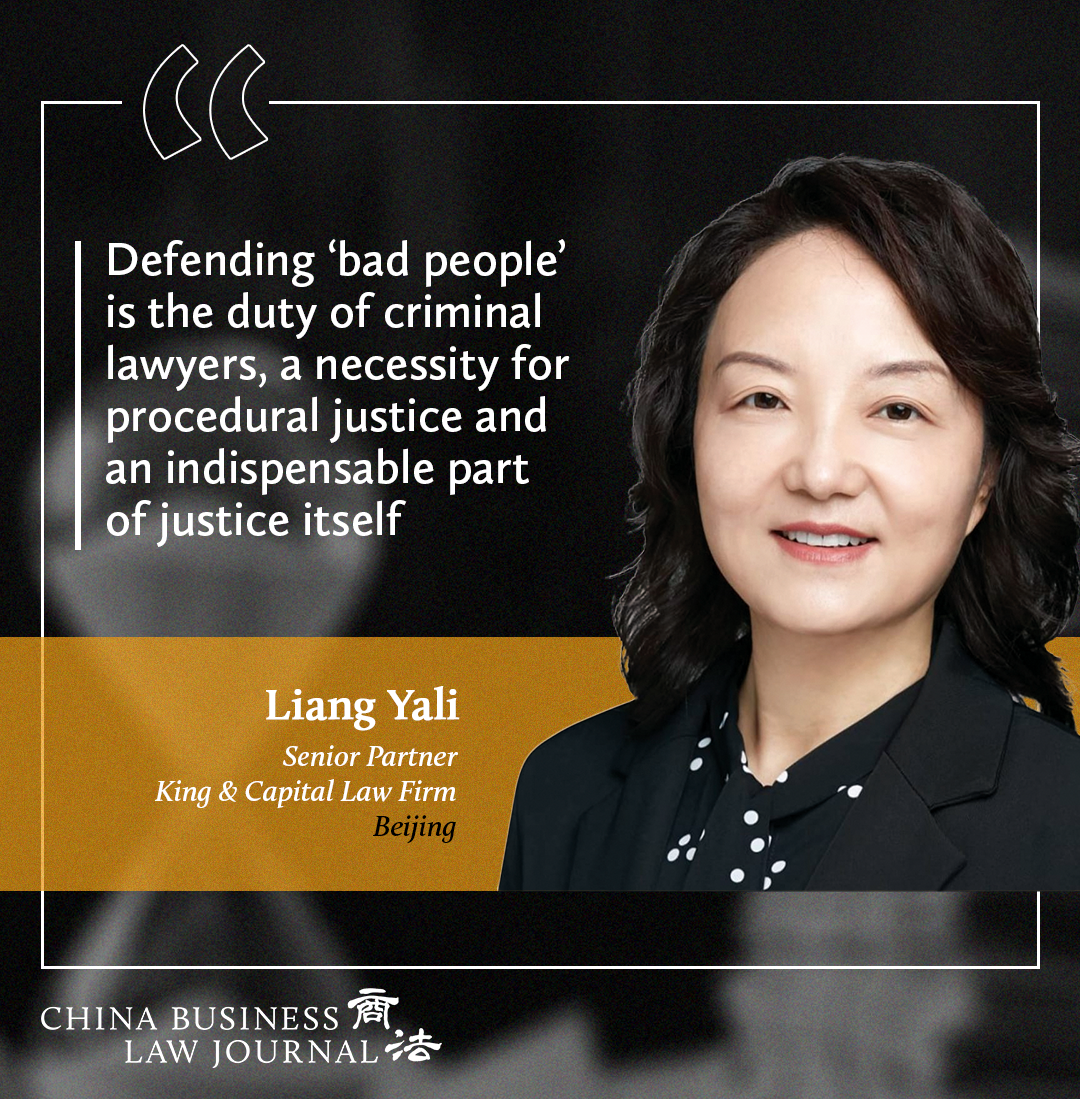
“When someone who committed a serious offence gets a serious penalty after adequate defence by counsel, it is a true demonstration of justice by due process,” says Liang. “Defending ‘bad people’ is the duty of criminal lawyers, a necessity for procedural justice and an indispensable part of justice itself.”
You must be a
subscribersubscribersubscribersubscriber
to read this content, please
subscribesubscribesubscribesubscribe
today.
For group subscribers, please click here to access.
Interested in group subscription? Please contact us.
你需要登录去解锁本文内容。欢迎注册账号。如果想阅读月刊所有文章,欢迎成为我们的订阅会员成为我们的订阅会员。