






Recent tax investigations involving several high-profile South Korean celebrities have drawn significant public attention to the use of one-person corporations as tax planning vehicles. According to the Korean National Tax Service (NTS), these celebrities established corporations primarily to reduce their personal income tax burden, while the corporations themselves allegedly lacked the personnel, facilities and operational substance necessary to conduct the business activities stated in their articles of incorporation and corporate registrations.
The NTS reportedly concluded that these entities were merely nominal corporations without genuine business operations. On that basis, the NTS denied the separate tax status of the corporations and treated the income earned by the entities as the personal income of the individual shareholders, many of whom owned 100% of the shares.
The authorities even suggested that such arrangements could potentially constitute tax evasion involving fraudulent or deceptive conduct, thereby exposing taxpayers not only to additional tax assessments but also to possible criminal liability.
This issue extends far beyond the entertainment industry. The use of corporations for tax reduction purposes has become increasingly common among high-income self-employed individuals, freelancers, medical professionals, lawyers, consultants and other service providers in South Korea.
Understanding why incorporations may offer substantial tax advantages, how the NTS challenges abusive structures, and what practical requirements must be satisfied for a corporation to be respected as a separate taxpayer is therefore highly relevant for South Korean high-net-worth individuals and estate planning professionals.
Progressive personal tax favours incorporation
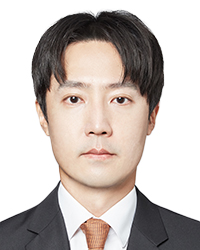
Partner
Lee & Ko
Seoul
Tel: +82 2 2191 3208
Email: jungho.ryu@leeko.com
South Korea’s personal income tax regime is highly progressive. Including local income tax, the marginal personal income tax rate ranges from 6.6% to as high as 49.5%. Income exceeding KRW150 million (USD101,000) is taxed at 41.4%; income exceeding KRW300 million is at 44%; income exceeding KRW500 million is at 46.2%; and income exceeding KRW1 billion is at 49.5%.
By contrast, South Korean corporate income tax rates are substantially lower. Including local surtaxes, effective corporate tax rates generally range from 11% to 27.5%, with the top rate generally applying only when taxable income exceeds KRW300 billion.
The gap between the top personal income tax rate and the corporate income tax rate can therefore exceed 30 percentage points. Although the South Korean government has recently tightened the rules for certain closely held corporations deriving substantial passive income – including by denying the preferential 11% tax bracket from 2025 onwards to certain family-owned entities earning significant rental, dividend, or interest income – incorporation still offers considerable tax advantages in many cases.
This disparity explains why many high-income individuals consider incorporation as part of legitimate tax planning. Through a corporation, income may be retained at the corporate level, rather than immediately taxed to the individual at the highest marginal rates. Funds can later be distributed as dividends or compensation during periods when the individual’s personal income is lower, such as retirement years.
South Korea’s dividend tax credit mechanism also partially alleviates economic double taxation between corporate income tax and shareholder-level dividend taxation.
From an estate planning perspective, the corporate structure may facilitate succession planning, centralised asset management and phased intergenerational transfers through equity ownership arrangements. Accordingly, establishing a closely held corporation is not inherently abusive and is frequently used as a legitimate planning tool by South Korean high-net-worth individuals.
Sham companies trigger tax scrutiny

Partner
Lee & Ko
Seoul
Tel: +82 2 6386 6271
Email: steve.kim@leeko.com
The legal difficulty arises when a corporation exists only on paper and functions merely as a vehicle for tax avoidance, without meaningful operational substance.
South Korean tax law adopts a strong substance-over-form doctrine as its general anti-avoidance rule (GAAR). Article 14(1) of the Framework Act on National Taxes provides that where the nominal owner of income, profits, property, acts or transactions differs from the person to whom such items actually belong, the tax laws shall apply to the person who is the substantive owner.
Under this principle, tax authorities may disregard the corporate form where the corporation lacks genuine economic substance. In practice, the NTS may deny the independent existence of a corporation where the entity was established primarily for tax avoidance purposes, lacks independent operations, commingles corporate and personal finances, or merely serves as a conduit for the shareholder.
In recent celebrity investigations, the NTS appears to have relied heavily on this reasoning. The authorities reportedly concluded that the corporations lacked the personnel and facilities necessary to conduct the registered business activities, and that actual business operations could not be verified. Consequently, the income generated under the corporate name was recharacterised as personal income subject to much higher individual income tax.
The controversy has intensified because the NTS also referenced the possibility of criminal tax evasion charges. Under South Korean criminal tax law, simple underreporting or non-filing is generally insufficient to establish criminal tax evasion. Instead, the authorities must demonstrate affirmative deceptive conduct that makes the assessment or collection of tax impossible or substantially difficult.
The key issue is therefore whether conducting business and filing tax returns through a corporation lacking economic substance constitutes the type of fraudulent or deceptive act required under criminal tax statutes.
Relevant factors may include executing contracts under the name of a sham corporation, issuing invoices through an entity lacking operational reality, artificially diverting income to the corporation, or concealing the true recipient of business income.
At the same time, criminal statutes must be interpreted strictly. Whether a particular corporate arrangement rises to the level of criminal tax evasion will depend heavily on the specific facts and the taxpayer’s intent.
Operational substance protects corporate planning

Partner
Lee & Ko
Seoul
Tel: +82 2 6386 6604
Email: jaekyoung.han@leeko.com
For taxpayers seeking to utilise corporations as part of legitimate tax and estate planning, maintaining sufficient operational substance is critical.
First, the corporation should possess the personnel, office space, equipment and operational capacity necessary to conduct its stated business activities. A corporation that merely maintains a registered address without actual business operations faces substantial risk of being disregarded.
Second, the corporation must actually conduct business activities in its own name. This includes entering into contracts, providing services, receiving payments and maintaining ordinary commercial records. Supporting documentation such as contracts, invoices, payroll records and accounting books is particularly important.
Third, strict separation between corporate and personal finances is essential. The corporation should maintain separate bank accounts and accounting systems, and corporate funds should not be used for personal expenditures without proper accounting treatment. Commingling of funds is one of the most damaging facts in substance-over-form disputes.
Fourth, the corporation should demonstrate independent governance procedures rather than functioning solely as the alter ego of the shareholder. Maintaining shareholder resolutions, board minutes, and internal approvals may help establish that the corporation operates as an independent legal entity.
Substance determines corporate tax outcomes
The line between legitimate tax planning and impermissible tax avoidance ultimately depends on whether the corporation possesses real economic substance.
Given South Korea’s steeply progressive personal income tax rates, the use of corporations as part of tax and estate planning strategies can be commercially reasonable and legally permissible.
However, where a corporation exists merely as a formal shell without genuine business operations, the tax authorities may disregard the entity, attribute the corporation’s income directly to the individual shareholder, and impose substantial additional income taxes. In more aggressive cases, taxpayers may even face allegations of criminal tax evasion.
The recent celebrity investigations demonstrate that incorporation is not a one-size-fits-all solution for reducing taxes. At the same time, these cases should not be understood as signalling hostility towards legitimate corporate structuring itself.
The key issue is whether the corporate entity is supported by sufficient operational and economic substance to withstand scrutiny under South Korea’s substance-over-form principles.
Ultimately, whether a particular structure will be respected for tax purposes depends on a careful analysis of corporate governance, operational substance, income attribution and supporting documentation. With proper planning and implementation, corporate structures can continue to serve as effective and legitimate tools for high-net-worth individuals seeking long-term tax efficiency and estate planning objectives in South Korea.
 Lee & Ko
Hanjin Building, 63 Namdaemun-ro
Jung-gu, Seoul 04532, Korea
Tel. +82 2 772 4000
Email: mail@leeko.com