






China’s pharmaceutical giants have made out-licensing drugs a major part of their business development strategy as they transition from developing generics to innovative drugs. While a surge in deals has occurred between the East and West, how can they navigate intellectual property, cross-border data transfer and antitrust challenges to ensure a seamless transaction? Maisy Mok reports
As a looming patent cliff threatens to erode billions in revenue for global pharmaceutical giants in the next two to three years, the pressure is on to counter the rise of generics. Pharmaceutical giants have turned their gaze towards China to search for the next blockbuster drugs, acquiring medicines in early clinical stages. This pivot is fuelled by China’s significant advancement in R&D capabilities and by its mature pharmaceutical supply chain.
In the first half of this year, China witnessed two record-breaking out-licensing deals. In May, the USD1.25 billion payment between China’s 3SBio and US pharma giant Pfizer set a record for the highest upfront payment in China.
Two months later, China’s pharma top dog Hengrui Pharmaceuticals struck a record-breaking USD12 billion out-licensing deal with UK pharmaceutical giant GSK to develop up to 12 innovative medicines.
But the two cases are just the tip of the iceberg. In the first half of this year, 72 Chinese out-licensing deals have been signed, reaching 76% of the total of 2024, according to China’s pharmaceutical data provider PharmaCube.
The growth began before this year. Between 2021 and 2024, the number of deals has surged by 88% increasing from 50 to 94, while the total value surged by 57 times to USD51.9 billion.
Richard Li, Hong Kong-based head of healthcare and life sciences practice group in Greater China at Simmons & Simmons, says the out-licensing wave began in 2022 driven by the challenging capital market environment. This downturn led to drugmakers that have yet to achieve self-sustaining profitability to face reduced liquidity in primary and secondary markets as well as tighter financing channels.
The unfavourable conditions pushed many companies to out-licence partial rights of their “treasured” innovative drugs in exchange for capital to sustain their R&D and operations.
The strategic change in China feeds the appetite of European and American pharmaceutical companies that were starved of new blockbuster drugs.
Li, who has been in the pharmaceutical industry for 16 years, says China’s increasingly mature pharmaceutical R&D ecosystem, coupled with its ability to generate high-quality early stage clinical data has lured multinational corporations to increase their acquisition of Chinese innovative drug assets in phase I/II clinical stages.
Zhu Min, a Shanghai-based partner at Han Kun Law Offices who assisted GSK and 3SBio in completing their major deals this year, says that compared to the in-licensing business development model, which used to be relatively more common before, out-licensing is often more complex.
Not only deal negotiations, tax and fund planning, IP protection, antitrust filings and cross-border data compliance are involved, but legal issues surrounding corporate governance and information disclosure for listed companies are also within the scope.
The broad spectrum of issues is why pharmaceutical companies must obtain comprehensive legal support when conducting such transactions, says Zhu.
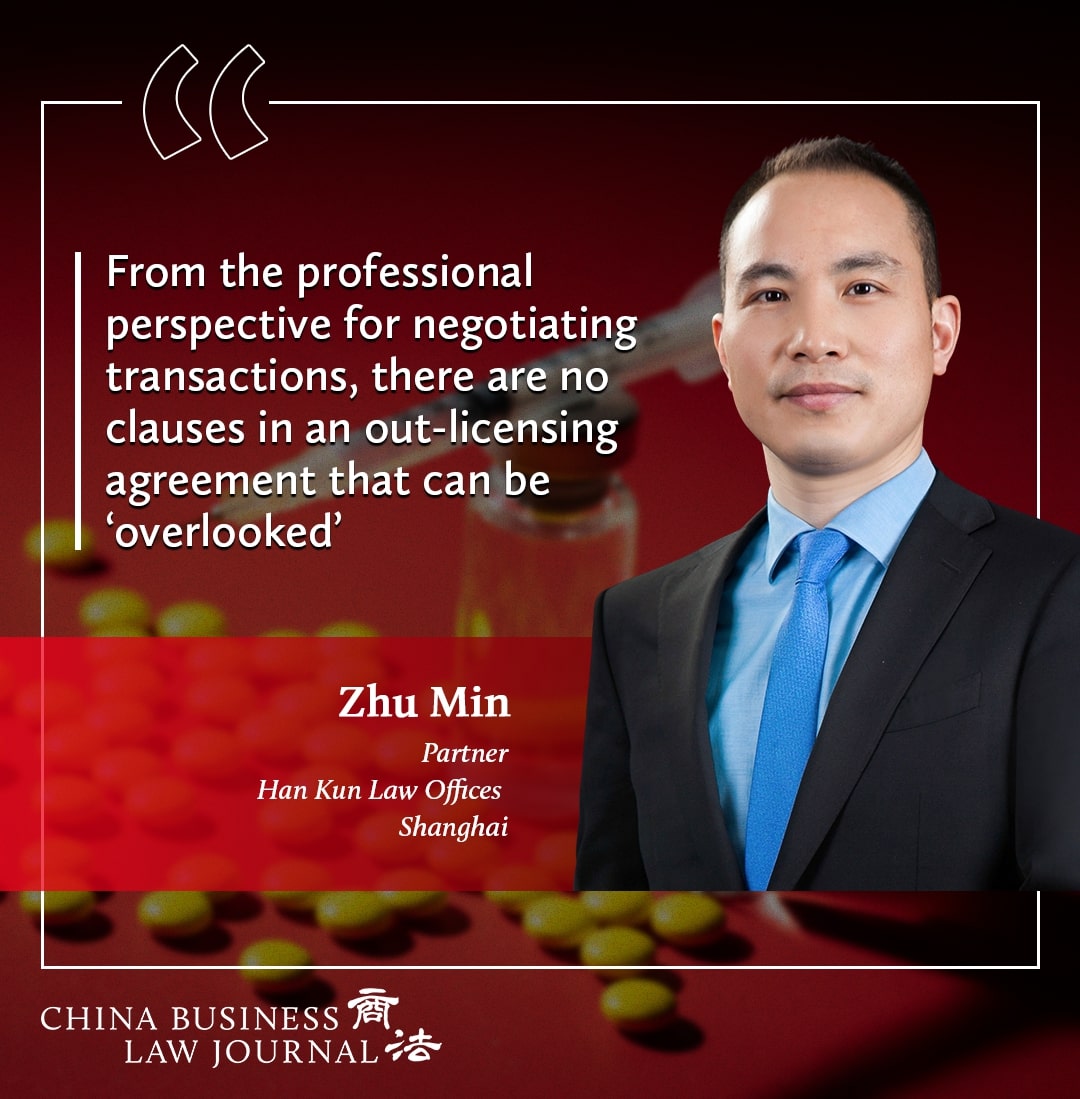
“From the public perspective, the contract price, especially the amount of the upfront payment, often receives the most attention,” says Zhu. “But from the professional perspective for negotiating transactions, there are no clauses in an out-licensing agreement that can be ‘overlooked’ — each one could have a significant impact during the project’s life cycle.”
Beyond the price tag
Taking the “representations, warranties and covenants” clauses as an example, Zhu says many non-legal professionals might view them as boilerplate text, but actually, they cover descriptions and commitments from both parties regarding business operation, compliance, ongoing obligations and more. “Therefore, these clauses must be given the same attention as price terms during negotiations. To mitigate future dispute risks, limit the scope, clarify exceptions and allocate responsibility to where it’s necessary.”
Alan Tamarelli, a New York-based partner at Cooley’s US branch who counselled Hengrui Pharmaceuticals’ out-license deal, says a successful project relies not only on experienced business development professionals but also pre-emptive planning on intellectual property and territory arrangements.
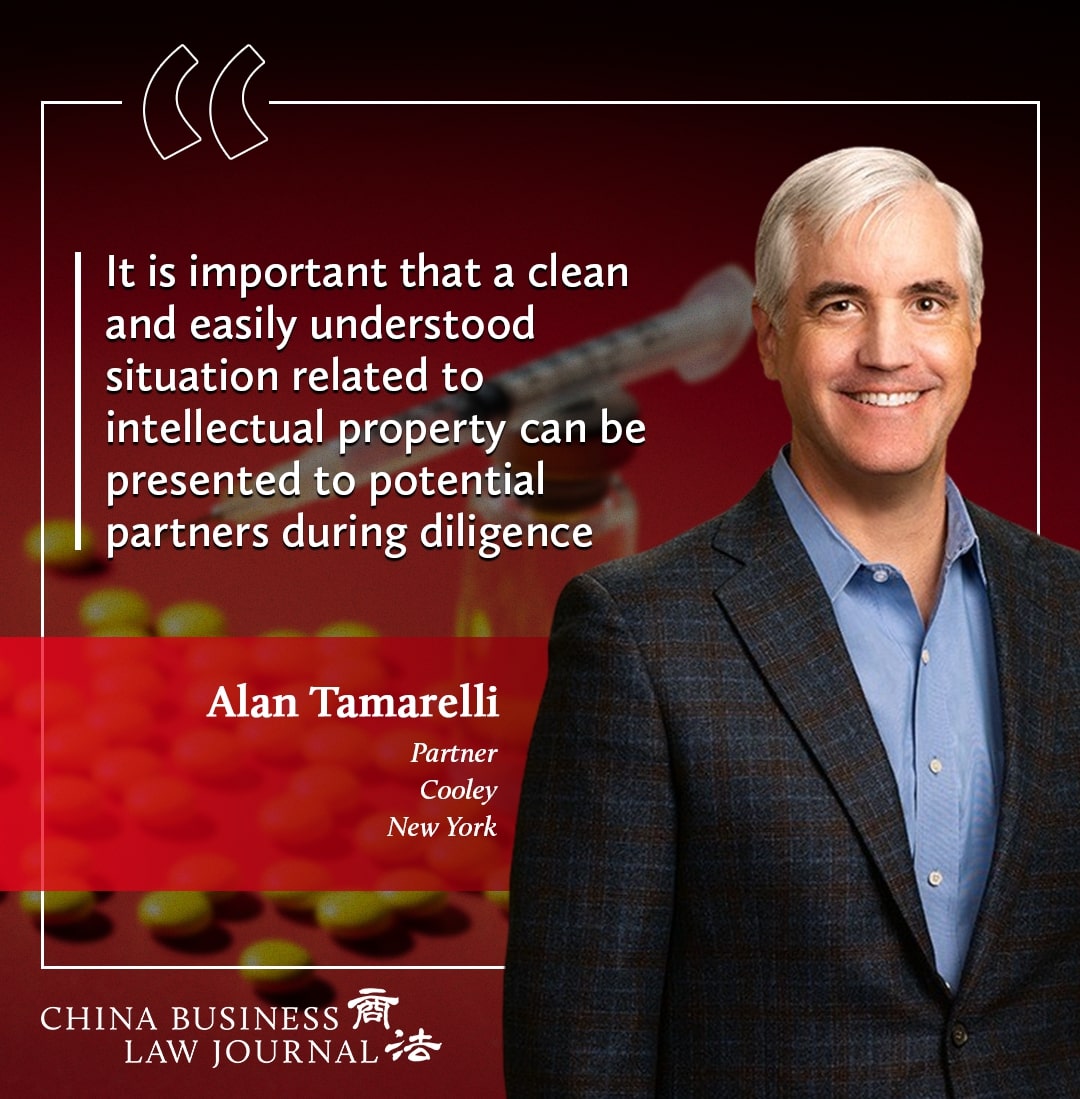
Tamarelli says licensors should engage well in advance in an analysis of important intellectual property-related issues to anticipate the representations and warranties the other party will require. “So that, for example, all upstream obligations are known and clear, and all ownership and related issues are clearly documented. It is important that a clean and easily understood situation related to intellectual property can be presented to potential partners during diligence,” he adds.
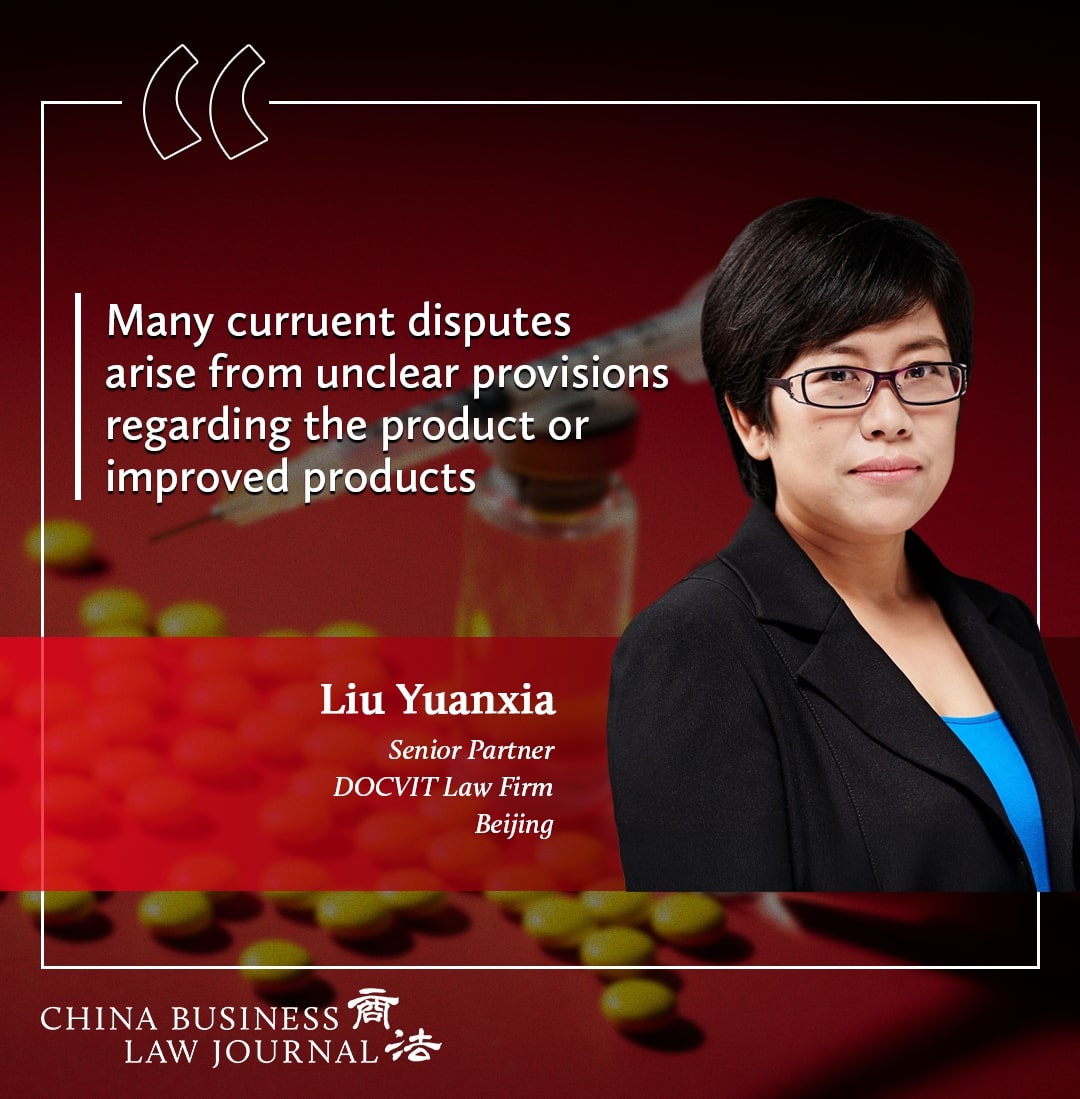
When it comes to patents, Liu Yuanxia, a senior partner at DOCVIT Law Firm’s Beijing branch who handles patent invalidations and litigations for many pharmaceuticals, says companies should pay attention to arrangements for derivative products in patent assignments. She adds: “Many disputes arise from unclear provisions regarding the product or improved products.”
She cites a case between China and an overseas pharmaceutical company as an example: both parties (Party A and Party B) agreed that the original rights holder (Party A) would have rights to use patents for the derivative drug free of charge. However, this has caused a conflict between upstream and downstream ownership during actual execution.
You must be a
subscribersubscribersubscribersubscriber
to read this content, please
subscribesubscribesubscribesubscribe
today.
For group subscribers, please click here to access.
Interested in group subscription? Please contact us.
你需要登录去解锁本文内容。欢迎注册账号。如果想阅读月刊所有文章,欢迎成为我们的订阅会员成为我们的订阅会员。