





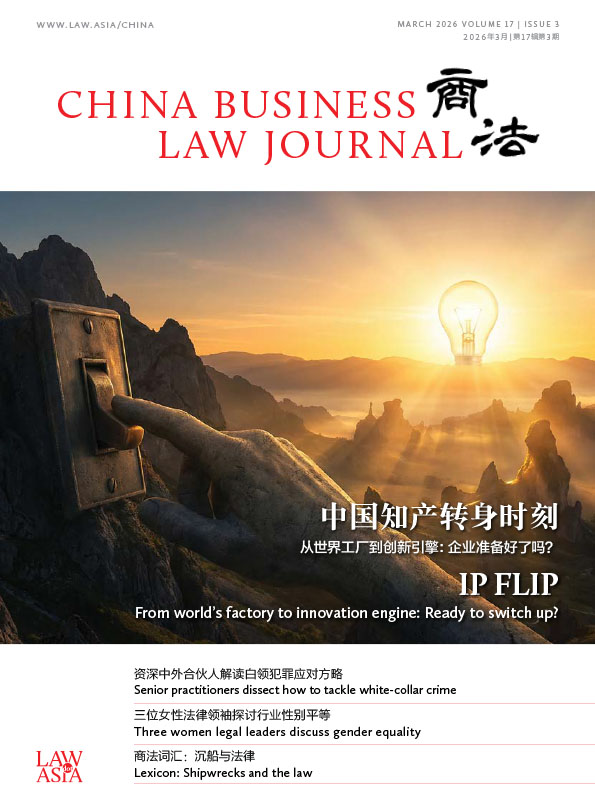





With geopolitical shifts reshaping the rules of intellectual property protection, Chinese companies are leading the charge – planning not just for today, but for the next decade. The question is no longer whether the world’s IP order will change, but who will lead its next chapter. Sasha Zeng reports
Geopolitical forces are reshaping global commerce, and nowhere is the shift more nuanced than in the battle over IP. As tensions and supply chain disruptions prod multinationals to rethink their IP strategies, Chinese companies are rewriting the global IP rulebook – from patent grabs in emerging markets to high-stakes battles over streaming royalties and AI-driven trade secret protection.
China’s corporate champions like Alibaba, Foxconn and Zeekr are deploying legal foresight as ruthlessly as they do manufacturing scale, turning IP into a shield and a spear in the global tech competition.
Expanding in unstable times
The longstanding global turmoil, triggered by geopolitical tensions and worsened by covid-19, has forced a strategic reckoning among multinational companies regarding their global IP framework.
“The eight-year trade war between China and the US, compounded by the pandemic, has made major corporations taste the agony of disruption to their supply chains,” says Eric Xie, vice president and chief legal officer at Foxconn Industrial Internet.
The manufacturing titan, traditionally prioritising patent applications in mainland China, Taiwan, the EU and the US, is now expanding its IP footprint into emerging markets such as India, Mexico and Vietnam.
“The drivers are clear: our substantial investment in manufacturing facilities in these regions, combined with their gradually maturing IP legislation offering stronger safeguards,” explains Xie. This trend, he adds, mirrors intensified patent activity globally as firms build larger portfolios in these markets in the past two to three years.
This co-ordinated shift highlights a broader strategic trend – aligning IP investment with industrial expansion in emerging regions that show strong economic and legislative development potential.
Although judicial practices related to IP in these markets remain nascent, “patent strategies must embrace forward-looking approaches to stay ahead of the curve”, says Xie. “Waiting for the legal environment to fully mature may lead to missed opportunities.”
He further points out the importance of long-term planning: “We are planning for the next decade, or even beyond that.”
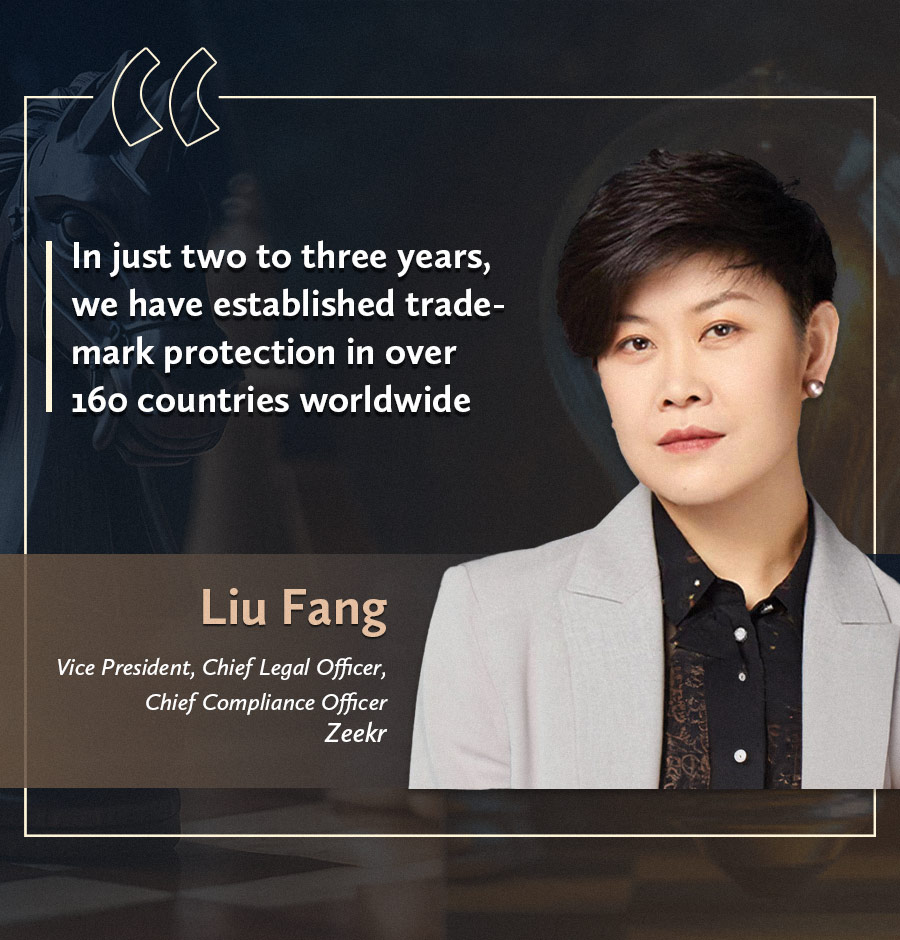
Such foresight is increasingly evident among China’s emerging tech firms with global ambitions. “In just two to three years, we have established trademark protection in over 160 countries worldwide,” says Liu Fang, vice president, chief legal officer and chief compliance officer at Zeekr. The company has also leveraged critical technology patents, including the Sustainable Experience Architecture and Gold Brick Battery, to bolster its global IP portfolio.
Liu encourages firms to harness international IP frameworks, such as the Patent Co-operation Treaty and the Madrid System for trademark registration, to ease entry into global markets, while forging overseas IP partnerships to strengthen dispute resolution capabilities.
Zhu Zhigang, a Shanghai-based partner at Wanhuida Intellectual Property, echoes this approach, recommending companies “plan global strategies in advance and utilise relevant IP treaties to expedite trademark and patent applications, as well as copyright registration”.

Max Sun, a Beijing-based senior partner at Kaiwei Law Firm, advises companies to tailor their IP strategies to specific industries and products, prioritising jurisdictions with vibrant markets, mature legal frameworks and strategic significance, such as those hosting their competitors.
Sun recommends adopting a “dual-track patent strategy”, focusing on consumer technology breakthroughs in Europe and the US, while prioritising sensitive technologies in RCEP states and Belt and Road nations.
Significant shifts are also occurring in global litigation strategies. Sean Ke, Alibaba’s patent legal director, points out the evolving market priorities shaping the landscape of international litigation. “Certain jurisdictions that were once considered less significant have become important,” says Ke.
“For instance, Brazil has emerged as a key market in the standard essential patent [SEP] domain due to its support for injunctions. Therefore, we believe it is necessary to conduct forward-looking legal assessments.”
Brazil’s judiciary has gained recognition for its openness and effectiveness in granting injunctions, making it a popular choice for rights holders. Notable cases include Lenovo v Ericsson (2023), Ericsson v TCT (2012–2014), and Nokia v Amazon (2014), where preliminary injunctions were issued by Brazilian courts in favour of patentees.
Considering the distinct characteristics of different courts and jurisdictions, it is therefore crucial to delve into the nuances carefully when formulating litigation strategies. “Some courts are more favourable to rights holders, while others are less so … it is crucial to anticipate these nuances,” says Xie.
“For instance, when drafting contracts, we can incorporate jurisdiction clauses that favour our position in potential disputes, ensuring a more advantageous legal framework for the future.”
Xie says that when patent infringement happens, swift action is paramount. “For instance, upon identifying an issue at 7PM, by 10AM the next morning the company had already convened a strategic analysis meeting with senior executives to chart an effective course of action.”
He adds that this level of response requires a network of familiar, reliable law firms with expertise in relevant markets.
Considering the excessive costs of patent litigation, selecting firms strategically – based on opponent counsel and budget constraints – is essential.
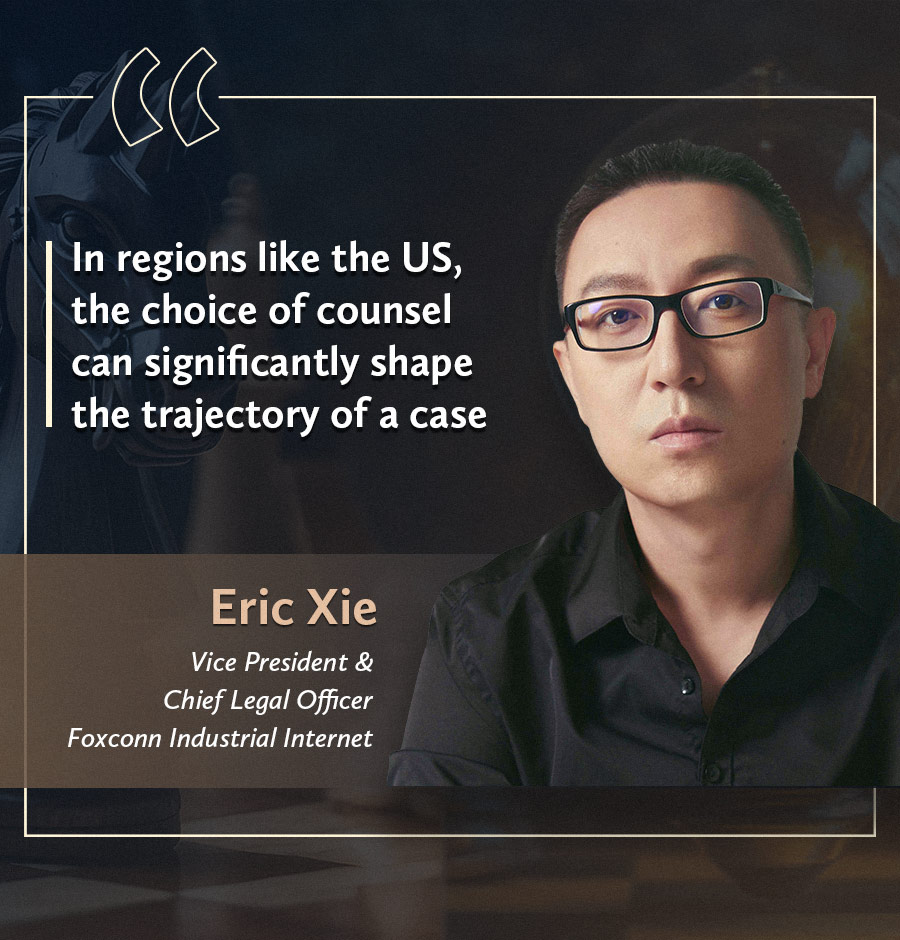
“In regions like the US, the choice of counsel can significantly shape the trajectory of a case,” says Xie. “Engaging a tier-2 law firm against an opponent backed by tier-1 representation often puts one at a disadvantage before proceedings even begin.”
You must be a
subscribersubscribersubscribersubscriber
to read this content, please
subscribesubscribesubscribesubscribe
today.
For group subscribers, please click here to access.
Interested in group subscription? Please contact us.
你需要登录去解锁本文内容。欢迎注册账号。如果想阅读月刊所有文章,欢迎成为我们的订阅会员成为我们的订阅会员。