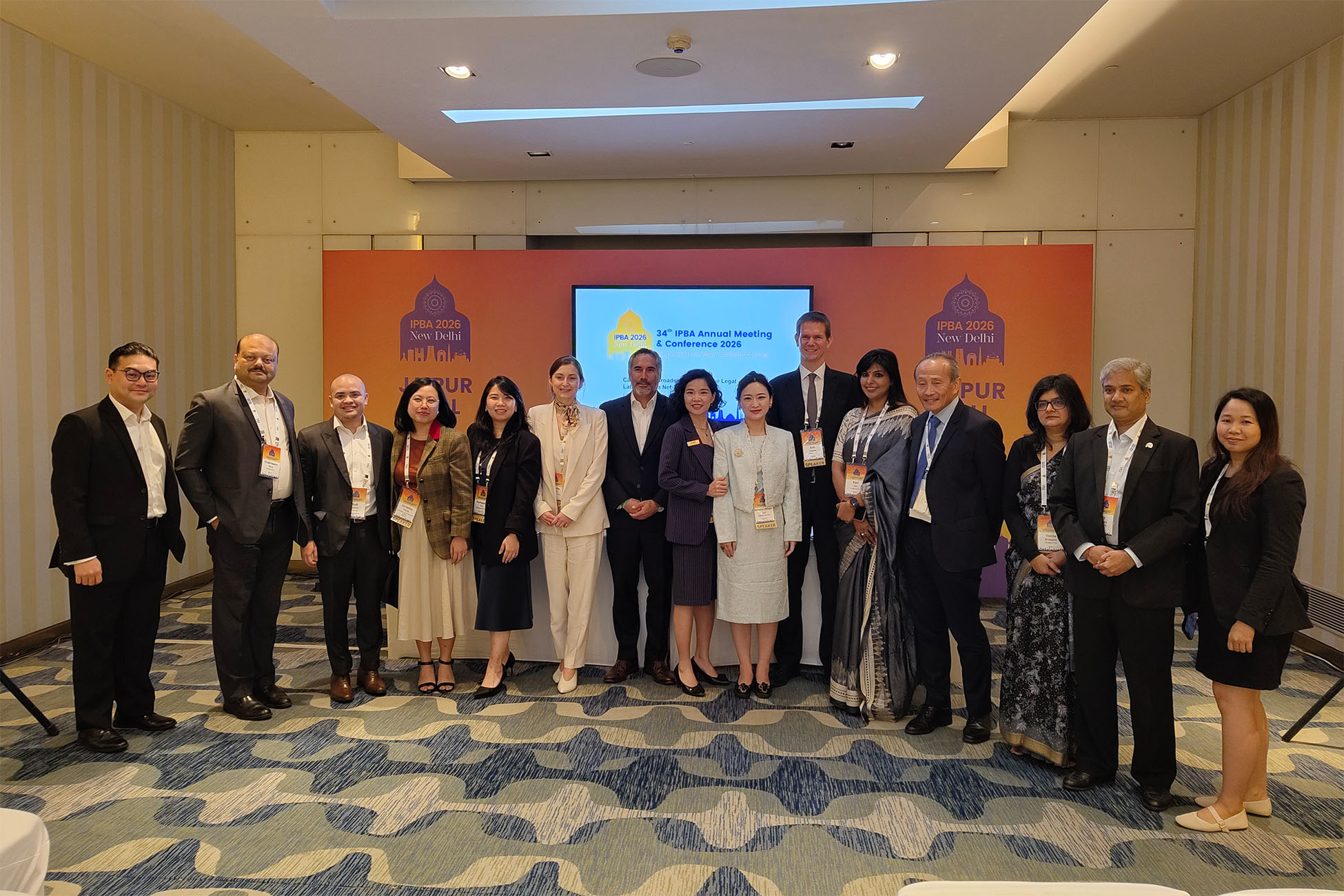









The Inter-Pacific Bar Association (IPBA) vice-chairs of the environmental, social and governance (ESG) committee, Christina Reyes, a junior partner at Cochingyan & Partners Law Offices in Manila and Weronika Nalbert, a senior associate at Wardyński & Partners in Warsaw, presented the panel “Carbon crossroads: Navigating the legal labyrinth of a net-zero future” on 27 February.
They were joined by panellists Andreanna Ten, a partner at Zaid Ibrahim & Co in Kuala Lumpur, Vanita Bhargava, a senior partner at Khaitan & Co in Noida, India, Romanee (Mengni) Luo, a partner at QZ&WD Law Firm in Nanchang, China, and Eric Wagner, a partner at Gleiss Lutz, Stuttgart, Germany.
Coming from different jurisdictions, the panellists gave an overview of the ESG landscape and environmental regulation in their respective countries and regions.
“When we look at China’s ESG ecosystem over the 14th five-year plan period of 2021 to 2025, one word that comes to our mind is acceleration,” said Luo, who is the chairperson-elect of the IPBA environmental law committee. She said the increased pace rests on “two fundamental pillars” – one is the 2012 Beautiful China Initiative, and the other is China’s 2020 dual carbon commitment, which targets carbon dioxide emissions peaking before 2030 and the country achieving carbon neutrality by 2060.
“ESG has evolved from a niche investor focus into a non-negotiable national strategy in China, where a top-down policy mandate is meeting with a bottom-up corporate awakening,” added Luo. “ESG is no longer optional but is actually regulated, is enforceable and is creating a new legal exposure.”
Reyes said that in the Philippines, sustainability reporting was limited to the Philippine Financial Reporting Standards. “It’s the association of a monetary value, of a number to your sustainability goals. In that aspect, we are still talking about it being monetised, which is apparently an initial step for any endeavour in any regulation. So first, you appeal to how it affects your business – the bottom line. Then you move on to a larger principle, which is, you want to do this. You want to comply on your own without nothing in return.”
Wagner discussed the ESG landscape in Europe and Germany. He broke it down under the heads of “reporting, carbon trading, supply chain due diligence and greenwashing”. Wagner is highly regarded for his expertise in ESG matters, particularly in corporate due diligence in supply chains. He spoke at length about the EU’s Corporate Sustainability Reporting Directive, which mandates detailed ESG data reporting.
Finally, the conversation among those at the panel moved to the subject of greenwashing. Bhargava shared an Indian perspective, stating that guidelines for the prevention of greenwashing were only framed in 2024 and provided under the Consumer Protection Act. She said that the Advertising Standards Council of India had also issued guidelines on how companies could claim to be environmentally friendly. “Companies cannot use words like ‘eco-friendly, natural or sustainable’ without evidence. They should not use misleading green coloured imagery while ignoring a major negative environmental impact [of their product]. And this is also considered as an unfair trade practice.”
Bhargava said there was a risk of over-regulation, leading to the trend of “green hushing”. Nalbert agreed and said a similar trend could be observed in Europe.