








Singapore’s omnibus Insolvency, Restructuring and Dissolution Act, 2018 (IRDA), came into effect on 30 July 2020 and amalgamated its corporate and personal insolvency processes, which were previously in separate statutes. The IRDA also incorporated the UNCITRAL Model Law on Cross-Border Insolvency (Model Law) into Singapore law.
The IRDA, together with the lingering effects of disruptions and insolvencies brought about by the covid-19 pandemic, has resulted in more insolvency cases being litigated before the Singapore courts. We take a look at four judgments from the apex court, the Singapore Court of Appeal (SGCA).
Test for actual insolvency
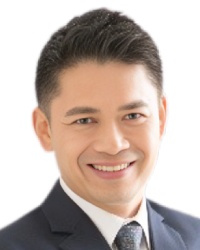
Managing Director
Focus Law Asia
Singapore
Tel: +65 6950 0842
Email: shemkhoo@focuslawasia.com
In Sun Electric Power v RCMA Asia (2021), the SGCA clarified the test for a company’s inability to pay its debts under the then section 254(2)(c) of the Companies Act (now section 125(2)(c) of the IRDA). The court held that the cash flow test is the sole and determinative test for actual insolvency under this provision.
The cash flow test assesses “whether the company’s current assets exceed its current liabilities such that it can meet all debts as and when they fall due”. “Current assets” and “current liabilities” generally refer to those realisable or falling due within a 12-month timeframe. The SGCA highlighted that a flexible approach should be taken in assessing a company’s cash flow, and a non-exhaustive list of factors includes:
-
- The quantum of debts due or becoming due in the reasonably near future;
- Whether payment is being, or likely to be, demanded;
- Any failure to pay debts, the quantum and duration of non-payment;
- Time passed since winding-up proceedings commenced;
- Value of current assets and assets realisable in the reasonably near future;
- The company’s state of business for expected net cash flow;
- Other income or payments receivable in the reasonably near future; and
- Arrangements between the company and prospective lenders, such as its bankers and shareholders, to determine whether any shortfall in assets can be made up by borrowings which would be repayable at a later time.
Model Law application in Singapore

Director and Head of Korean Desk
Focus Law Asia
Singapore
Tel: +65 6890 0843
Email: mimiahn@focuslawasia.com
In United Securities Sdn Bhd (in receivership and liquidation) v United Overseas Bank (2021), the SGCA examined articles 20(1) and 20(2) of the Model Law and clarified the conditions for granting a stay of Singapore legal proceedings following the recognition of foreign insolvency proceedings. The SGCA held that a stay would only be granted if a stay would have been available in the equivalent Singapore insolvency proceeding. In other words, Singapore’s domestic insolvency laws still apply to determine if a stay would be granted and, if so, to what extent.
Therefore, despite the Singapore court recognising the Malaysian winding-up proceeding as a foreign main proceeding that could have stayed Singapore legal proceedings, a stay on United Overseas Bank’s (UOB) Singapore proceedings against United Securities was not granted because UOB was prima facie a secured creditor. Under Singapore law, leave would readily be granted to secured creditors to proceed with enforcing their security, even if there is a stay of proceedings that arises on the winding up of the debtor.
The SGCA also reiterated the cumulative attributes for a foreign proceeding to be recognised under article 2(h) of the Model Law:
-
- It must be a collective proceeding that contemplates the consideration and treatment of the rights, obligations and claims of creditors generally;
- It must be based on a law relating to insolvency in that it deals with or addresses insolvency or financial distress;
- The foreign court must exercise control or supervision over the debtor’s property and affairs; and
- Its purpose must be the debtor’s reorganisation or liquidation.
Arbitration v restructuring moratoria
The importance of the interaction between insolvency and arbitration regimes can be seen from Sapura Fabrication Sdn Bhd v GAS (2025), where the SGCA issued a judgment even though the parties had reached a settlement and the appeals were withdrawn. In its decision, the SGCA made clear that the Singapore court will not automatically grant a carve-out from a moratorium in favour of arbitration.
The case involved an application for a carve-out from an automatic moratorium to allow arbitration claims to proceed. The SGCA held that granting such a carve-out is a discretionary matter for the court. Rejecting the submission that there must be “exceptional circumstances” to grant a carve-out, the SGCA clarified that the Singapore court will consider the factors laid down in Wang Aifeng v Sunmax Global Capital Fund 1 and another (2023), which include, but are not limited to, the following:
-
- The timing of the application for a carve-out;
- The nature of the claim;
- The existing remedies;
- The merits of the claim;
- The existence of prejudice to the creditors or the orderly administration of the restructuring proceedings; and
- Other miscellaneous factors such as the potential of an avalanche of litigation being unleashed by the grant of permission, the proportionality of the cost of the proceeding to the scheme company’s resources, and the views of the majority creditors.
In the Sapura Fabrication case, the complexity of the arbitration claims made them less suitable for the proof of debt adjudication process. The SGCA thus opined that, had the appeals proceeded, it would have dismissed the appeals and upheld the carve-out.
Schemes and creditors

Associate Director
Focus Law Asia
Singapore
Tel: +65 6890 0868
Email: veronicateo@focuslawasia.com
This case arose from the liquidation of the now infamous oil trading company, Hin Leong Trading (HLT), which collapsed during the covid-19 pandemic. In UT Singapore Services Pte Ltd v Goh Thien Phong and others (2025), HLT’s liquidators proposed a scheme of arrangement to distribute about USD80 million of HLT’s assets to its creditors as an interim dividend.
Notably, the scheme provided for dividends to be distributed to creditors with disputed security interests without prior summary determination of those interests. The SGCA’s decision, therefore, addressed creditor classification in schemes of arrangement where creditor rights are uncertain or disputed.
The SGCA affirmed that creditors with uncertain and disputed security claims can be classified into a single class in a scheme of arrangement. In this context, the appropriate comparator for assessing creditor rights was the situation creditors would face if they pursued litigation to determine their claims, including the uncertainty of the outcome and the associated litigation costs.
The appropriate comparator was not the distribution of assets in accordance with the established rights and priorities of each creditor. The scheme, therefore, compromised uncertain claims to security rights.
Consistent with the above-mentioned, the SGCA also held that a scheme compromising such uncertain claims did not require an in-built adjudication mechanism for determining those claims for classification purposes, particularly if claims are complex and not suited for summary determination.
After considering the complexity of the various claims by creditors, as well as the associated costs and potential dilution of the estate, the SGCA held that the HLT liquidators’ proposed scheme offered significant benefits to HLT’s creditors and endorsed the proposed scheme.
Looking ahead
Singapore has made clear that its ambition to be a leading international hub for insolvency and debt restructuring. Even after the introduction of the IRDA in 2021, it continues to refine and develop its restructuring and insolvency framework.
As recently as March 2025, the committee to enhance Singapore’s corporate restructuring and insolvency regime proposed nine recommendations aimed at strengthening the judicial management regime, refining the cross-class cramdown threshold requirements in schemes of arrangements and allowing for more efficient debt restructurings overall.
Further legislative refinements and substantial jurisprudential advancements can be anticipated in the future.
Focus Law Asia LLC
16 Raffles Quay
#21-01 Hong Leong Building
Singapore 048581
Tel: +65 6890 0840
Email: office@focuslawasia.com