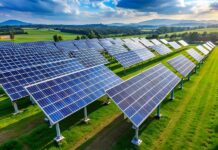









Saudi Arabia has launched its Vision 2030 at the national level and developed a series of plans to promote the diversification of its industries, including the National Renewable Energy Programme. In recent years, financing activities in the renewable energy sector have become increasingly active. This article examines the current financing structures of new energy projects in Saudi Arabia, aiming to provide a reference for Chinese investors seeking to enter the Saudi new energy market.
Green tendering

Senior Counsel
Zhong Lun Law Firm
The National Renewable Energy Programme is implemented by the Saudi Power Procurement Company (SPPC). Authorised by the Saudi Electricity Regulatory Authority, the SPPC is responsible for electricity procurement and offtake in Saudi Arabia, with a Moody’s credit rating of A1. Since February 2017, the SPPC has held six rounds of renewable energy project tenders, competitively procuring more than 10,100MW of renewable solar photovoltaic and wind projects.
SPPC’s tendering process has attracted participants from the Middle East, as well as China, Japan, Korea and France. Almost every round of bidding has resulted in new world records for photovoltaic and wind power tariffs. In the earlier rounds, developers were mainly from the Middle East, Europe (France) and Japan, while Chinese companies initially participated primarily as engineering, procurement and construction contractors and equipment suppliers. Huanghe Hydropower Development and Jinko Power successfully participated as developers.
Financing structure
According to the prequalification requirements for new energy projects published by the SPPC, project financing is independently arranged by the successful bidder through limited or non-recourse project financing in international, regional or local financial markets. Limited recourse project financing refers to loans where repayment is secured by the project’s own cash flow and assets, rather than the shareholders’ assets. This ensures that, in the event of project failure or default, lenders can only seek recourse within a defined scope of project assets and cannot pursue the project sponsor’s other assets, effectively isolating the parent company’s other assets from project risks.
Project financing generally involves one or more potential sources of funds, most commonly debt and equity financing, with the debt-to-equity ratio in total project cost typically not exceeding 85:15.
Equity financing

Counsel
Zhong Lun Law Firm
Project equity financing may take the form of equity bridge loans. All Saudi renewable energy projects adopt the build-own-operate model. The project company is generally 100% owned by the bidder and may be jointly held by a consortium of local and international developers. SPPC and Saudi government entities typically do not take equity stakes.
Equity bridge loans are a common model in the Middle Eastern financial market. During the project financing stage, banks or other financial institutions lend to the project company, temporarily advancing the equity capital that should be contributed by the project sponsors (project company shareholders). The sponsors repay the loan when they have sufficient funds, helping the project company quickly meet equity injection requirements before financial close or during the early construction phase, and improving the return on project capital. Equity bridge loans are generally non-recourse to the project company’s assets, with the only security being credit support provided by the project company’s shareholders in proportion to their shareholding. Equity bridge loans and debt financing are mutually isolated, with no cross-default.
In the third round of SPPC bidding in Saudi Arabia, Huanghe Hydropower Development, as project developer, held a combined 39.9% equity stake in the Ar Rass and Layla independent power photovoltaic projects and signed an equity bridge loan agreement of about USD60 million to achieve close, marking the first successful overseas equity bridge loan case for a Chinese company.
Debt financing
Currently, the debt financing products recognised by Saudi renewable project procurement agencies mainly include full term facilities, refinancing loans, or a combination of both.
Full term facilities. The tenure of full term facilities should be no less than 20 years, usually matching the duration of the power purchase agreement. These loans may be provided by local, regional and international commercial or Islamic banks, or may be direct loans from export credit agencies, or financing loans guaranteed by such agencies.
In Saudi Arabia and other Gulf countries, power plant construction typically adopts a dual-track financing structure, with international commercial banks providing the international financing portion and local banks providing the Islamic financing portion. Islamic finance structures offer Shariah-compliant financing products designed to overcome the prohibitions of riba (interest) and gharar (excessive uncertainty) under Shariah law. Islamic scholars have developed various Shariah-compliant structures for different scenarios. For greenfield construction projects, a combination of istisna’a (procurement contract) and ijara (forward lease) may be used for financing.
Full term facilities generally have specific requirements for repayment schedules, such as prohibiting any balloon repayment plans or similar arrangements, and not allowing cash sweeps or other mandatory repayment mechanisms.
Soft mini-perm facilities. These loans are commonly used in Saudi independent power projects for new energy. They are used to repay the initial senior debt and, except for refinancing costs and expenses, generally do not increase the amount of the initial loan. They are usually permitted only once and must be completed within five years after the project commences commercial operation.
Compared to hard mini-perm facilities, soft mini-perm facilities do not impose mandatory refinancing obligations, and failure by the borrower to refinance does not constitute a default under the loan documents. Lenders may use cash sweeps as a remedy, i.e. using all or part of the excess cash flow generated by the project company for debt repayment or restricting dividend distributions to shareholders, and/or increasing the debt interest rate, allowing the refinancing loan interest rate to step up over time.
Saudi new energy projects generally adopt limited recourse project financing. Saudi renewable energy tenders recognise soft mini-perm facilities. When structuring financing for Saudi new energy projects, foreign companies should consider both bankability and refinancing options.
Wang Jihong is a senior counsel and Zhang Li is counsel at Zhong Lun Law Firm. Ding Litian, a legal assistant at the firm, also contributed to this article.
 Zhong Lun Law Firm
22-31/F, South Tower of CP Center
20 Jin He East Avenue
Beijing 100020, China
Tel: +86 10 5957 2288
Fax:+86 10 6568 1022
E-mail: wangjihong@zhonglun.com | cecilezhang@zhonglun.com