











Foreign interest in Asia’s real estate markets is peaking, but clear knowledge of regulation is needed to avoid pitfalls in different jurisdictions
Regulatory framework for FI, financing in Indian property
Current Indian foreign direct investment (FDI) regulations allow investment of up to 100% in the construction sector under the automatic route, with certain conditions. Construction projects include the development of townships, residential/commercial premises, roads or bridges, hotels and resorts, hospitals, educational institutions, recreational facilities, and city and regional level infrastructure.
FDI in India can be made through equity shares, compulsorily convertible debentures or compulsorily convertible preference shares. In addition to FDI, India has witnessed strong inflows of foreign funds in structured debt to real estate companies, those debts being high-yield, coupon-bearing and mortgaged-backed (with real estate assets), and arising through foreign portfolio investors and alternate investment funds.
This article analyses the current regulatory framework for foreign investment, real estate investment trusts (REITs), insolvency, and structured financing in the Indian real estate sector.
FDI

Senior Partner
AZB & Partners
Delhi
Email:
hardeep.sachdeva@azbpartners.com
Foreign investors in the construction sector are permitted to exit a project after the development of trunk infrastructure (i.e. roads, water supply, street lighting, drainage or sewerage). While each phase of a construction project is considered a separate project, the investor is also permitted to exit and repatriate its investment before completion of the project, subject to a lock-in period of three years, calculated with reference to each tranche of the FDI. These exit restrictions are not applicable to investments in such infrastructure as hotels, tourist resorts, hospitals and educational institutions.
The transfer of a stake from one non-resident/foreign investor to another non-resident/foreign investor without repatriation of the investment is allowed, and is subject neither to any lock-in period nor to any government approval.
No FDI is permitted in an Indian company engaged in the construction of farmhouses, trading in transferable development rights, or in real estate business.
The term “real estate business” includes the business of dealing in land and immovable property with a view to earning profit, but does not include development of: residential or commercial premises; roads or bridges; REITs; educational institutions; recreational facilities; city and regional level infrastructure; and townships. Earnings from rent or income on the lease of a property, not amounting to a transfer, is exempted from the definition of real estate business.
Further, 100% FDI under the automatic route is also permitted in completed projects for the operation and management of townships, malls/shopping complexes and business centres. However, there would be a lock-in-period of three years, calculated with reference to each tranche of FDI, and the transfer of immovable property or part thereof is not permitted during this period. FDI regulations also allow 100% FDI under the automatic route in real estate broking.
REITs

Senior Partner
AZB & Partners
Delhi
Email: ravi.bhasin@azbpartners.com
One notable development has been the introduction of the REIT regulations allowing the constitution and listing of such instruments. Currently, there are four listed REITs in India, three in the commercial office space and one in the retail mall space.
A REIT is constituted as a trust under the Indian Trusts Act 1982, registered with the Securities and Exchange Board of India (SEBI), and generally comprises persons designated as the sponsor, manager, trustee and unit holders.
Such REITs require a minimum asset base of at least INR5 billion (USD60 million) and at least 80% of the value of REIT assets must be invested in completed and rent and/or income-generating properties, while the remaining 20% can be held in the form of stocks, bonds, cash, or under-construction commercial property. At least 90% of rental income earned by a REIT has to be distributed to its unit holders as dividends or interest.
Most recently, the SEBI has notified a regulatory framework for small and medium real estate investment trusts (SM REITs). These are now allowed for smaller or medium-sized projects of at least INR500 million, and not more than INR5 billion. SM REITs can have commercial or residential assets, and require at least 200 investors and at least 95% of the value of the scheme’s assets to be invested in completed and revenue-generating real estate assets/properties, with only up to 5% held in cash, liquid mutual fund schemes and fixed deposits.
SM REIT regulations are likely to be a catalyst for the widespread unlocking of the value of commercial real estate in India, although only one SM REIT has received a licence from the SEBI at the time of writing.
Debt financing

Senior Partner
AZB & Partners
Delhi
Email: abhishek.awasthi@azbpartners.com
Most debt financing by foreign financial institutions in the real estate sector in India is through either: subscription to secured non-convertible debentures of Indian companies in accordance with SEBI regulations, which may or may not be listed on a stock exchange in India; or loans/debt from alternate investment funds (AIFs) set up in India.
The security interest is created in favour of a debenture trustee, who is responsible for holding the security on behalf of the foreign investor and overseeing compliance by the borrower. The foreign investor subscriber must be registered with the SEBI as a foreign portfolio investor of a SEBI-registered AIF.
Insolvency in real estate
Another key regulation in India is the Insolvency and Bankruptcy Code, 2016 (IBC), which sets out the framework of insolvency and bankruptcy laws, and streamlines the processes for insolvency and liquidation of corporate persons in India.
The IBC enables any financial creditor, operational creditor, or the corporate debtor, to initiate an insolvency resolution process in the event of a default by a corporate debtor, which must be resolved within a fixed period of 180 days from the submission of an application for the initiation of the process.
The IBC has a crucial impact on all stakeholders: homebuyers, lenders and real estate developers. It allows developers with the financial capability and delivery records to salvage an incomplete real estate project where promoters have no financial means to complete the entire works.
Homebuyers have been afforded greater rights through amendments and decisions of the Supreme Court. While initially their role was limited to being recognised as “other creditors”, homebuyers are now recognised as “financial creditors”, and given the right to initiate insolvency processes against defaulting real estate companies, and also take a seat on the committee of creditors. This right to initiate insolvency is subject to a threshold on the minimum number of homebuyers.
Real estate developers in India have also been afforded greater flexibility when seeking and passing the resolution plans of real estate companies. IBC regulations allow a “resolution plan” in respect of one or more projects of the real estate corporate debtor, where no resolution plan was received for such a corporate as a whole.
Enforcement

Senior partner
AZB & Partners
Delhi
Tel: +91 12 0417 9999
Email: priyamvada.shenoy@azbpartners.com
Apart from the IBC, another prime avenue lenders can use to recover their debts is governed by the Securitisation and Reconstruction of Financial Assets and Enforcement of Security Interest Act, 2002 (SARFAESI Act).
If a borrower fails to repay a secured debt, the secured creditor may classify the borrower’s account as a non-performing asset and initiate proceedings to enforce its security interest, take possession of the secured real estate assets, and monetise the assets without any intervention of the court.
This is a faster process for the recovery of debts in comparison to the ordinary civil court process.
A prior notice in this regard must be sent to the borrower to discharge the liability in full within the stipulated period, on failure of which the enforcement proceedings under the provisions of the SARFAESI Act may commence as per the process set out under its regulations.
In the recent past, the SARFAESI Act has been well used and implemented by lenders in the foreclosure of real estate assets as securities, selling them through public auctions and/or private treaties.
The real estate sector is pivotal to the growth of the Indian economy.
It is one of the biggest contributors to the economy, is its second-largest employment generator, and has more than 275 allied industries (including steel, cement and other construction materials) dependent on it to sustain their businesses.
Happily, the real estate sector in India has been enjoying a notable boom, capturing the attention of investors, homebuyers and corporates, both domestic and foreign, and the surging demand for properties seems likely to continue for some time.
 AZB & PARTNERS
AZB House, Plot No A-7 and A-8
Sector 4, Noida 201301
National Capital Region, India
Tel: +91 12 0417 9999
Spotlighting the potential of Japanese real estate
(1) Inbound investment
Foreign investors have long played a key role in the Japanese real estate market. To sustain growth of the national economy as Japan’s population continues to decline, it is becoming increasingly important to continue developing a sophisticated real estate market to attract inbound investment.
Moving forward, the Japanese government expects inbound investment to play a key role in real estate development. In a fairly large number of transactions sponsored by foreign investors, a special purpose company (SPC) purchases property using financing with securitisation structures.
This article outlines an overview of the real estate market for inbound investments by asset type.
Hotels
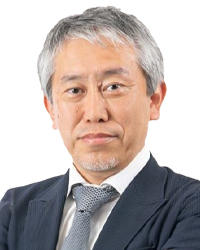
Partner
Nishimura & Asahi
Tokyo
Tel: +81 3 6250 6523
Email: h.niinomi@plus.nishimura.com
Hotel assets appear to be recovering significantly from the pandemic as an investment target due to increased domestic travel and a recovery in the number of inbound visitors. According to the Nikkei’s real estate market advisory, two of the top 10 transactions (by deal size) in 2023 were hotel investment projects, compared to none ranked in 2022.
In line with this trend, the government has recently placed more energy and focus into the tourism industry. Capitalising on the natural beauty of the countryside as a tourism resource, the government recently announced a policy of inviting luxury resort hotels and developers of other facilities to open in all 35 national parks in Japan by 2031.
Offices
While not appearing depressed to the point of being negative, investment in this asset class appears to have stagnated somewhat in 2023, as it did in 2022, due in part to rising vacancy rates.
Nonetheless, while office building prices in Europe and the US have plummeted due to rising interest rates and the post-pandemic trend of telecommuting, office building prices in Japan have remained relatively stable, which appears to be one of the reasons behind a stable level of investment.
Residential
Investment in residential property is increasing, particularly in Tokyo and other core regional cities. In the context of an increasingly uncertain market environment including domestic interest rates, this asset type appears to be attracting attention due to the nature of its relatively stable operation.
In addition, some opportunistic investors have been taking advantage of relatively low rents compared to global rent levels in other mega cities such as New York, London and Singapore. As a result of these combined factors, investment in Japanese residential property appears to be growing steadily.
Logistics
The pandemic prompted a significant acceleration in investment in logistics assets due to the expansion of e-commerce resulting from widespread adoption of work-from-home arrangements and quarantine measures imposed.
Following this trend, investment in logistics facilities remained strong in 2023, with a number of funds being newly launched. In the first half, the largest supply was in the Tokyo area, with transactions aimed at strengthening supply chains – such as base consolidation and investment in logistics systems – attracting attention.
Data centres

Partner
Nishimura & Asahi
Tokyo
Tel: +81 3 6250 6460
Email: k.hara@plus.nishimura.com
With growing demand for cloud computing, data centres are being developed in Japan, and investment in this asset class is on the rise. Complicating matters in regard to data centres, there are hurdles in obtaining non-recourse financing at the land leasehold stage without any income generated from a property, but development of data centres may be conducted through other schemes, such as joint ventures.
Driving the trend is IT technology advancing at an accelerated pace and society becoming more and more reliant on information processing over the internet. In tandem comes mounting concern over IT security, with preservation of safe access to data viewed as crucial to many businesses.
In addition, as the volume of data that must be processed continues to increase, many consumers are opting for, or considering, cloud services instead of establishing their own storage systems. Accordingly, data centres are becoming more prevalent.
These data centres generally house clients’ servers in racks with ample electricity, a temperature controlled environment and tight security, providing IT network services and facilities, including cloud services.
It is often beneficial for Japanese companies to use data centres located in Japan because shorter distances result in faster data exchange speeds. Since a certain number of data centres may be required in Japan, it is anticipated that data centre transactions will increase.
(2) Redevelopment projects

Partner
Nishimura & Asahi
Tokyo
Tel: +81 3 6250 6632
Email: na.yamamoto@plus.nishimura.
com
In addition to asset types, redevelopment projects are also an important sector in Japan’s real estate market, with a large number undertaken in metropolitan areas in accordance with the Urban Redevelopment Act. These include large-scale redevelopments in major metropolitan areas in Tokyo such as Roppongi, Azabu and Shibuya.
The purpose of the act is to promote greater use of urban land and facilitate the renewal of urban functions. It has unique features including enabling the participation of developers who are development professionals, and also covering project costs by selling rights in surplus portions to redevelopment, or allocating such rights to developers.
Without these features it would be difficult to proceed with redevelopment projects due to the challenges of aligning the interests of various rights holders for small-scale land and buildings in project areas, while also covering project costs.
Although individuals and local governments can carry out urban redevelopment projects, redevelopment associations are used in many cases. The procedures generally involve: (a) an urban planning decision; (b) preparation and approval of a project plan; and (c) rights conversion, which is the main procedure, converting rights in existing real property into rights in newly redeveloped property.
Increased project costs
One of the material issues regarding redevelopment projects is a significant increase in project costs, with various contributing factors. The main factors are the soaring cost of construction materials due to post-pandemic price increases and the weakened yen, as well as the difficulty in securing human resources.
The construction industry has a chronic shortage of human resources, while employment regulations such as the overtime limit, initiated as part of work-style reform, have applied from 1 April 2024, after a five-year grace period.
An ageing workforce and long working hours are other factors contributing to the difficulty in securing human resources. Together, these factors appear to make it difficult to establish long-term business plans for redevelopment projects.
SPC scheme
In recent years, there has been an upward trend in the number of projects that involve not only the participation of professional contractors or developers, but also the use of a real estate securitisation structure – such as a TK-GK structure or TMK structure – to finance part of the project costs.
There are several ways in which a special purpose company (SPC) can be involved in a redevelopment project, including the SPC becoming a participant in a redevelopment association, or an acquirer of surplus floor space after redevelopment. In this case, the difficulty level is high because both knowledge of real estate liquidation schemes and redevelopment projects is required.
TK-GK and TMK structures are regulated by the Financial Instruments and Exchange Act or the Asset Securitisation Act, respectively, neither of which is directly related to development-related laws and regulations.
For example, at the time of approval of a business plan, the relevant authorities may require that an SPC submit a letter of support from a sponsor to guarantee the SPC’s credibility and commitment to long-term involvement in such projects.
Note: For specific matters regarding relevant laws, types of proprietary interests, structures for ownership of real estate including SPC schemes, and legal due diligence, please refer to our 2023 ABLJ article titled ‘A regional comparison of real estate markets: Japan’.
 NISHIMURA & ASAHI
(GAIKOKUHO KYODO JIGYO)
Otemon Tower, 1-1-2 Otemachi, Chiyoda-ku,
Tokyo 100-8124, Japan
Tel: +81 3 6250 6200
Email: info@nishimura.com
Navigating the Philippine real estate legal landscape
The Philippine real estate sector operates within a complex legal framework that balances national interests with investment opportunities. The legal framework is shaped by constitutional restrictions on land ownership that protect national sovereignty but is driven by a policy of attracting productive foreign investment.
Recent years have seen an influx of foreign capital into Philippine property development. The influx is due to an increasing demand for residential, commercial and industrial spaces. With the country’s GDP expected to grow between 5.8% and 7% in 2024, foreign interest in the Philippine real estate market is expected to continue. The country is also witnessing continual growth in the information technology and business process management sectors, and in government transaction activities. This contributes to a continual demand for office and commercial space.
The residential market is expanding geographically, with a buildup of townships and mixed-use development projects outside Metro Manila. The government has enacted laws to provide fiscal incentives that promote commercial activity at priority locations, helping to push real estate development away from the metropolis.
The foundations

Managing Partner
DivinaLaw
Metro Manila
Email: nilo.divina@divinalaw.com
The 1987 Philippine Constitution provides an overarching framework for property rights; the Philippine Bill of Rights emphasises protection of private property. The constitution also cements a paramount consideration of national interest and national sovereignty as a state policy. Consistent with this, the constitution regulates ownership of land. Land ownership is restricted to Filipino citizens only, or Philippine juridical entities with at least 60% Philippine capital.
The Civil Code of the Philippines is the country’s cornerstone for property laws. It elaborates on property rights and transactions applicable to both individual and corporate property dealings. It provides requirements for the valid and enforceable transfer of ownership.
Sale of real property or its lease for longer than one year should be made in writing. Contracts creating, transmitting, modifying or extinguishing real rights over real property must be in a public document.
Foreign investment

Partner
DivinaLaw
Email: ciselie.gamo@divinalaw.com
Foreign investors may invest and participate in Philippine real estate, despite the restriction on land ownership.
The Investor’s Lease Act (Republic Act [RA] No. 7652) allows foreign investors to lease private land for 50 years, renewable for not more than a further 25 years. It requires that the leased area be used solely for the purpose of the investment. Any interruption of operation to the foreign investment must not exceed three consecutive years.
Foreigners may also invest in condominium projects. The total foreign ownership in a condominium project must not exceed 40%.
Foreigners may invest in real estate investment trust (REIT) funds up to 40% of its outstanding capital stock. REITs allow investors to gain exposure to a diverse portfolio of income-generating properties. This mitigates risk compared to investment in individual properties. REITs are also traded in the Philippine stock market, which facilitates liquidity and transparency in the investment.
Land registration

Senior Associate
DivinaLaw
Email: danica.godornes@divinalaw.com
In the Philippines, real estate management is governed by statutes and decrees such as the Property Registration Decree (Presidential Decree [PD] No. 1529) and the Land Registration Act (Act No. 496). These laws regulate land registration processes.
The Philippines employs the Torrens system of land registration, which guarantees the integrity of land titles and protects their indefeasibility once a claim of ownership is established. A person who is dealing with a registered parcel of land need not go beyond the face of the title and will only be charged with notice of the burdens and claims that are annotated on the title.
Unregistered lands may be brought into the Torrens system through an application to a court of competent jurisdiction. If the court finds the applicant has sufficient title proper for registration, judgment must confirm the title of the applicant. The Philippine Land Registration Authority will issue a decree of registration and corresponding original certificate of title.
An owner of registered land may convey, mortgage, lease or otherwise deal with that land in accordance with existing laws. In such cases, an instrument evidencing a transaction is registered with the registry of deeds of the locality where the property is situated.
Registration is the operative act to convey or affect the land insofar as third parties are concerned, and constitutes constructive notice to everyone from the time of registration. In the case of a transfer of ownership, the original certificate of title will be cancelled and a transfer certificate of title will be issued to the new registered owner. In the case of a lease, mortgage or any other type of encumbrance, the transaction will be annotated on the title certificate.
The Torrens system is adopted for the registration of ownership or interest over condominium units as well.
Environmental protections
Environmental laws also shape the Philippine real estate sector. These laws are designed to address the environmental impacts of real estate development and promote responsible land use to safeguard natural resources and public health.
The primary legislation on environmental protection is the National Environmental Policy (PD No. 1151). It provides a framework for environmental management and regulation, and integrates environmental considerations into national development plans and projects.
The Philippine Environmental Impact System, established under PD No. 1586, requires an environmental impact assessment for every proposed environmentally critical project or those that significantly affect the quality of the environment. No person, partnership or corporation can undertake or operate any declared environmentally critical project or area without first securing an environmental compliance certificate from the Department of Environment and Natural Resources.
Other notable environmental laws that real estate developers must consider are the Clean Air Act (RA No. 8749), Clean Water Act (RA No. 9275) and Solid Waste Management Act (RA No. 9003).
In addition to national laws, local government units enforce their own environmental regulations and ordinances. These may include additional requirements for environmental clearances, zoning regulations and specific measures to address local environmental concerns. Developers must navigate these local regulations to ensure compliance with both national and municipal environmental standards.
Empowering local growth
The local government implements and enforces zoning and land use regulations in the Philippines.
Local government units include barangays, municipalities, cities and provinces. They formulate and execute ordinances on land use plans, zoning, and development within their jurisdiction.
These ordinances classify land into different zones such as residential, commercial, industrial, agricultural and institutional, each with specific regulations on allowable activities and building standards. This decentralised approach was adopted in the Local Government Code of 1991 (RA No. 7160). The act empowers local governments to tailor regulations to the specific needs and conditions of their own communities, balancing urban growth with environmental protection and social objectives.
Real estate tax
The local government is also responsible for assessing and collecting real estate tax. The tax rate depends on the rate imposed by each unit within its jurisdiction, in an ordinance. The real estate tax is imposed on the assessed value of a property, which is determined by the local assessor of each unit.
The recent Real Property Valuation and Assessment Reform Act (RA No. 12001) standardised property valuation across the Philippines. All real properties must be appraised based on prevailing market values in conformity with the standards adopted by the Bureau of Local Government Finance. Notably, the act granted a real property tax amnesty for two years from the time it took effect.
Real property transfers are taxed by both national and local governments. Income on gains from real property sales (donor’s or estate for other transfers) and documentary stamp tax are paid to the national government through the Bureau of Internal Revenue (BIR). The rate of income tax depends on whether the property is held as an ordinary or capital asset, and the seller’s status. If the property is held for sale or used in business, the transfer may also be subject to value-added tax.
Local government units, particularly provinces and cities, impose tax on real property transfers based on fair market value or the total consideration, whichever is higher.
The local registry of deeds requires proof of payment of taxes before registering any deed. The buyer will have to submit a BIR-issued certificate authorising registration and evidence of payment of the transfer tax to the local government unit.
The legal framework for Philippine real estate is complex as it balances national interests with the need to attract foreign investment. It harmonises national economic goals with local development priorities to foster an environment that is both investor-friendly and responsive to community needs. The government continuously refines and streamlines real estate management and taxation to create a more attractive real estate market.
 DIVINALAW
8/F Pacific Star Building,
Sen. Gil Puyat Ave. cor. Makati Ave.,
Makati City, Philippines 1200
Tel: +63 2 8822 0808
Email: info@divinalaw.com