







|
KOREA |
South Korea’s medical security system comprises mandatory health insurance and medical benefits. More than 97% of the population is covered by the National Health Insurance (NHI) system, while the remaining 3% receives medical benefits through public assistance for low-income individuals.
The primary institutions administering the NHI system in Korea are the Ministry of Health and Welfare (MOHW), the National Health Insurance Service (NHIS), and the Health Insurance Review and Assessment Service (HIRA). Specifically, the MOHW oversees the NHI system, the NHIS serves as the insurer, and the HIRA functions as the review and assessment authority.
As of 2022, total health insurance expenses in Korea amounted to about KRW100 trillion (USD76.22 billion), with drug expenses constituting about KRW23 trillion. Korea adopts a positive list system, reimbursing only those drugs deemed cost-effective. The MOHW regulates the prices of drugs eligible for NHI reimbursement, setting and announcing the maximum reimbursement prices (MRPs). Within the context of the NHI in Korea, a drug price typically refers to the MRP (the same meaning applies in this article).

Partner
Shin & Kim
Seoul
Tel: +82 2 316 4326
Email: stkim@shinkim.com
Following marketing approval from the Ministry of Food and Drug Safety based on drug safety and efficacy, manufacturers or importers may apply for NHI reimbursement listing. The Drug Reimbursement Evaluation Committee of the HIRA then assesses clinical utility and cost-effectiveness to determine listing eligibility and initial prices for subsequent drug price negotiations.
If a drug is deemed eligible for reimbursement listing, the NHIS and the pharmaceutical company negotiate the drug price based on its financial impact. For high-priced anti-cancer drugs or rare-disease drugs that meet specific criteria, a risk sharing agreement may be arranged where the NHIS and the company share the uncertainties related to the efficacy and effect, as well as financial impact, of the new drug.
After the determination of the drug price, the Health Insurance Policy Review Committee, under the MOHW, reviews and approves it. This is followed by an MOHW notification that effectuates the reimbursement listing.

Partner
Shin & Kim
Seoul
Tel: +82 2 316 4032
Email: hwokim@shinkim.com
These procedures, including the HIRA assessment and the NHIS’s negotiation of drug prices, apply to first-listed drugs, such as new drugs. In contrast, generics and combination products are listed and priced according to set MOHW calculation criteria, which are based on the prices of already listed drugs.
Various post-listing control systems are in place to manage the prices of listed drugs, or to delist them from reimbursement. These systems include: (1) reducing drug price if the actual transaction price falls below the MRP announced by the MOHW; (2) reducing drug prices through negotiations with the NHIS if drug usage volume exceeds a specified threshold; (3) reducing drug prices in anticipation of increased claims after an expansion in reimbursement coverage; (4) reducing the prices of original drugs upon the entry of generics; and (5) delisting drugs from reimbursement or reducing their prices according to re-evaluation.
RE-EVALUATION OF LISTED DRUGS
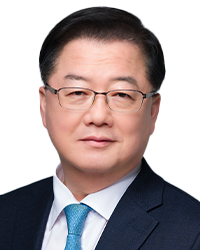
Senior Adviser
Shin & Kim
Seoul
Tel: +82 2 316 4308
Email: ysbyun@shinkim.com
After the publication of the first National Health Insurance Comprehensive Plan, in 2019, the MOHW has been implementing re-evaluation systems. South Korea now has four re-evaluation systems for listed drugs.
(1) Criteria requirements re-evaluation. From 1 July 2020, this system has transitioned from the previous drug pricing system, which based prices on calculation standards rather than negotiations, to a new approach where pricing is differentiated according to whether a drug meets two criteria: the conduct of its own bioequivalent test; and the registration of a drug master file. This system requires all previously listed drugs priced under the old criteria to comply with new requirements to maintain their existing prices. Consequently, the prices of about 7,000 drugs were reduced in September 2023, with a second re-evaluation scheduled for early 2024 to further adjust (reduce) prices of additional drugs.
(2) Re-evaluation for drugs with approval changes. This system, implemented on 8 October 2020 through an amendment to the Rules on the Criteria for NHI Reimbursement, empowers the MOHW to adjust eligibility for NHI reimbursement, or the MRP, as needed in response to changes in marketing approval details such as alterations in active pharmaceutical ingredients. However, the system has encountered a significant legal challenge. The first application resulted in an administrative lawsuit filed by pharmaceutical companies contesting the applicable price reduction decision. Represented by Shin & Kim, the companies won in the Supreme Court, and no applications of this system have been announced since.
(3) Re-evaluation for appropriateness of reimbursement. This system, initiated in 2020, involves the MOHW annually selecting drugs to assess whether their reimbursement should continue. The process considers clinical utility, cost-effectiveness and social need. The system allegedly places a substantial burden on the pharmaceutical industry. In October 2023, the Seoul Administrative Court ruled in favor of the pharmaceutical companies, represented by Shin & Kim, marking the first successful challenge by the industry against a price reduction under this system.
(4) Foreign drug price comparative re-evaluation. The MOHW has announced a plan, scheduled to be implemented in early 2024, to reduce the prices of listed drugs, including originals with expired patents and generics, by comparing their prices to those in eight countries: the US, Britain, Germany, France, Italy, Switzerland, Japan and Canada. This impending re-evaluation is expected to potentially trigger legal challenges from the pharmaceutical industry, particularly in cases where this re-evaluation leads to drug price reductions.
INJUNCTION REDEMPTION LAW

Associate
Shin & Kim
Seoul
Tel: +82 2 316 1689
Email: mypark@shinkim.com
The MOHW’s notifications to reduce drug prices or delist drugs from reimbursement are considered administrative dispositions, which can be contested through administrative legal proceedings. If a pharmaceutical company files for and is granted an injunction, the MOHW’s disposition does not take effect.
If a pharmaceutical company obtains an injunction but later loses the lawsuit on the merits, it is required to redeem the NHIS’s costs for all or part of the differences in reimbursements paid by the NHIS during the injunction period. Conversely, if a pharmaceutical company proceeds with a lawsuit without an injunction and ultimately wins, the NHIS should refund the company for all or part of the differences in reimbursement expenses.
This law, amending the National Health Insurance Act, took effect on 20 November 2023. because of the inclusion of redemption and refund provisions, this mechanism is known as the Injunction Redemption and Refund Law.
Opinions are divided on the law’s impact on the pharmaceutical industry’s willingness to seek injunctions against the MOHW’s drug price dispositions. Some argue that the possibility of having to redeem after a loss in court might dissuade companies from pursuing injunctions, while others believe the law will not significantly affect companies’ decision-making. There are also concerns about whether the law infringes the right to a trial.
EXPENDITURE DISCLOSURE
The expenditure report system, mandated by the Pharmaceutical Affairs Act and the Medical Device Act, requires pharmaceutical companies and medical device companies to record detailed accounts of economic benefits provided to healthcare professionals (HCPs) and to maintain relevant evidentiary material.
This system, inspired by the Sunshine Act in the US, was introduced in South Korea in 2018. Its primary objectives are to enhance transparency in pharmaceutical and medical device transactions, and to facilitate voluntary ethical practices in these industries.
A recent amendment has expanded the scope of these requirements to include contract sales organisations in addition to drug suppliers, requiring them to prepare, retain and submit expenditure reports. It has strengthened criminal punishment for non-compliance with these reporting obligations.
To improve the system’s effectiveness, regulations have been instituted regarding the conduct of a fact-finding survey on the status of expenditure report preparation and the disclosure of these reports. The survey results were announced 29 December 29 2023, and the expenditure reports are expected to be disclosed for the first time around August 2024.
The disclosure of expenditure reports raises significant concerns, however. There is a risk of privacy infringement, especially if the reports contain personal information such as HCP names. Furthermore, revealing proprietary information such as clinical study data risks trade secret misappropriation. Public access to expenditure reports could also lead to misconceptions that HCPs have improperly received economic benefits from pharmaceutical companies or others. This misunderstanding could discourage HCPs from engaging in legitimate activities such as proper product presentations or academic forums.
Ahead of the first disclosure of expenditure reports in 2024, several critical issues remain under discussion. These include determining the appropriate level of personal information disclosure regarding HCPs, developing strategies to effectively educate the public about the expenditure report disclosure system, and resolving potential conflicts between HCPs and the companies resulting from the disclosure of expenditure reports.
 SHIN & KIM
23F, D-Tower (D2), 17 Jongno 3-gil,
Jongno-gu, Seoul 03155, Korea
Tel: +82 2 316 4114
Email: shinkim@shinkim.com