










An in-house counsel’s tasks may be highly diverse and closely tied to their own business and industry. But lately, with mounting regulatory pressure and geopolitical uncertainty, the community has found a sense of shared experience, writes Kevin Cheng
The pace at which new laws and regulations are coming out in China, covering a broad range of key aspects such as data security, executives’ liabilities and compliance of state-owned enterprises (SOEs), is keeping in-house counsel constantly on their toes.
Conflicts worldwide, on some occasions fought with weaponised economic tools and in others with actual weapons, have had immeasurable ramifications on global stability and supply chain security, creating dents in the capacity, as well as willingness, of far-removed businesses to link up and explore potential, when not long ago the same players would have joined hands with little to no hesitation.
The situation has not made it easy for in-house counsel whose job, in essence, is to anticipate and manage risks to the company’s operation, both internal and external. Lately, far too many fall into the latter category, and they happen because far too often, factors other than good old-fashioned business sense are at the wheel.
This article explores the challenges facing in-house counsel in various industries, and how they are managing, in spite of tempests, to keep the boat afloat.
Automotive and energy
Tariffs on China’s burgeoning electric vehicle (EV) sector, were they not so demoralising, would be comparable to a TV show that keeps upping the ante to retain its viewership, with the latest episode airing in early October 2024, when the European Commission members, following an anti-subsidy investigation, voted to impose tariffs of up to 45% on imports of Chinese-made EVs.
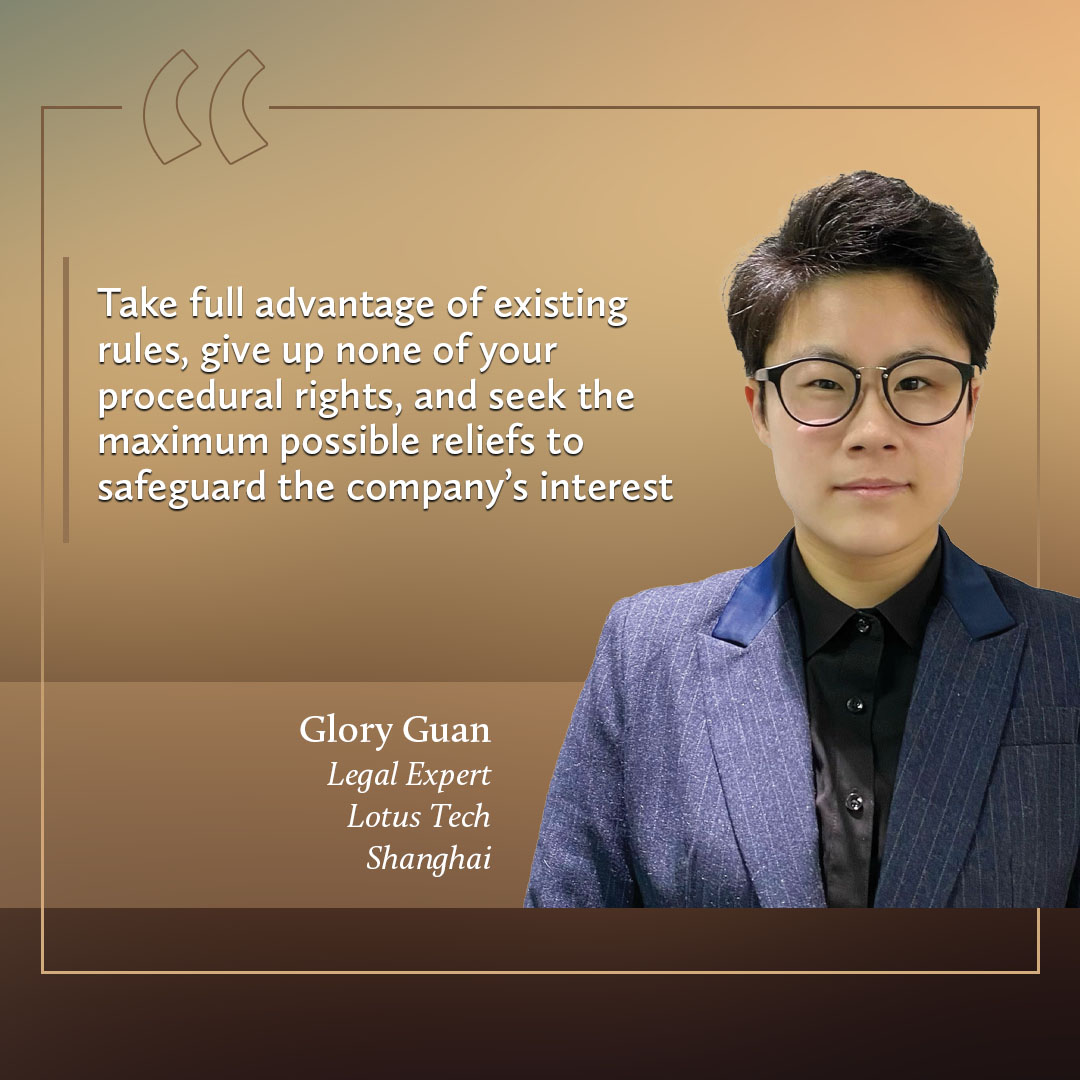
Other than finished automobiles, tariffs and restrictions from the West on sensitive technologies such as chips also pose severe hindrance to the export of new-energy intelligent connected vehicles, says Glory Guan, a legal expert at Lotus Tech. This has caused a constriction in the scale of business, a rise in costs, and forced revisions in global sales plans.
However, “there are opportunities hidden among the challenges”, she says. The chip shortage and rising tariffs have driven up sales costs but have also encouraged original equipment manufacturers (OEMs) to seek multipronged production and sales strategies. “Undoubtedly, for those who have already set up shop overseas, this provides a viable way forward with localisation and continuous realisation of overseas revenue,” she adds.
With China being a Regional Comprehensive Economic Partnership (RCEP) member state, she advises, companies enjoy regional tax incentives as long as they engage in industries and supply chains within the scope of the free-trade agreement. Export to the US and EU can also proceed if the rules of origin, which determine the goods’ origin as where they are manufactured instead of from where they are shipped, are observed.
Faced with rising trade barriers, Guan points out that companies should form effective linkage with industry associations, local governments and the Ministry of Commerce, instead of passively waiting for results. As an example, she cites China’s initiation of WTO dispute settlement proceedings with the US over EV subsidies under the Inflation Reduction Act.
“Take full advantage of existing rules, give up none of your procedural rights, and seek the maximum possible reliefs to safeguard the company’s interest,” she says.
Huang Yiyun, general manager of the legal department at Autoliv China, feels the heat of competition in the automotive industry with the rise of domestic EV brands and an ever-growing pool of sub-brands. This, she says, compels the legal team to respond to more complex and intense business needs.
“It places high demands on our time and resource management, and requires us to be closely in tune with the market ebbs and flows,” says Huang.
Therefore, she tends to recruit individuals who are keen and willing to learn when building a legal team. “Legal work is not about reviewing contracts like grading exam papers, nor is it about answering business department queries like short-answer or essay questions,” she says.
Instead, she emphasises that legal professionals need to understand their own company and the upstream and downstream industries, as well as be familiar with both domestic and international environments, in order to effectively provide legal solutions that match the company’s needs.
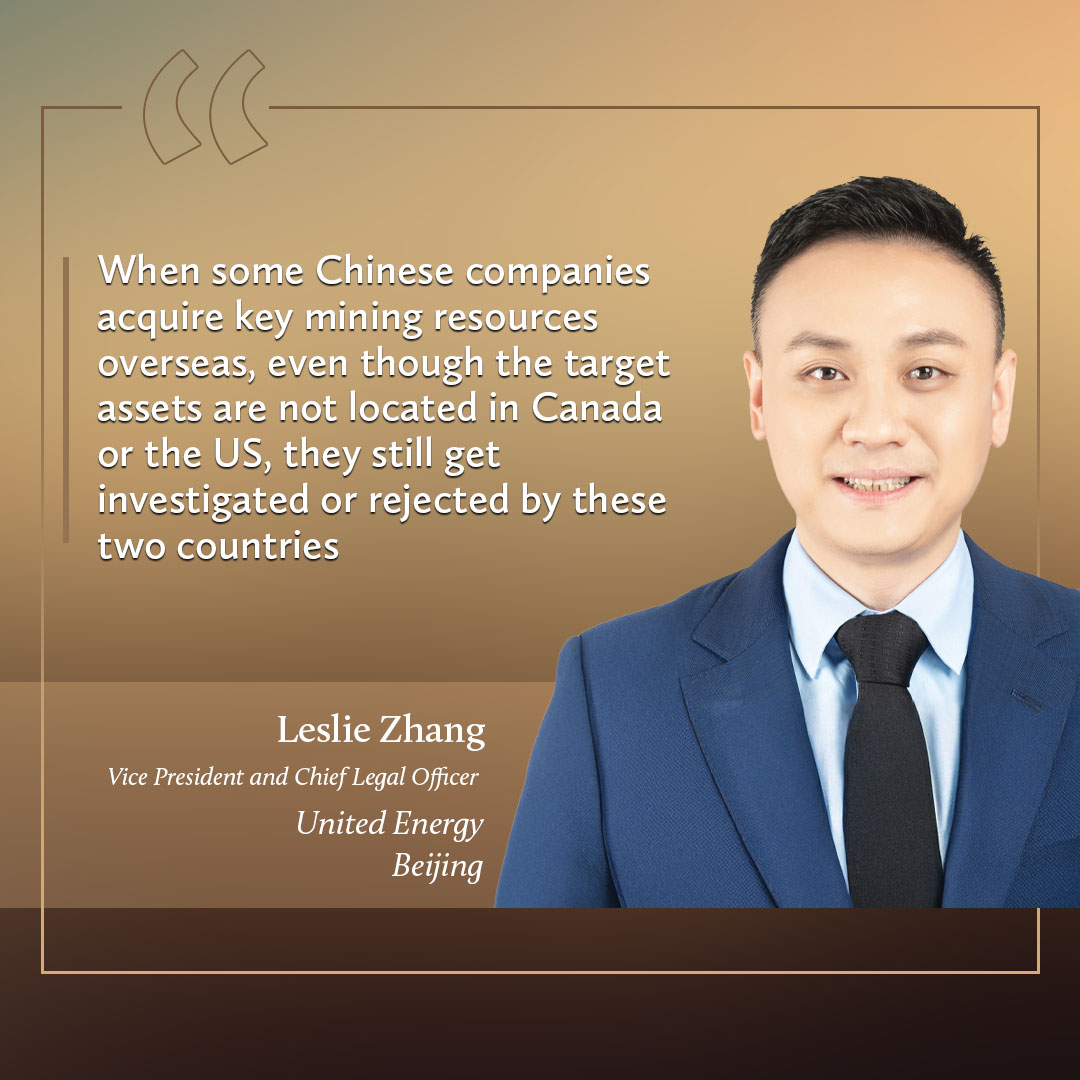
Amid rising global tension, Chinese energy companies also need to go through more complicated approval procedures for overseas investment. “In particular, national security review for foreign investments have ramped up,” says Leslie Zhang, vice president and chief legal officer at United Energy.
“For instance, when some Chinese companies acquire key mining resources overseas, even though the target assets are not located in Canada or the US, they still get investigated or rejected by these two countries.”
The implications of the Russia-Ukraine war, sanctions against Russia, and the resultant dichotomy in the global energy industry have affected even those who do not trade crude oil or such products from Russia, such as United Energy, which must nevertheless stay up to date with Russia-related sanctions and strictly monitor potential risks arising from partners on the supply chain.
“Sanction risks have exposed us to greater trade risks, while international financial institutions also keep a closer eye to the sanction risks faced by oil and gas companies,” says Zhang. “With our international supply chain risk control, we ensure compliance from all parties while maintaining the continuous development of our business.”
Industrial
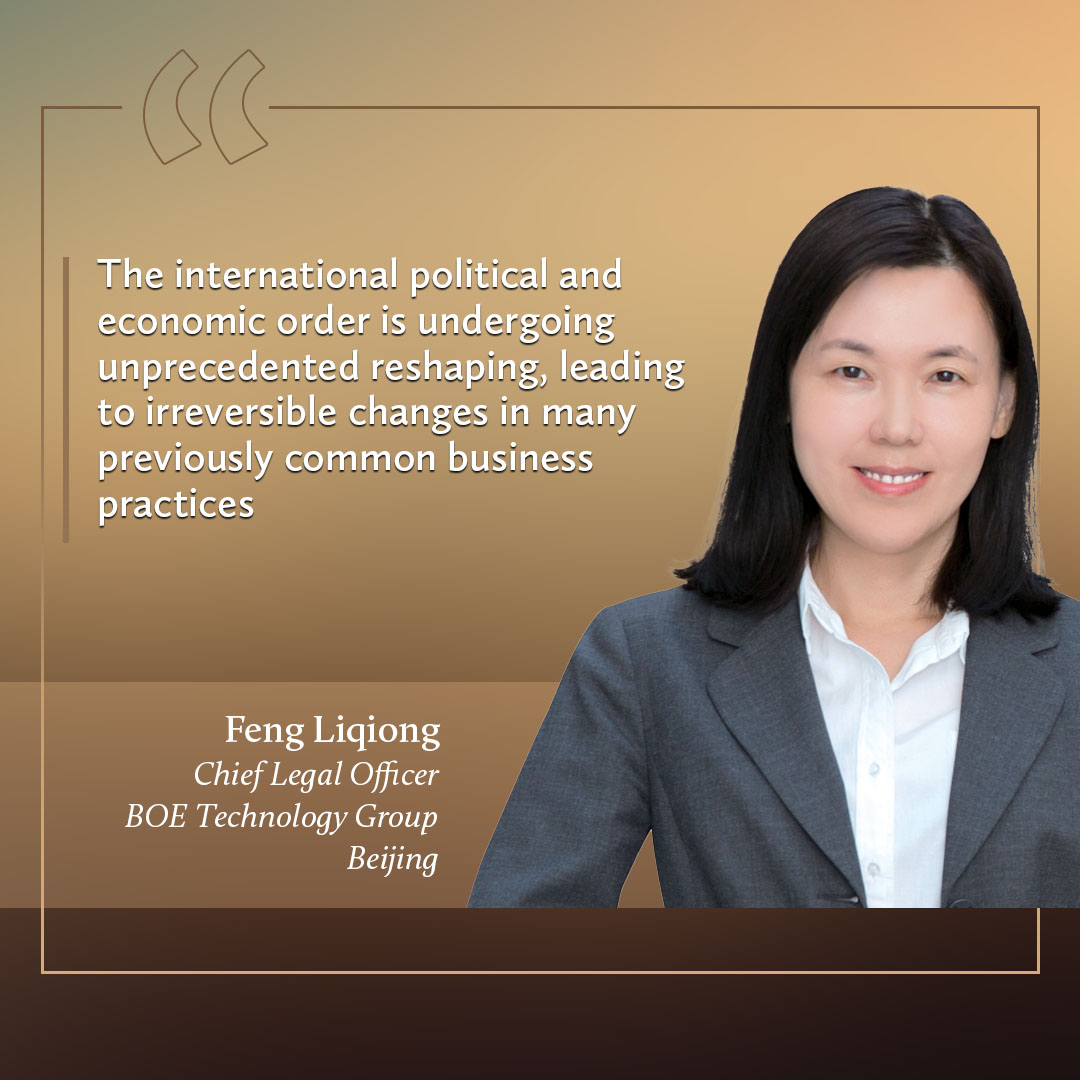
The supply chain is the bloodline to any manufacturing facility and, in recent years, marked by trade wars, a pandemic and decoupling, the security of this bloodline has repeatedly come under threat. “The international political and economic order is undergoing unprecedented reshaping, leading to irreversible changes in many previously common business practices,” says Feng Liqiong, chief legal officer at BOE Technology Group.
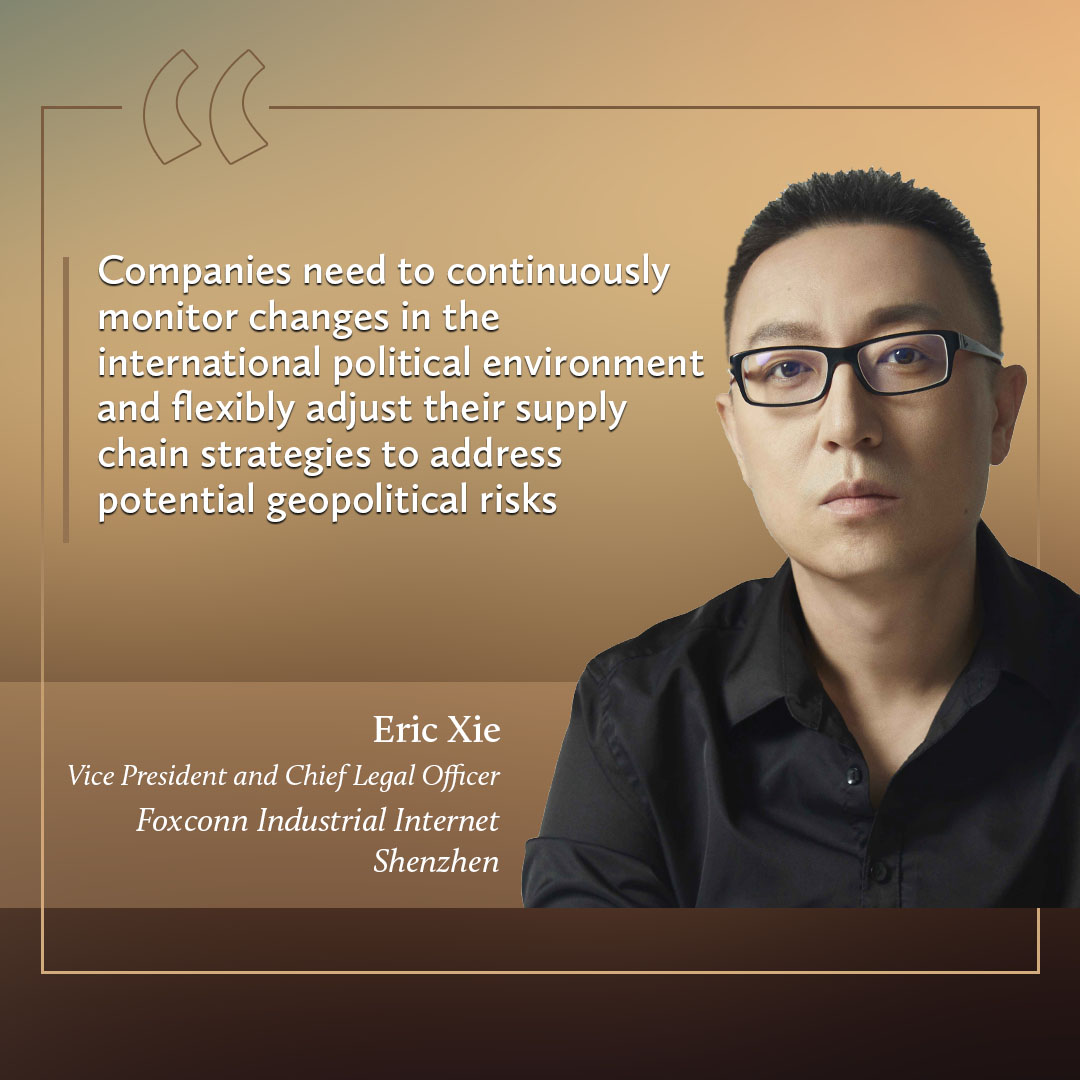
Eric Xie, vice president and chief legal officer at Foxconn Industrial Internet (FII), breaks down the potential consequences of supply chain breakage as: (1) production disruptions; (2) rising costs; (3) missed market opportunities; (4) damage to brand reputation; and (5) increased geopolitical uncertainty.
Xie laments that geopolitical tensions may lead to more trade barriers, which in turn further exacerbate the fragility of the supply chain. “Companies need to continuously monitor changes in the international political environment and flexibly adjust their supply chain strategies to address potential geopolitical risks,” he says.
He suggests that companies venturing abroad explore strategies for diversifying their supply chains by developing alternative suppliers and sources of raw materials to mitigate risks. “The essence of a diversified supply chain lies in not being confined to supplier resources from any specific country or region, but rather looking globally and actively seeking partners to achieve broad risk dispersion and significantly enhance supply chain resilience,” he says.
Feng also notices that greater attention is diverted to compliance with local laws and regulations, now a top priority for overseas ventures. “Labour laws, tax laws and environmental protection laws can vary significantly across different countries,” she says. “In the context of global competition, companies need to comply with antitrust laws and fair market competition rules in various countries or regions to avoid unnecessary legal risks and losses.”
Chinese companies habitually look at labour expenditure before anything else when it comes to reducing costs, but to rashly replicate such an approach to overseas subsidiaries is to risk violating local labour laws.
Panda Sun, general manager of the legal department of Feilo Acoustics, a Shanghai-listed manufacturer and distributor of lighting equipment, is particularly cautious in this matter.
Sun maintains regular and thorough communication with overseas counsel and lawyers, and reports local labour laws and practices in written form to leaders at all levels. As she explains, the meticulous reporting is to ensure that the management does not overlook the differences between domestic and international labour laws, thereby preventing decisions that could be detrimental to the company.
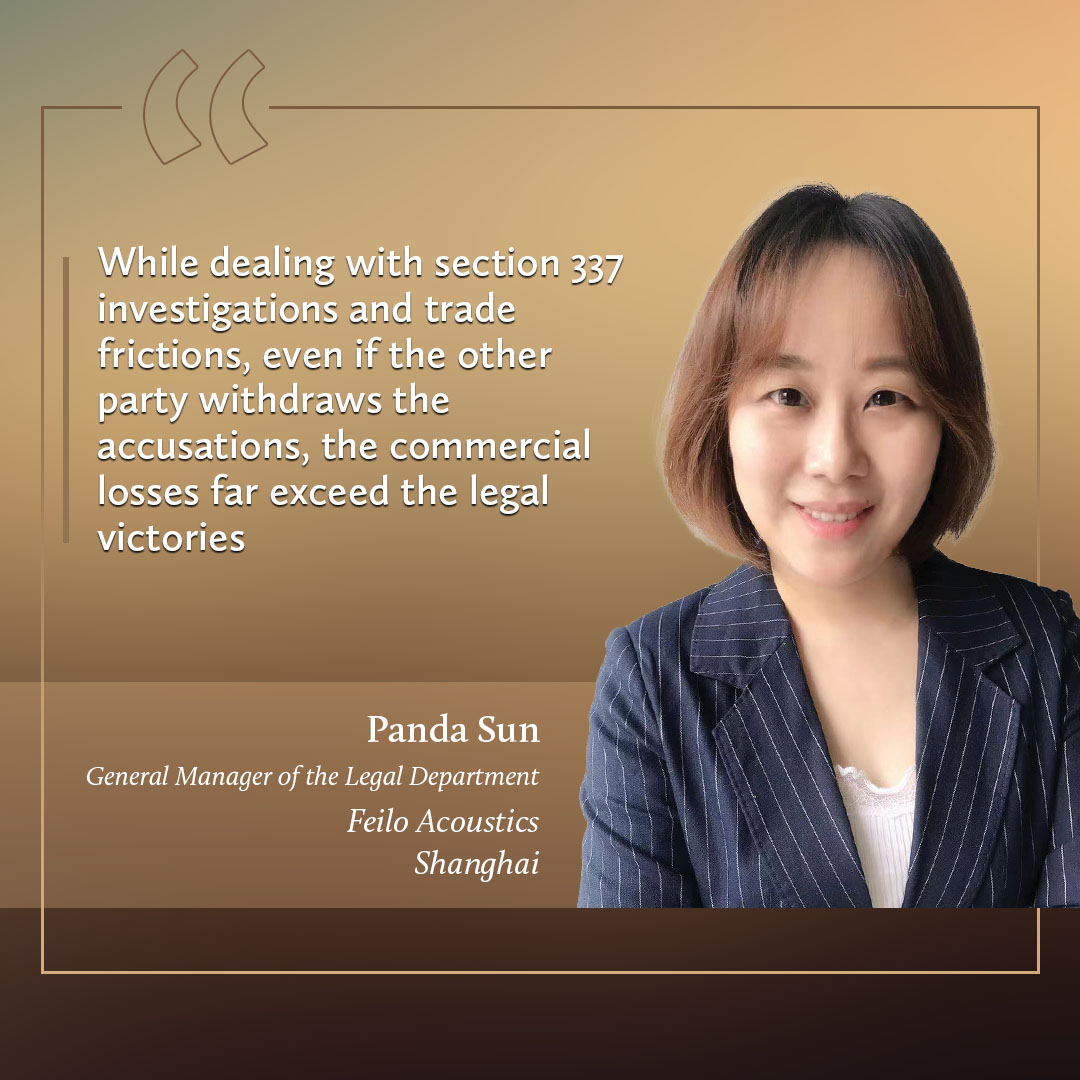
Regarding US export controls, Sun believes this is a relatively more challenging hurdle to overcome. “In the past couple of years, while dealing with section 337 investigations and trade frictions, even if the other party withdraws the accusations, the commercial losses far exceed the legal victories,” she says.
Data security regulation is ramping up in China and around the world, which makes it no easy task for global businesses to regularly transmit large quantities of sometimes sensitive data across jurisdictional borders.
Xie, at Foxconn, shares that his legal department has invited lawyers from multiple countries including the US, Czech Republic, Vietnam and India to conduct internal training sessions on cross-border data and data security compliance in various regions.
In addition to international risks, the progress of the rule of law and business environment governance at home are also worthy of attention. According to Feng, the revised Regulation on Disciplinary Action Against the Managerial Professionals of State-owned Enterprises provides clearer and stricter guidelines for the conduct of SOE managers, ensuring the healthy development of SOEs and the integrity and self-discipline of their managers.
She also cites the Provisions of the State Council on the Standard for Declaration of Concentration of Business Operators and the Regulation on Fair Competition Review as positive examples of legislation promoting fair market operations.
The former, she says, “provides clear guidance for companies when engaging in mergers, acquisitions and other commercial activities”, while the latter “regulates government behaviour, prevents the abuse of administrative power, ensures that various market entities develop equally in a fair competitive environment, and provides a solid legal foundation for the healthy development of the market economy”.
Real estate
China’s real estate industry is in a phase of deep adjustment, and it is no exaggeration to say that many real estate developers are struggling for their very survival. Shang Dongning, director of legal management at Midea Real Estate Group, observes that construction project contract disputes between real estate and construction companies, as well as commercial housing sales contract disputes with small homeowners, are on the rise.
“Disputes arising from small homeowners defaulting on payments due to the economic downturn have significantly increased, and some cases may lead to real estate companies bearing liabilities for transitional guarantees,” he adds.
The introduction and implementation of the new Company Law have placed real estate companies, already facing a high level of disputes, under even greater litigation pressure. Shang points out that the law emphasises the protection of the rights of minority shareholders, whose awareness of their rights has also increased, potentially leading to them filing more lawsuits.
“Between shareholders and creditors, [the law] leans towards protecting the interests of creditors. Currently, there are many debt disputes involving real estate companies,” he warns, and this “may further burden them”.
The new Company Law has also added to the liability of directors, supervisors and senior executives, which means the operational risks of real estate companies are more likely to translate into individual management liabilities and compensation risks.
Against mounting litigation pressure, Shang encourages the legal team to adopt a do-it-yourself approach with cases, which helps save much legal expense for the company. Incentives are also provided for team members who take on such cases.
Zhao Li, deputy general manager of the legal and compliance department of Chenxi Investment, a private real estate fund company, also senses a surge in disputes arising from real estate developers’ inability to repurchase equity as agreed in contracts and bond defaults, due to significant devaluation of project assets.
The revised Measures for the Registration and Recordation of Private Investment Funds, implemented in May 2023, and its ancillary guidelines, have had a significant impact on Chenxi Investment, owing to its crossover between real estate and fund businesses.
The measures, according to Zhao, stipulate that if the investors of a private fund manager engage in conflicting businesses, their direct or indirect holdings of the manager’s equity or property shares must not exceed 25%. Additionally, controlling shareholders, de facto controllers, GPs and major investors must not have engaged in conflicting businesses in the past five years.
Those who have done so are prohibited from serving as the legal representative, senior executive, executive partner or appointed representative of a private fund manager. Real estate development is classified as a “conflicting business” under these regulations.
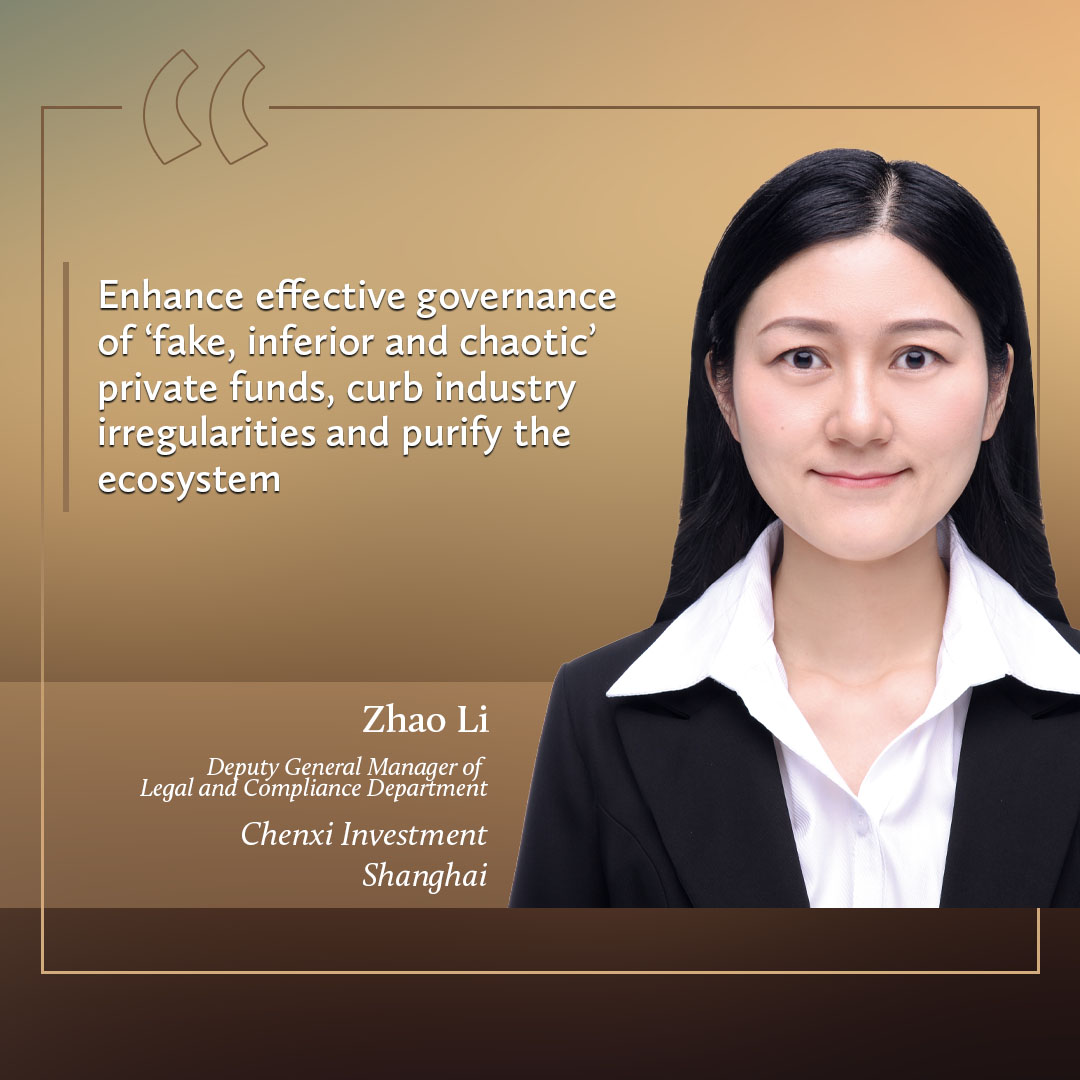
In response to stricter industry regulations, Zhao suggests strengthening thorough investigations and compliance requirements for managers, as well as improving self-regulatory measures. “Enhance effective governance of ‘fake, inferior and chaotic’ private funds, curb industry irregularities and purify the ecosystem,” she advocates.
Consumer products
Intellectual property is a top concern in the consumer industry. For Unilever, a fast-moving consumer goods company, IP challenges mainly include counterfeiting, imitation and malicious trademark squatting, as well as malicious non-use cancellation. The last refers to abuse of a provision under the Trademark Law, which provides that if a registered trademark is not used for three consecutive years, anyone can apply to the trademark office for its cancellation.
In response, Michael Yu, head of North Asia brand protection at the company, says that his team “adopts a multidimensional rights protection strategy to combat counterfeiting and infringement, and works with agencies to identify key instances of malicious trademark squatting”. At the same time, they strengthen trademark usage and implement tiered management to reduce the risk of non-use cancellation for major trademarks.
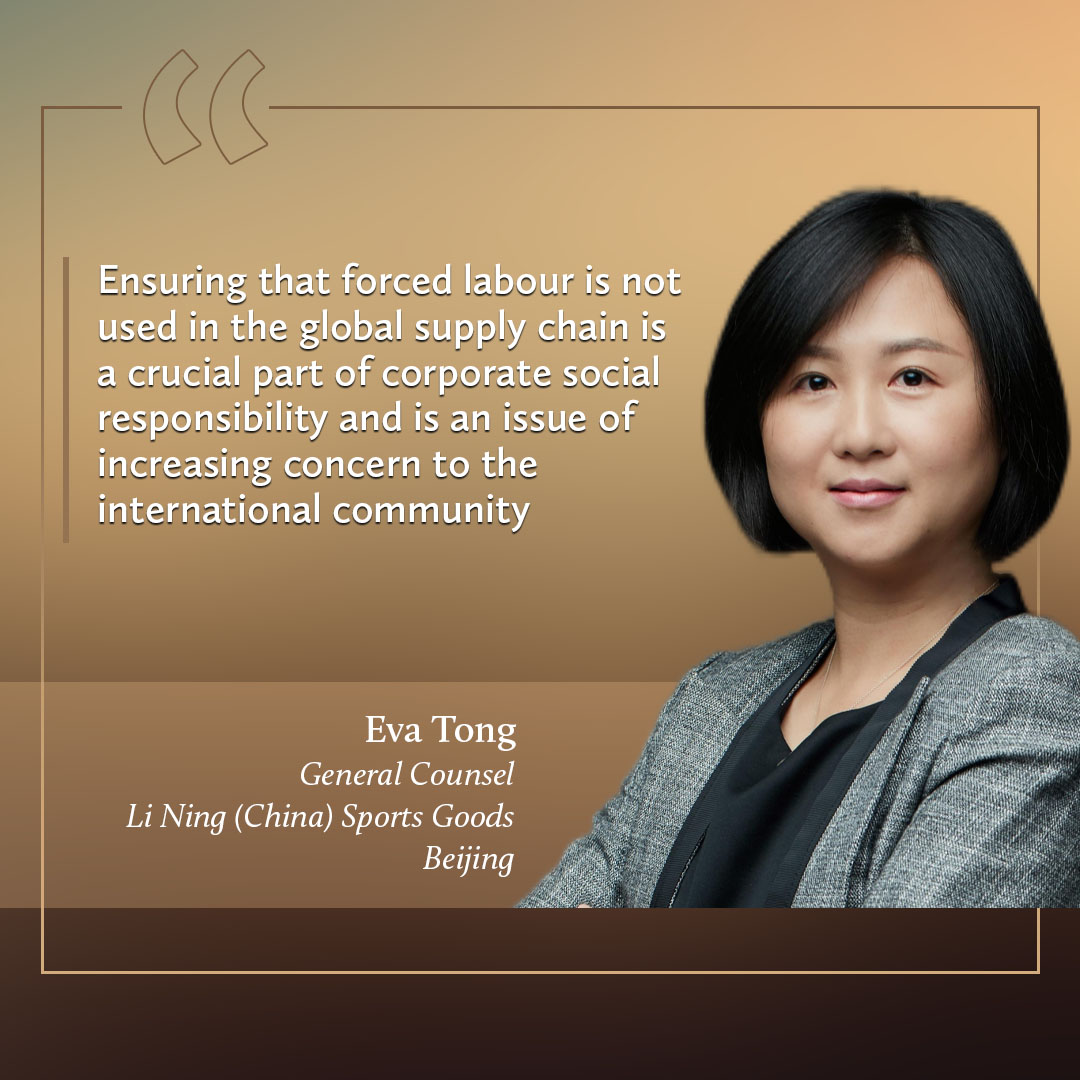
Compliance issues related to forced labour are a significant focus for the legal team at Li Ning Group. “Ensuring that forced labour is not used in the global supply chain is a crucial part of corporate social responsibility and is an issue of increasing concern to the international community,” says Eva Tong, general counsel at Li Ning (China) Sports Goods.
Tong provides compliance training on anti-forced labour to all partners in the supply chain, ensuring they understand the relevant laws, regulations and company policies.
The upgraded requirements for data compliance are nothing to scoff at either. To address this, Li Ning’s legal department established a group data compliance management committee, a governing body for personal information and data protection. The committee is responsible for overseeing the company’s data protection practices and acts as its liaison with regulatory authorities.
Additionally, Tong has developed detailed data protection policies, conducted data protection awareness training for all employees, introduced advanced security technologies such as encryption, formulated a data breach emergency response plan, and continually monitors the effectiveness of data protection measures.
The use of advanced technology is not limited to protecting the company’s data assets. Tong’s team employs intelligent contract management systems, case tracking software and online collaboration platforms in their own daily work to enhance efficiency.
Nancy Wei, legal director of Tupperware China, places great importance on her team’s learning and experience accumulation in practical operations. She encourages the team to establish reasonable three to five-year career development plans, aiming to advance their legal professional skills and related competencies with clear goals.
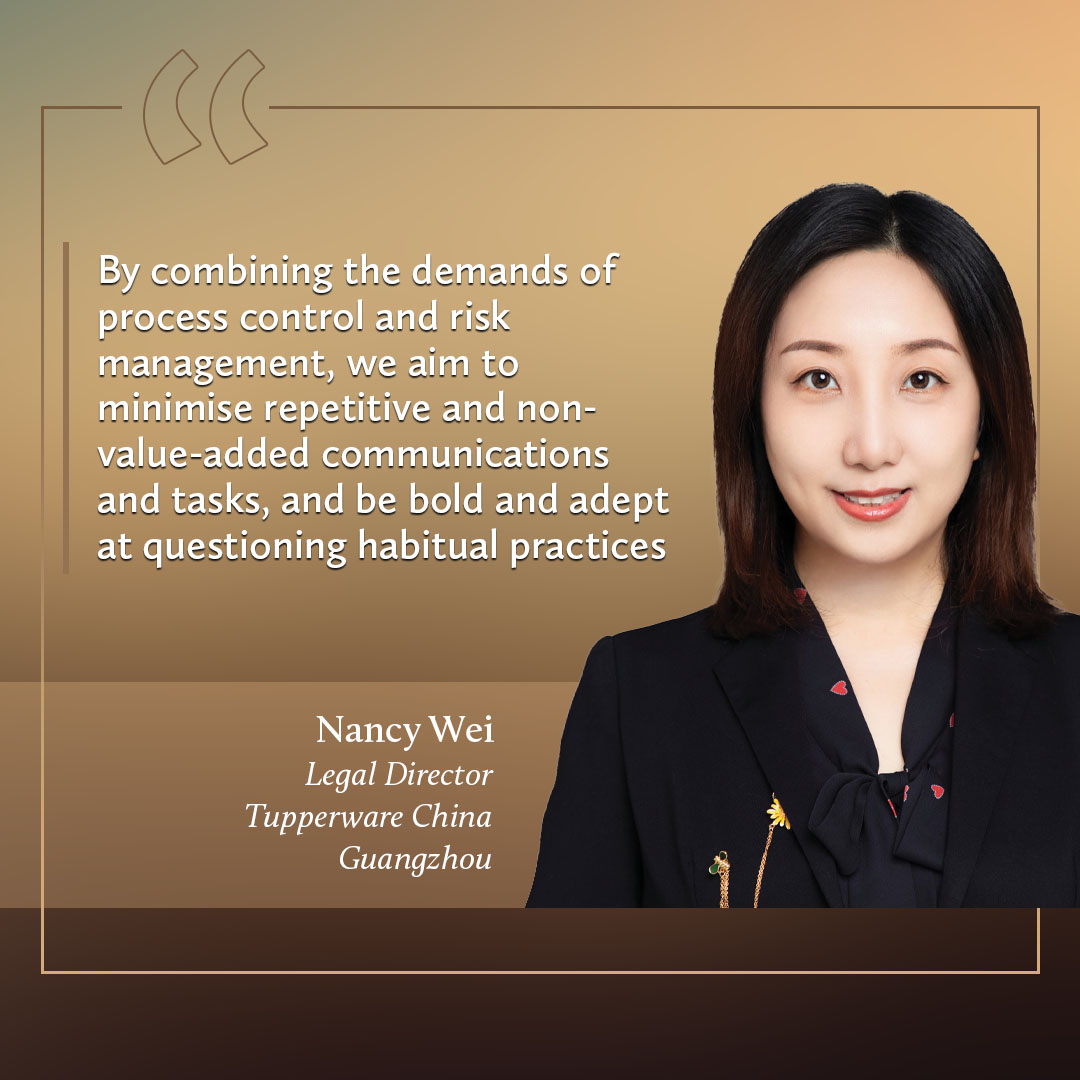
“By combining the demands of process control and risk management, we aim to minimise repetitive and non-value-added communications and tasks, and be bold and adept at questioning habitual practices,” she says.
Help, but with higher standards
BOE’s Feng puts it best: “A long-term trusted external legal adviser is a valuable asset to the company.”
Budgets hang over every business decision and often of late the do-it-yourself approach is preferred over external engagement for this reason. But as well-rounded, sophisticated and capable as in-house legal teams may have become, corporate counsel remains, in general, a collaborative effort. Dispute resolution, overseas affairs and capital markets are some of the top areas in which external legal services are called upon.
Foxconn’s Xie hopes that lawyers, when rendering services, can keep in mind the company’s need for cost-effectiveness. Additionally, he tends to choose law firms adept at integrating global resources.
When selecting external legal advisers, Eva Tong, of Li Ning, values their expertise and good reputation in their professional field. She also assesses their communication skills, integrity and reliability, as well as their willingness to grow with the company and engage in long-term co-operation.
However, she mentions that the current legal services lack personalisation, technology application and resource allocation in emerging legal fields.
The recent boom in overseas expansion have also led to greater expectations for the scale of legal services on offer. Feng believes that legal counsel need to have an international perspective and cross-cultural communication skills, and be able to provide cross-jurisdictional legal solutions.
She also sees room for improvement in the transparency and reasonableness of legal service fees, as clients often lack a clear understanding of the cost composition. “To enhance client trust and satisfaction, legal service providers should promote fee transparency, clarify fee standards and service content, and offer flexible billing models to meet the needs of different clients,” she says.
For Chenxi’s Zhao, lawyers stand a good chance to impress with their commercial mindset, co-ordination skills and timeliness. However, she notes that the legal market lacks a one-stop service platform capable of integrating resources for litigation, non-litigation and even non-legal functions such as finance.
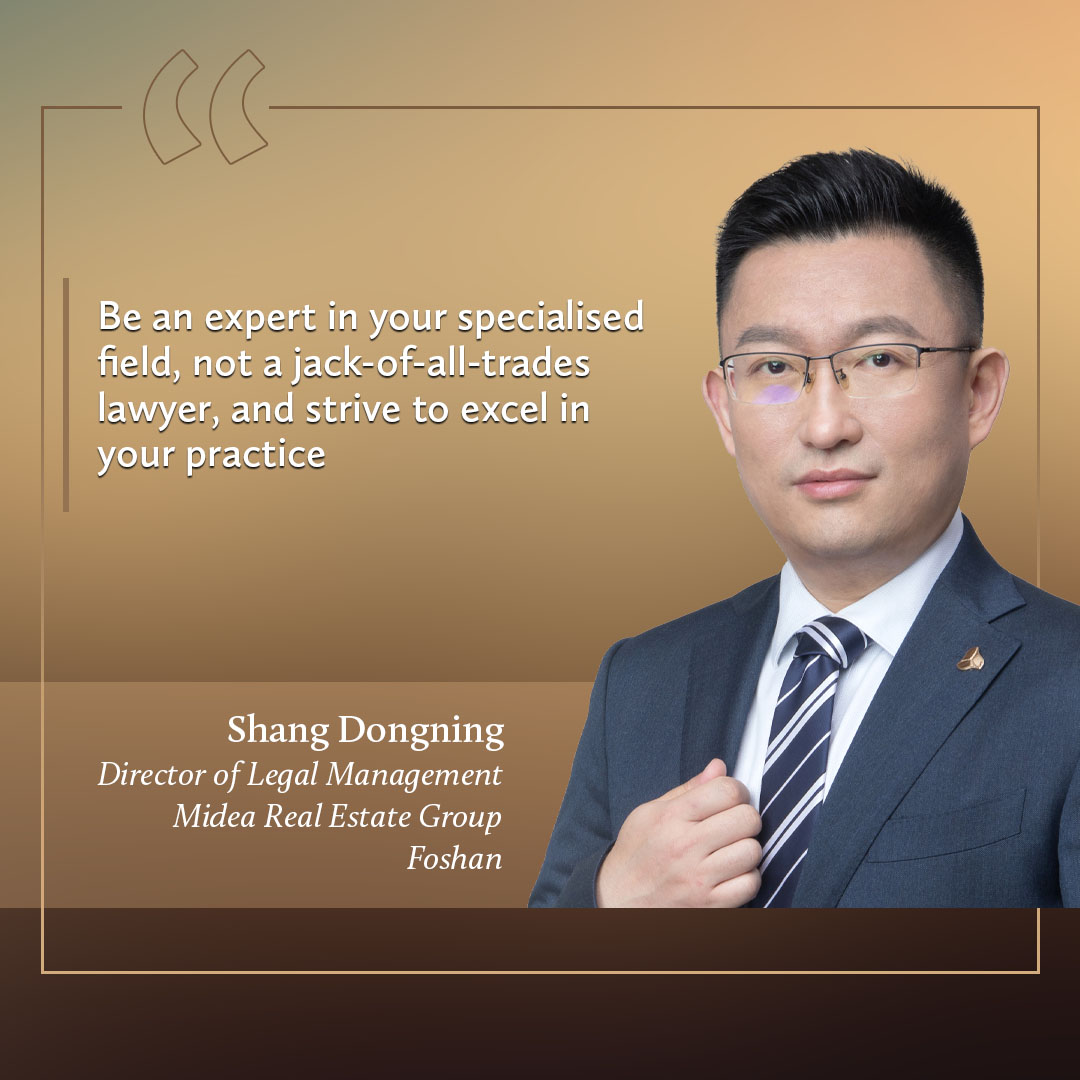
Shang, of Midea Real Estate, advises lawyers to cultivate their respective area of expertise. “Be an expert in your specialised field, not a jack-of-all-trades lawyer, and strive to excel in your practice,” he says.