






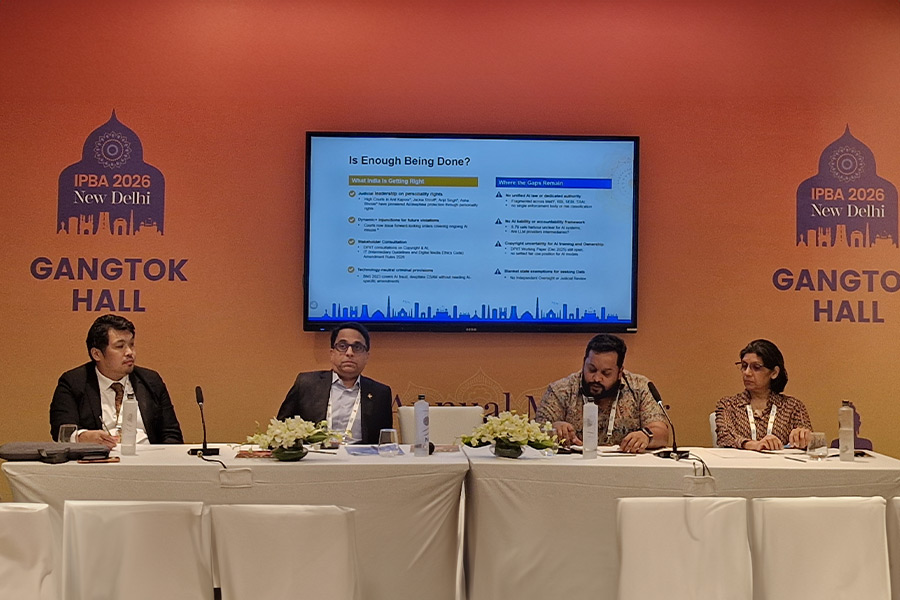
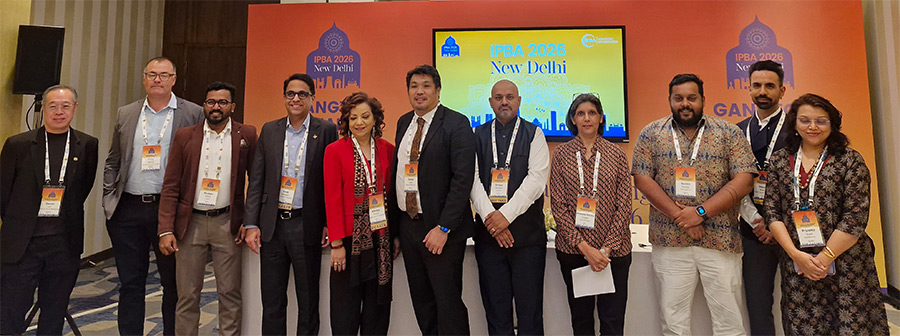
In the “Regulation of Digital Products and Artificial Intelligence – is Enough Being Done?” panel, moderator Daniel Liang, a partner at Allen & Gledhill in Singapore raised important issues for the panellists to elaborate on during day three of the Inter-Pacific Bar Association (IPBA) conference in New Delhi on 28 February.
Panellists Senthil Dayalan, associate director at Forte Law in Singapore, Vivek Kathpalia, partner at Cyril Amarchand Mangaldas and Ameeta Verma Duggal, partner at DGS Associates, both from India, discussed the existing legislation and policy framework in their countries around artificial intelligence (AI).
Duggal cautioned against the unregulated export of AI as a product and urged that a framework needs to be established to ensure safe and trustworthy exports, keeping AI advancements away from proliferation elements, especially where weapons of mass destruction were concerned. “Development must come parallel with the establishment of a framework ensuring safe and trustworthy export,” she said.
Liang emphasised that AI could still be considered a nascent technology and a balance to regulation was needed, as more regulation only stifled innovation and creativity.
Kathpalia shed light on the Indian perspective of the premise that at least the existing level of regulation was required to protect interests. He also said the rapid competition of AI development coming from two different parts of the world majorly, would also influence security concerns.
Dayalan cited the fintech industry as an example to emphasise Singapore’s evolving regulation around it, considering that it matters who would be writing the rules.