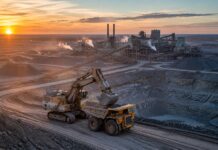









In July this year, the International Energy Agency (IEA) reported that China had surpassed the US as the largest energy consumer in the world. Driven by its revitalized economy and increased output across virtually all industry sectors, the IEA reported that China consumed around 2.25 billion tonnes of oil-equivalent energy in 2009, eclipsing consumption in the United States by 4%.
The news was not well received by the Chinese government, with the National Energy Administration quickly issuing a statement dismissing the IEA’s findings as not credible and based on calculations that failed to properly account for conservation and energy efficiency programmes being pursued across the country. The immediacy and defensive tone of the Chinese government’s response to the IEA’s conclusions came as a surprise to many observers in the US.
The resources required to meet the demands of an expanding and increasingly consumption-driven Chinese economy are well publicized. With reference to IEA numbers again, it is estimated that energy consumption will increase in the next 25 years by 84% in non-OECD countries, with China on the leading edge of that growth. Oil and natural gas consumption in China is also expected to increase by almost 50% in this same period.
China’s rightful place

Partner
Baker & McKenzie, Chicago
Rather than disputing the numbers, the Chinese government might be better served by accepting this latest development as yet another reason to take its rightful place among environmental leaders. The US has never apologized for its consumption habits, instead viewing them as a measure of its global economic strength. At the same time, the US has always considered itself a leader in laws and policies aimed at preserving and protecting the natural environment. While some may quarrel with such proclamations, current US environmental laws and regulations represent perhaps the most stringent regulatory requirements in the world, with a government enforcement regime which is without a peer in the international community.
The challenge for the Chinese government is to convince the world, as it continues its impressive economic expansion in order to meet the needs of its vast citizenry, that its environmental laws and policies are reflective of its status as the leading global consumer.
Alternative solutions
To be fair, recent initiatives suggest that China might be staking out a position on the international environmental stage. Recently, while the US has been mired in endless policy debate, China has aggressively pursued the development of alternative and clean energy solutions to address its carbon challenges. In 2009, China invested around RMB235 billion (US$35 billion) in clean technology projects, more than any other country in the world. One of the division heads of the National Energy Administration, Jiang Bing, recently pledged almost RMB5,000 billion more for these energy projects over the next ten years.
One such clean energy solution garnering much attention in China is the development and commercialization of carbon capture and storage (CCS) technologies to address the impacts associated with the long-term use of inexpensive and abundant fossil fuels. Innovative CCS projects are under way across the country, including the multi-phase, industrial-scale GreenGen coal gasification project in Tianjin.
China also appears to be introducing potentially transformative environmental regulations. The most recent example is the Advancing the Joint Prevention and Control of Atmospheric Pollution for Improving Regional Air Quality Guidance Opinions, also known as the Regional Air Quality Management (RAQM) opinions, which was issued jointly by the Ministry of Environmental Protection (MEP) and other departments in May.
The RAQM opinions call for a regional approach to combating air pollution problems in China’s most polluted metropolitan and industrial areas. They target certain energy-intensive industries and promise to impose more stringent emissions controls on an expanded list of priority pollutants very similar to the “command and control” regulatory schemes that have been utilized in the US for the past quarter century or more. Perhaps more significantly, the RAQM opinions carve out a strong oversight role for the MEP in an effort to address the systemic challenges associated with implementing these initiatives on a regional and local level in China. Finally, the RAQM opinions also promote the deployment of alternative energy sources and other energy efficiency strategies to assist the regions in achieving their air quality targets.
For US companies operating in China, the prospect of increased regulation, such as that promised in the RAQM opinions, is not inherently problematic. Responsible global enterprises readily acknowledge the need for progress on the environmental challenges that exist across the China landscape. With expanded public disclosure of environmental information by companies in China and the increased activism of non-governmental organizations, the risk of negative consequences to business operations in China is increasing. Most US companies are already pursuing environmental initiatives at their China operating facilities that go beyond existing compliance obligations. As such, the development of clear, consistent and appropriately crafted regulations implemented uniformly across industry sectors with the active oversight of the MEP is likely to be accepted without objection, if not with affirmative endorsement, by many regulated entities.
Political will
Rather than attempting to distance itself from its inevitable status as the largest energy consumer in the world, China should use its position, much like the US has arguably done, to propel itself forward towards real and lasting progress on addressing its environmental challenges. China’s investment in CCS and other energy solutions, and its more aggressive approach to environmental protection as highlighted in the RAQM opinions, suggest that the political will exists to move forward. The US and the rest of the world will be watching to see whether the results of these efforts match the Chinese government’s lofty expectations.
John Watson is a partner at Baker & McKenzie’s Chicago office. He leads the firm’s coordinated global environment practice

Baker & McKenzie
1601 Jin Mao Tower, 88 Century Avenue, Pudong,
Shanghai 200121, PRC
Tel: +86 21 6105 8585130 East Randolph Drive, Suite 3900
Chicago, Illinois 60601, United States
Tel: +1 312 861 2646
E-mail: john.watson@bakermckenzie.com