









“Everything is a major change for me now [and] adjusting to our new role is a big challenge. Everyone wants things done fast, but that is not always how governance works, so we need to strike the right balance,” says Bono Adji, the managing director, legal, of Danantara’s Investment Holding in Jakarta.
Bono spoke to Asia Business Law Journal about five months after he left more than a two-decades-long private practice at Jakarta-based Assegaf Hamzah & Partners (AHP), in March, to join as the managing director, legal of the investment holding of Indonesia’s newly established sovereign wealth fund (SWF), Danantara, for a five-year term. After being officially appointed on 24 March this year, he went on to be appointed as a member of the board of directors of the investment holding’s legal entity on 22 July.
As a legal industry veteran known for his expertise in areas including banking and finance, capital markets and M&A, Bono served as managing partner of Assegaf from 2017 to 2024.
With his appointment as the managing director legal of Danantara’s investment holding, Bono reached heights in his legal career he had never dreamed of, but also stepped into unfamiliar territory, with a new set of responsibilities.
In his new role, Bono must handle all aspects related to legal issues, from initial discussions starting from an investment pipeline, and monitoring transactions up until closing.
“I am involved in the process and have the chance to ask the necessary questions throughout the investment process, whether it is due diligence, preparing the investment memo, establishing the structure, or ensuring that the terms and conditions align with our investment objectives,” says Bono.
And that is not where his responsibilities end. Bono’s responsibilities also include ensuring and monitoring legal compliance, and working with the risk director to confirm that compliance requirements on the other side are met. He also engages with government officials and institutions, particularly the Ministry of State-Owned Enterprises, on the co-ordination and drafting of regulations and policies.
Officially launched by President Prabowo Subianto in February this year, Danantara is the newest and second sovereign wealth fund of Indonesia after the Indonesia Investment Authority (INA), established in 2020. There are two entities established under Danantara: asset management (operational holding); and investment management (investment holding). The asset management arm is in charge of managing the assets of state-owned entities, while the investment management arm oversees and manages investments.
Danantara, the investment holding and the operating holding have dual mandates of not only maximising investment returns, but also making investments that positively impact Indonesia’s economic development. These include creating job opportunities, strengthening food and energy security, and improving supply chains.
In particular, the investment holding prioritises eight sectors covering minerals, renewable energy, digital infrastructure, health, financial services, downstream infrastructure, industrial zones and food.
In terms of supervision, Danantara will be heavily overseen by the government, with a monitoring or supervisory committee comprising several co-ordinating ministries, with the minister of SOEs serving as the chair. The committee also has the attorney-general’s office, the state auditor and the anti-corruption commission serving as members.
Danantara states on its official website that it is “dedicated to enhancing asset efficiency, attracting global investment and strengthening Indonesia’s competitiveness in strategic sectors, positioning itself as a key player in Indonesia’s economic future with significant potential for global investors”.
The new sovereign wealth fund also states that, “in pursuit of its strategic objectives, Danantara Indonesia aims to drive economic growth with a professional approach and implementing good governance”.
Good governance is both the keyword and a task that has kept Bono busy since shortly after he assumed his new in-house role.
At the moment, Bono will lead a legal team of eight legally qualified members, five of whom are currently active, with the remaining three joining in September. They include: director Cindy Riswantyo, who was formerly a White & Case Indonesia partner; vice president legal Aji Utomo, who was previously an AHP senior associate; and assistant vice president, legal, Bryan Wisaksono, who was recently an associate at Baker McKenzie International’s Indonesian member firm, HHP Law Firm. Also among the members is director legal Kenna Safrudin, who recently worked as the senior vice president, legal at INA, and was also previously a counsel at Ginting & Reksodiputro in association with Allen & Overy (now A&O Shearman).
All team members are legally qualified with every member having worked at a law firm since the beginning of their legal career before joining Danantara, says Bono.
He says that he and his team have been working on establishing a governance framework for the past three months. “We are currently focused on developing governance processes, systems and procedures and are working with the government to draft the implementing regulations for Law No. 1 2025 on SOEs.”
Regulations governing Danantara are an amendment (Law No. 1 of 2025) to the State-Owned Enterprises Law (No. 19 of 2003), Government Regulation No. 10 of 2025 and Presidential Decree No. 30 of 2025.
The regulations stipulate that the new SWF is required to establish key internal oversight structures. Such structures include having an audit committee and developing minimum standard operating procedures (SOPs) relating to governance, audit, risk management and other control functions.
The regulations also stipulate that Danantara may be audited by the Audit Board of Indonesia, while audits of SOEs’ financial statements must be conducted by independent public accountants.
Bono explains that the key elements for the governance framework will include, among others, corporate structure and oversight, investment governance, risk and compliance, and audit and evaluation. He has involved both domestic and international law firms to assist them in this process.
“The involvement of legal counsel will then be extended when we begin executing the investment, at which point their role will become that of investment law counsel, covering M&A, financing for projects, properties and related matters,” says Bono.
Ira Eddymurthy, a founding partner at SSEK in Jakarta, tells ABLJ that her firm is one of the external Indonesian legal advisers supporting Danantara in the process of preparing these governance instruments.
SSEK has also advised on matters concerning the respective authorities, and roles of the investment holding and operational holding entities under Danantara. This includes providing legal support in the establishment process of the investment holding, as well as assisting the operational holding in one of its proposed shareholder loan transactions.
“On the investment side, a multi-layer risk-based investment model should be adopted and applied,” says Eddymurthy. “Because BPI Danantara has a lot of capitalisation, investments should go through multi-layer risk assessments to ensure that it is an appropriate course of action, without delaying the decision to make an investment.”
 Overall, a well defined governance framework with clear rules, institutional checks and public visibility will be crucial for Danantara to operate effectively as Indonesia’s state asset management body
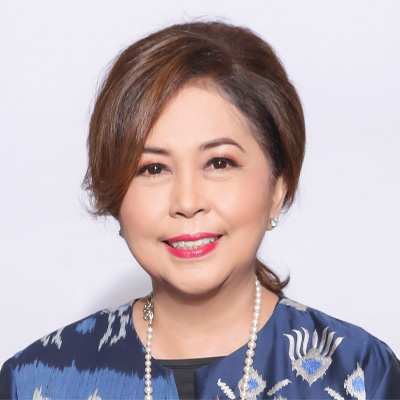
Ira Eddymurthy
Founding Partner
SSEK
Jakarta
Eddymurthy also stresses the importance of transparency, saying that reports, plans and performance should be made accessible to the public, even though Danantara is not a publicly listed company.
In terms of supervision, she points to the need for Danantara to have cross-agency supervision through the involvement of many government institutions, such as the Audit Board of Indonesia and, where applicable, the Financial Services Authority (OJK), to ensure that investment implementations are in line with the applicable regulatory frameworks.
“Overall, a well-defined governance framework with clear rules, institutional checks and public visibility will be crucial for Danantara to operate effectively as Indonesia’s state asset management body,” says Eddymurthy.
Bono points out that Danantara has an investment charter acting as an internal policy, which lays out the procedures that investment team needs to follow. He explains that from the beginning, when they have an investment pipeline, they will assess this to create a shortlist up until obtaining recommendations from the investment committee and the board of directors’ approval.
“Based on that, we hope to be able to move ahead and execute and close the deals,” says Bono.
In recent months, Danantara has signed several memorandums of understanding (MOUs) with a number of international institutions looking to collaborate with Danantara across multiple sectors, demonstrating that Indonesia offers attractive foreign direct investment opportunities.
Bono points out that, at this stage Danantara is evaluating the potential investments with all the prospective partners. “We have signed several MOUs to signal our interest in certain potential projects,” he says.
Looking at this from a law firm’s perspective, Eddymurthy says that continued efforts to strengthen internal governance and compliance frameworks are critical in building investor confidence.
“The development of key oversight structures such as the Audit Committee and the formulation of comprehensive governance instruments, SOPs and risk management protocols are important steps toward demonstrating operational accountability,” she says.
Bono says that Danantara already has several SOPs on how it deploys funds, assesses deals, co-operates with partners to co-invest and does procurement. It is also assessing its compliance, is keen on formally adopting the Santiago Principles, but is awaiting a final assessment to do so.
The Santiago Principles are 24 generally accepted principles and practices established in 2008 by 26 founding members of the International Forum of Sovereign Wealth Funds. These are globally accepted standards for governance, investment and risk management practices for sovereign wealth funds.
“We look at the best practices of [other] SWFs and how they regulate themselves. That needs to be balanced by the fact that we are operating as an investment vehicle in that we have to follow the deals, and deals, as you know, tend to move fast,” says Bono.
He emphasises that the exercise of benchmarking the investment holding to other global SWFs, as well as the INA, is intended to help create a strong governance system, while at the same time giving the entity the agility to execute transactions in a way that accommodates both speed and governance.
“As an SOE, we don’t want to be caught by lengthy bureaucracy, and we want to be able to move as quickly as the other sovereign wealth funds in the global market,” says Bono.
There is also the implementation of the business judgement rule, a law concept introduced in the revision of the SOE law governing Danantara.
The business judgement rule protects management from legal liability for losses from investment decisions made in the best interest of the company, and applies to any person operating under a limited liability company in Indonesia, including SOEs.
When asked how the business judgement rule will be applied to investments and actions for deciding on and conducting deals in Indonesia and abroad, Bono points to the need to ensure investment decisions are made after going through rigorous deliberations encompassing analyses, risk assessments and independent advice.
“We also ensure fiduciary discipline of the board members as well as our personnel, meaning that decisions are made without personal gain motives and truly align with our mandate,” he says, adding that controls and mitigation steps through risk management, contingency planning and rapid intervention will also be implemented when warning signs emerge.
But his legal team consisting of private practice lawyers, including himself, are new to their present roles, and Bono says that his immediate objective is to help his team members adjust to the new working environment while striving to achieve the short-term goal of establishing a solid governance platform and ensuring that everyone consistently abides by it.
“Previously, as lawyers, we were typically involved only after the board of directors had made decisions. At Danantara, however, the team needs to be involved from the very beginning, including in the decision-making process. This is a new experience for us, so I want to ensure my team can adapt to this requirement,” says Bono.
He says he has a mid-term goal of managing the team similar to how a law firm manages its legal team, with a focus on continuous improvement of legal knowledge.
“Ideally, I would like to provide opportunities for my team to be seconded to law firms, so they can maintain their connection to legal practice. In Indonesia, I have observed that some in-house legal professionals lose their passion for the law, which I want to avoid for my team,” says Bono.
He plans to implement continuous training and secondment opportunities, adding that the team should concurrently also develop skills in other areas such as finance, accounting and management to become a holistic and well-rounded legal team.

Looking at his decades-long legal career, Bono says it feels as if it was only yesterday that he started out. Over the years, he has acted on landmark deals including co-leading Assegaf’s team advising Indonesian ride-hailing giant GoJek on its USD18 billion merger with Indonesian e-commerce giant Tokopedia in 2021, which was then the largest of its kind in Indonesia.
Back then, he says he wanted to be a good lawyer without really knowing what it took to be one, and what the consequences would be. He also realised that he was committed to doing more than just what an ordinary person would do to become a good lawyer. “I can say that I probably started enjoying my role and then, without realising it, I reached where I am today,” he says.
One thing Bono is aware of, and strongly abides by, is his role and duty to his clients.
“I focus on being a problem-solver for my clients, which means not creating drama, not arguing or debating unnecessary points with opposing counsel, and not trying to look good or sound smart.”
These are things he says he always avoids because he wants to work efficiently and to find the best solution for his clients, adding: